Buyers price a Rolex by running a predictable playbook: identify the exact reference and generation, grade condition, verify all-original parts, check completeness (box, papers, service records), weigh case and bracelet materials, and benchmark against recent comparable sales. They then adjust for current demand, macro conditions, and any documented provenance.
Below is how each step moves the number up or down and how a professional buyer validates it. For a clear seller baseline, see the trusted Rolex resale value assessments provided by Diamond Banc.
How Buyers Identify the Watch (Model & Reference)
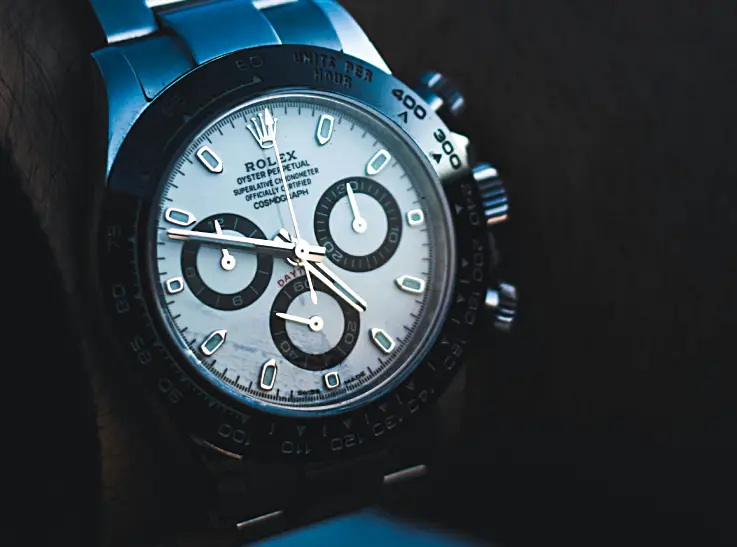
Everything starts with identity. A buyer doesn’t price “a Submariner.” They price your Submariner: its reference, its production window, its dial, bezel, and any small tells that set it apart. Lines like the Submariner, GMT-Master II, and Daytona attract broad audiences, which is why they tend to hold strong interest. When a model is discontinued or produced for a shorter stretch, scarcity can lift the ceiling even higher.
Movement updates matter as well. Longer power reserve, a new escapement, or a quiet mid-cycle change can shift collector interest. That is why buyers look at serial ranges, warranty card dates, and known production markers to place the watch in the right chapter of its history.
Then there are configurations. Dial color, typography, lume type, bezel insert, handset, and rehaut engraving all play a part. Nicknamed variants such as “Hulk,” “Kermit,” “Batman,” and “Pepsi” are not priced off generic comps. They are compared to recent sales of that exact setup. If the watch shows transitional features that appeared briefly, that can be another nudge upward.
Plain speak: the more precisely a buyer can define your watch, the more accurate and often stronger the pricing conversation becomes.
Condition: What Appraisers Look For
Condition moves numbers more than any single factor because it touches the case, dial, bracelet, and movement at once.
- Case and bezel.
Buyers study the case shape first. Crisp lines, even chamfers, and correct finishes say “well kept.” Rounded lugs from heavy polishing, deep nicks, corrosion between the lugs, or distorted spring-bar holes say the opposite. On sport models, bezel condition matters a lot. Ceramic chips, faded inserts, or sloppy alignment hold the price back.
- Crystal.
Edge chips and scratches, especially on sapphire, are common deduction points. Acrylic on vintage can be polished to a degree, but cracks still count against value.
- Dial and hands.
The dial is the watch’s face and collectors care. Matching lume tone, clean text, and stable, attractive patina support value on vintage pieces. Moisture spotting, relumed plots, or flaking printing lower it. Some buyers use UV or blacklight to see how lume behaves and whether anything looks tampered with.
- Bracelet and clasp.
Stretch, bent links, missing links, and a tired clasp all get priced in. A tight bracelet with the correct end links and full link count is an easy win.
- Movement health.
This part is straightforward. Timing machines provide rate, amplitude, and beat error. Setting and winding feel are also checked. If the watch is due for service, they subtract that expected cost.
Put together, a watch with sharp geometry, a clean dial and hands, a healthy movement, and a tight bracelet usually sits above “average” market pricing. Heavy polish, tired mechanics, or expensive service needs can pull it down quickly.
All-Original Parts vs. Aftermarket Changes
Authenticity isn’t just about paperwork. It lives inside the watch.
Buyers check that the dial, hands, bezel, crown, crystal, and movement parts are Rolex and period-correct for the reference and era. Official Rolex service parts can be acceptable on many modern pieces. On highly collectible vintage, originality usually prevails, so later service dials or hands may dampen enthusiasm.
Custom work is a different story. Non-OEM diamond setting, generic bracelets, aftermarket bezels, or redone dials typically lower offers. These changes alter the watch’s identity and make future servicing more complicated. On the flip side, a desirable reference with its factory-correct parts intact can be a standout and command stronger bids.
Box, Papers, and Service History (Completeness)
Completeness gives buyers confidence and often speeds resale, which is why it has a real dollar impact.
Here’s what gets reviewed: the original warranty card or certificate, inner and outer boxes, manuals, tags, extra links, bezel protector, and invoices. Service records from Rolex or respected specialists are especially helpful because they document care and timing of work.
A “full set” can add a noticeable premium on newer and collectible references. Missing documents do not end the conversation, but they can narrow the buyer pool. Fewer buyers usually means a slower sale, and slower sales require a little more room in the offer.
To protect everyone, buyers also match serials and references across the watch, card, and engravings, and they look closely for tampering or reprints.
Case and Bracelet Materials: How They Influence Price
Material changes both demand and wear profile.
Stainless steel sport models are the most liquid. They attract the largest audience, wear well, and are easy to place. Two-tone pieces appeal to a different buyer segment, and their pricing can swell or soften with style cycles and the specific reference.
Solid gold and platinum carry higher intrinsic value and appeal to a focused group of buyers. These metals show marks easily, so condition matters even more. Special factory options, such as meteorite dials, gem-set bezels, or stone dials, can increase value when authentication is secure.
Comparable Sales, Waitlists, and Time-to-Sell
Offers are rooted in what the watch is likely to sell for soon, not in a vague average.
Buyers look at recent sales for the same reference, same dial or bezel variant, the same general year range, and comparable condition. They weigh auction results, dealer-to-dealer data, and platform sales, then set a sensible range. One-off high sales are viewed with caution unless the pattern repeats.
Speed matters too. A watch that consistently sells in days lets the buyer work with a tighter spread. A slower mover needs a little more room to cover holding risk. Seasonality and regional demand can shift the expected time to sell. Shipping, insurance, light refurbishment, and any warranty reserve are costs that must be accounted for before an offer becomes final.
Economy and Trends: How Demand Shifts Prices
The secondary market responds to broader economic conditions. When consumer confidence and asset prices are strong, discretionary buying increases and bids tend to rise. During periods of weaker confidence or tighter liquidity, buyers become more selective and bid levels moderate. Exchange-rate movements influence cross-border purchasing power and can reset local pricing floors.
New product releases and cultural visibility can reallocate demand for a time. A new dial color, a notable public appearance, or renewed media attention may lift interest in a specific variant. These effects are often short-lived, so professional buyers prioritize verified, recent transactions over older sentiment.
Availability is the final factor. When authorized retailers have limited supply, demand shifts to the secondary market, which can support firmer prices while supply remains constrained. As availability improves, prices typically normalize.
Provenance: When History Adds Value
Provenance is the documented story of a watch. When authenticity, ownership history, and cultural or event connections are well supported, resale value can rise. Original components, clear documentation, and meaningful cultural relevance work together to build confidence and demand.
Ownership History
Ownership records add depth. A Rolex linked to a well-known collector, public figure, or respected family line often attracts more interest. A documented chain of custody helps confirm authenticity and that the piece has not been altered. Watches with aftermarket or swapped parts usually trade for less, while original components and service records from qualified professionals support value by showing proper care over time.
Notable Events
Association with a notable moment can elevate both emotional and monetary value. Examples include use during a polar expedition, a championship win, or other documented significant events. These connections must be supported by reliable evidence to matter—period photos, invoices, letters, press mentions, or catalog entries that tie the specific watch to the event. Personal milestones, such as anniversaries, can also add appeal when they are documented.
Cultural Significance
Some Rolex models gain broader cultural resonance through film, sport, or association with well-known personalities. The Submariner’s long-standing link to James Bond is a clear example. Designs that remain relevant across generations tend to hold attention in the resale market, and that enduring recognition can support stronger valuations.
How Buyers Ultimately Determine the Resale Value of a Rolex
The resale value of a Rolex is never based on a single element. Buyers weigh multiple factors together—model and reference, condition, originality of parts, completeness of documentation, material composition, current demand, broader economic influences, and any verifiable provenance. Each aspect adds or subtracts from the final figure, shaping a price that reflects both the watch’s tangible qualities and its place in the market.
For sellers, understanding this process provides perspective on why offers may differ and how value is established. A Rolex is more than a timepiece; it is a combination of precision engineering, history, and demand. Recognizing how these factors work together helps set expectations and supports informed decisions when it comes time to sell.
If you are considering parting with your watch, seek a professional evaluation. A thorough assessment will provide clarity, transparency, and confidence in understanding what your Rolex is truly worth in today’s market.