“Who controls the past controls the future: who controls the present controls the past.”
It’s the warning that echoes through ORWELL: 2+2=5, a new documentary from Academy Award-nominated director Raoul Peck, arriving in UK and Irish cinemas on 27 March 2026. Drawing on the life and legacy of George Orwell, the visionary writer behind Nineteen Eighty-Four and Animal Farm, the film sets out to examine how Orwell’s warnings about propaganda, surveillance and have taken on new meaning in the digital age.
Working in collaboration with the Orwell Estate, Peck blends archival material, excerpts from Orwell’s diaries and essays, cinematic references and present-day footage into a dense, reflective portrait of the writer as both historical figure and enduring political voice. Narrated by Damian Lewis, the film traces how ideas once imagined in Orwell’s 1940s fiction now appear uncannily relevant amid contemporary debates around artificial intelligence, algorithm-driven media ecosystems, state propaganda and political censorship.
Peck approaches the subject with a personal perspective. As a child, he was forced to flee Haiti under the Duvalier dictatorship, an experience that informs the film’s exploration of how authoritarian systems shape language, perception and public memory. Produced alongside Oscar-winning filmmaker Alex Gibney, whose credits include Taxi to the Darkside and Going Clear: Scientology and the Prison of Belief, the project aims to connect Orwell’s writing with the mechanisms of power that continue to influence contemporary society.
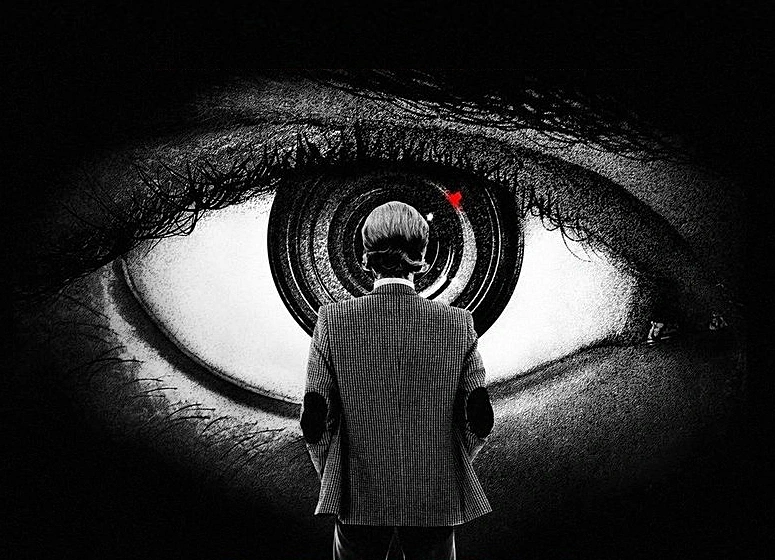
Early responses to the documentary have been sharply divided. Some critics have praised the film’s ambitious scope and its urgent reminder of Orwell’s continuing relevance in an era of “newspeak,” disinformation and political polarisation. Others, however, have found its pacing slow and its structure uneven, pointing to dense narration, underdeveloped narrative threads and editing that at times moves too quickly through on-screen text and references. The film’s political framing has also sparked debate, with supporters viewing it as a timely warning about modern threats to truth and democracy, while detractors argue that its perspective risks simplifying the very ideological manipulation it seeks to critique.
Whether embraced or contested, ORWELL: 2+2=5 positions Orwell not simply as a literary icon of the twentieth century but as a voice whose ideas continue to resonate in the twenty-first. By revisiting the writer’s life and work through a contemporary lens, Peck’s film asks a question that feels increasingly urgent: in an age shaped by algorithms, information wars and shifting realities, who really controls the story of the present — and what future that story might create.