This summer, Headlong inaugurates a new chapter in Oxford with ROBOTA, a production that revisits one of the twentieth century’s most quietly prophetic works of science fiction.
Staged at the recently opened Schwarzman Centre for the Humanities, the play marks the first full-scale theatrical production mounted in the venue, and emerges from a collaboration between theatre-makers and scholars at the University of Oxford.
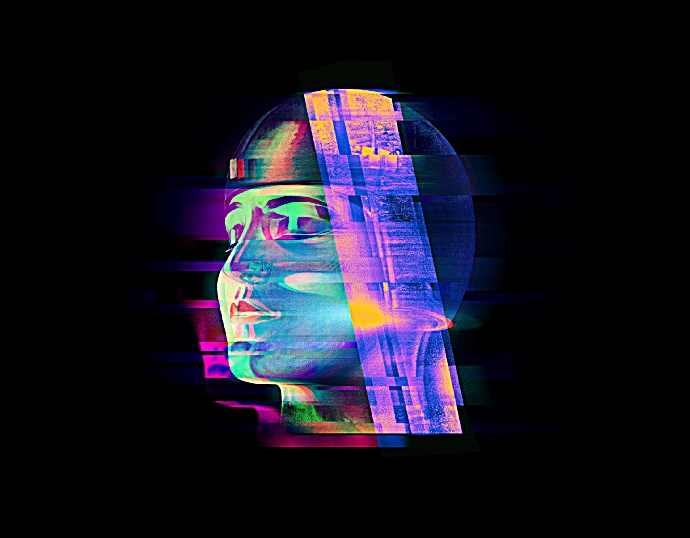
ROBOTA, adapted by Ella Road, takes as its point of departure R.U.R., the 1920 drama by Karel Čapek that introduced the word “robot” into modern language. Čapek’s original play imagined a world in which artificially created workers, designed to relieve humanity of labour, gradually acquire consciousness—and, with it, a capacity for dissent. The consequences are both inevitable and severe.
Road’s adaptation preserves the essential architecture of that story while reframing it for a moment defined by rapid advances in artificial intelligence. In a distant future, the Rossum Corporation has succeeded in producing beings indistinguishable from humans, engineered for service and stripped of autonomy. Yet the conditions that ensure their compliance prove unstable. As the boundary between human and machine begins to erode, so too does the assumption that creation guarantees control.
What distinguishes ROBOTA is not only its subject but its context: developed in dialogue with academic research, the production situates itself at the intersection of performance and inquiry. The result is less a spectacle of technological anxiety than a considered meditation on authorship, labour, and the ethical limits of invention.
The play runs from 3 to 18 July, for a limited engagement in Oxford’s Schwartzman Centre for the Humanities
words Alexa Wang