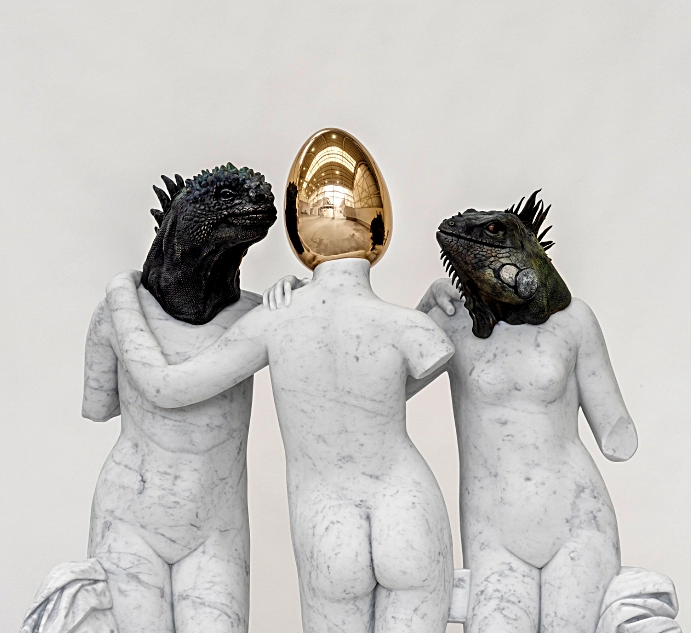
There’s something quietly radical unfolding in Venice this spring. Inside the crumbling, timeworn walls of Palazzo Rota Ivancich, Koen Vanmechelen stages We Thought We Were Alone — his first solo sculptural exhibition in the city, landing in sync with the La Biennale di Venezia.
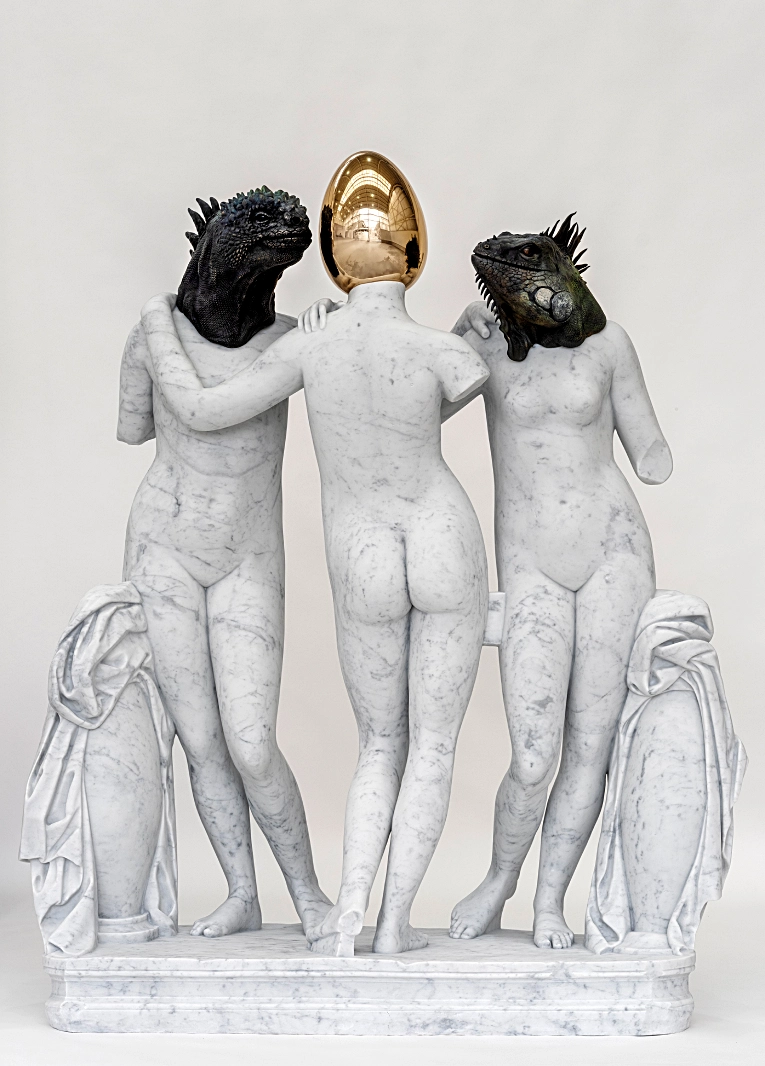
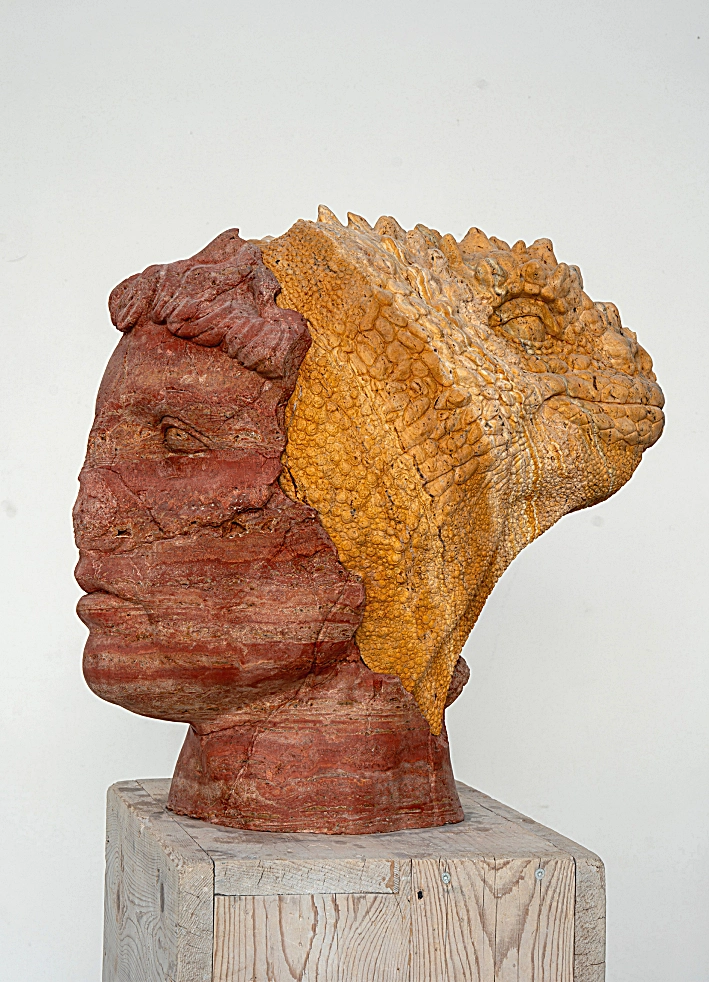
Curated by James Putnam, the show unfolds across three precarious floors, where architecture becomes more than backdrop — it breathes, fractures, and mutates alongside the work. Forty new sculptures and installations push beyond the human gaze, tracing a charged relationship between biology and the inorganic world. Think less white cube, more living organism.
Vanmechelen has long operated in the space between disciplines — art, science, philosophy — but here the stakes feel sharper. His recurring obsessions with hybridity, crossbreeding, and identity crystallise into something almost existential. Visitors move through the palazzo like a cocoon: shedding certainty, picking up new forms. Rooms become thresholds. Meaning is unstable, constantly renegotiated.
Materials collide — bronze against glass, marble beside video — creating a tension between permanence and flux. Classical references (Medusa, The Three Graces) surface only to dissolve into a wider ecosystem of animal forms and speculative futures. Nothing stands alone. Everything is entangled.
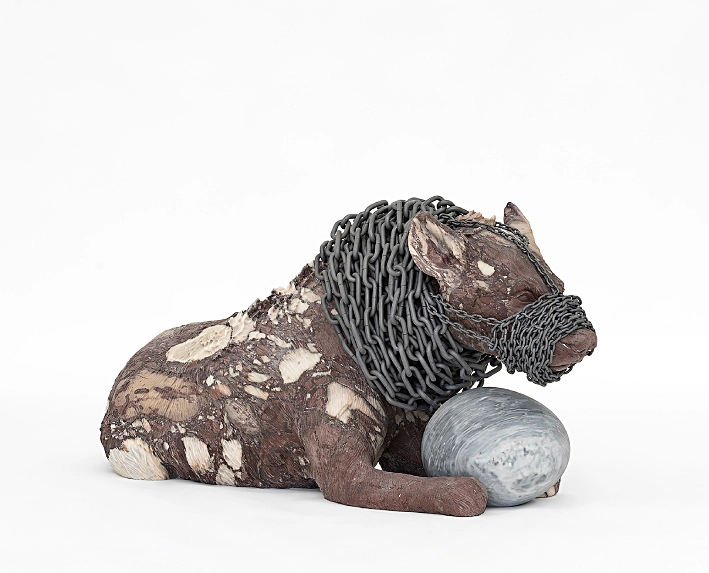
“For centuries we thought we were alone,” Vanmechelen reflects. “We imagined ourselves at the centre of all things.” What follows is not nostalgia, but a confrontation: a dismantling of human exceptionalism in favour of something messier, more reciprocal. Survival, he suggests, isn’t about dominance — it’s about coexistence.
The exhibition also folds in Vanmechelen’s long-running Cosmopolitan Chicken Project and his wider work at LABIOMISTA, extending his interest in biocultural diversity into lived, communal experience. Art here isn’t static — it’s participatory, evolving, embedded in networks of people, animals, and environments.
A standout moment comes via the Wild Gene Festival installation, a collaboration with Youssou N’Dour. Originally staged in Belgium, the project arrives in Venice as an immersive, multi-sensory space where music, painting, and community collide. Video works capture the raw energy of the live performance — N’Dour’s sound meeting Vanmechelen’s monumental gestures in real time — translating it into something closer to ritual than documentation.
“Art and music combine,” N’Dour says, “to reflect identity, community, and the living dialogue between humans and nature.”
Putnam frames it more structurally: Vanmechelen doesn’t illustrate interconnectedness — he constructs it. The exhibition becomes a system in motion, where fragile balances and hybrid forms force viewers into a constant negotiation between what is and what could be.
Running from 9 May to 22 November 2026 at Palazzo Rota Ivancich, Venice. We Thought We Were Alone doesn’t offer answers. It dissolves them.
words Alexa Wang