Jelly Balls – Joe Wells
I wasn’t always masked. When I was a baby, I would cry, laugh, wave my arms about or shit myself whenever I felt like it. Those were the days!
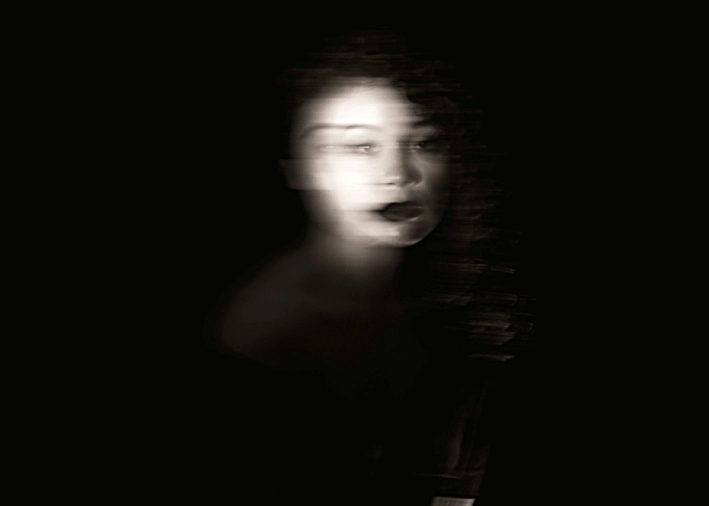
It was when I was a child that the masking started to happen. Little things that I did or said which other people told me weren’t correct – ‘stop fidgeting’, ‘look me in the eyes’, ‘don’t ask questions like that!’ – so I made a conscious effort to change these things so that other people would be happy. Looking back, I realise that by making these changes I was making me less and less me. Soon the masking became second nature to me, and it felt weird to not mask.
Here’s an example; when I was a child I would talk very passionately about things which I was interested in. I would keep talking until a grown up would say to me, ‘Ok Joe, you’ve been talking about penguins for an hour now, we are at a funeral so maybe we should talk about something else’.
My special interests changed but my urge to talk about them did not. I now monologue about my interests as a job which I find genuinely therapeutic.
As a teen I was told off for talking about my special interests. So much so that I gave myself a rule. You must not talk about your special interest unless someone asks you about it, and only then may you tell them one thing about your interest before asking them a question about their lives (even if you don’t care about their lives you have to ask to be polite). That was my golden rule – Answer briefly, ask question back.
This rule helped me to stop getting told off for boring people with my interests, but it was not without its problems. When you learn social rules manually there can be a level of inflexibility with those rules compared to people who seem to get them more naturally. As an adult my main special interest is comedy and (like many successful autistics) my special interest is also my job. In the run up to a tour or festival run I will have to do interviews with journalists about the show. They will ask me, ‘So Joe, what’s the new show about?’ and following my rule I will reply, ‘It’s about being autistic, and are you writing any good news articles at the moment?‘ One day I will get the hang of not treating press interviews like a conversation.
I think the most painful masking I had to do growing up was learning to make eye contact. There’s a level of intimacy to eye contact which I’ve never been comfortable with. If we think about how eye contact works, we all (or at least most of us) have two balls of jelly which we carry in our skulls and the purpose of those jelly balls is to suck in all the surrounding light. This is icky enough but for some reason it is the social etiquette when you are talking to people to point your jelly balls at their jelly balls so that you can suck the light off their jelly balls whilst they are sucking light back off your jelly balls. This has always felt like a very intense thing to do – at least buy me a drink before you expect me to suck on your jelly balls!
I used to get in trouble at school, I had a science teacher who would say – ‘You have to make eye contact with me, otherwise I don’t know you’re listening to me’. I remember thinking, ‘What kind of biology teacher are you, who thinks that people listen with their eyes?’
I was told to make eye contact enough as a child that I taught myself to do it, even when it felt uncomfortable. I’d look at the bridge of people’s noses and try not to think about the jelly balls on either side.
I actually listened to people less when I was trying to force eye contact with them, if you worked with me any time before 2019 and you ever thought that I was listening to you because I was looking in your eyes then I’m sorry to tell you that I was actually spending the whole time thinking about how awkward I was finding it and planning an exit strategy.
When I learned of my neurodivergence I started to experiment with not making eye contact. The problem was that whilst this reduced the sensory overload of forced eye contact, I still felt uneasy about being ‘unmasked’. I had spent so much of my life with this mask on that it had become normal for me. Not making eye contact might have been my default state but I’d been conditioned to feel that it was wrong so going back to it felt like walking out of the house naked.
One day in late 2019 I was meeting with the artist Jon Adams. Jon is an inspiration to me (in the real sense of the word) and a lot of the way I talk about autism is borrowed from him. He once said, ‘People ask me what my autistic superpower is, and I say surviving’ – fuck that’s deep, I quote that a lot.
Jon tends not to make eye contact, so this felt like the perfect opportunity to try not making eye contact myself. As Jon spoke to me, I just looked down and I felt so free. ‘This is the first day of the rest of my life’, I thought to myself. I realised that I had never been able to fully connect with people in conversations because I had had this cloud of eye contact hanging over me. I was so excited about the future, finally being able to meaningfully listen to people when they talk to me without worrying about doing something which felt uncomfortable to me. ‘What do you think?‘ asked Jon. Oops! I’d been so excited about my new unmasked life that I’d forgotten to listen.
Neurodivergent Moments: Sex, Sunscreen, Turtles and How (Not) to Pack a Suitcase will be published on June 18.