(Image: Adam (adiamo) Hilborn | Archive)
Ford’s Greenfield Labs was never simply a room for future-car ideas. It was a working experiment in how a century-old automaker could learn to think and collaborate differently.
For Adam Hilborn, the project sits at that intersection: not just design for mobility, but design of the environment, identity, and culture needed to make innovation possible inside Ford.
The focus of the work was Greenfield Labs, Ford’s smart mobility future innovation lab, later connected to the broader D-Ford network. Created in 2016, Greenfield Labs was developed as a near-now-far strategy for bringing human-centered design into Ford’s future-facing work. Its purpose was to explore, test, and launch products and ideas that could bring greater humanity to mobility.
That mission required more than ambition.
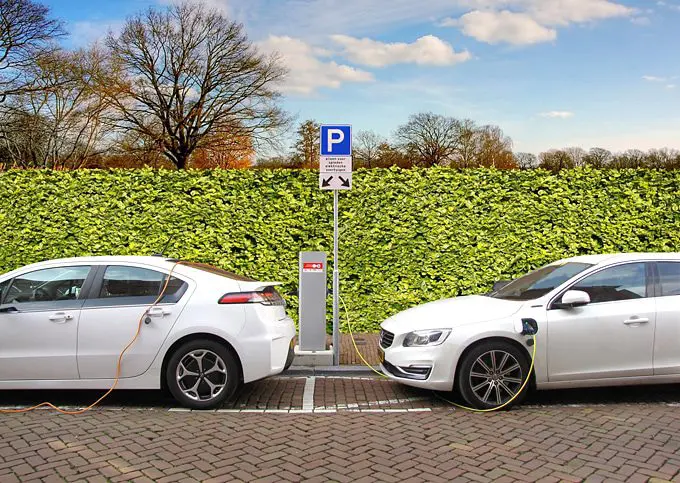
Ford was facing a transportation landscape shaped by connectivity, automation, electrification, artificial intelligence, and the sharing economy. These forces were changing how people moved and what a car company could become next.
Greenfield Labs gave Ford a place to study those changes through people’s needs, not only through technology.
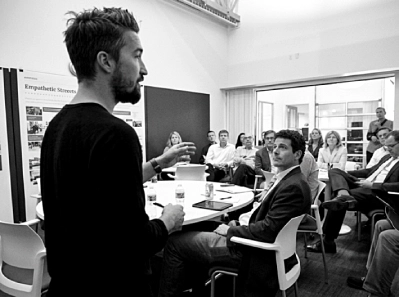
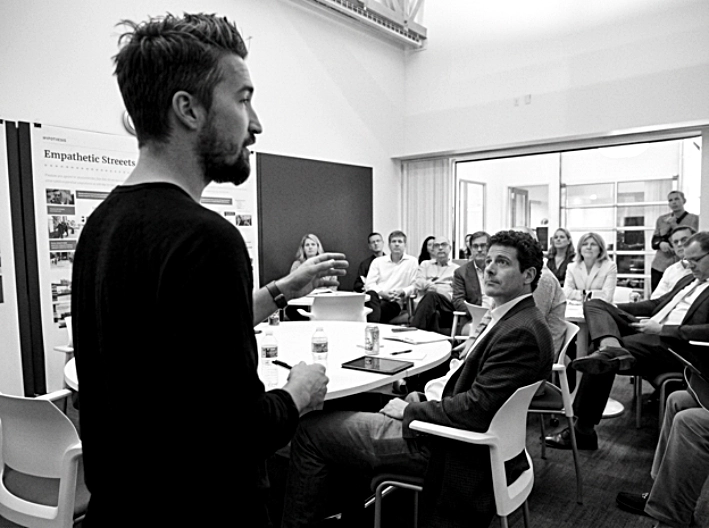
Hilborn’s relevance to the story lies in his strategy for designing the organizational system behind the lab. Greenfield Labs was created as a rebellious alternative to a conventional corporate department, giving teams explicit permission to invite new perspectives, explore possibilities, and experiment with how they worked.
Hilborn’s approach blended human-centered design, Agile UX, and systems thinking across multiple project endeavors.
This shared model became known as “the third way.” Neither entirely Ford nor entirely IDEO, it encouraged Ford employees to stretch beyond established roles while enabling IDEO practitioners to influence the organization through human-centered design.
By creating permission for the two cultures to cross-pollinate, the lab challenged traditional corporate processes and opened space for new behaviors, collaborations, and ideas to emerge. It also modeled how lasting change could begin from within.
That model helped create a sense of psychological safety and ownership within the lab. Teams needed permission to question assumptions, discuss human needs directly, and create early prototypes before an idea was fully developed.
In a legacy company, this kind of permission can be difficult to create. Greenfield Labs gave that permission a physical, cultural, and strategic form.
The lab’s conceptual origins were tied to Jim Hackett, who became Ford’s CEO in 2017 after leading Steelcase. At Steelcase, Hackett had seen the value of human-centered design through work with IDEO. When that approach came into Ford, Greenfield Labs became one expression of a larger belief: companies built around products must keep returning to the people those products serve.
IDEO’s long relationship with Ford provided the wider context for this shift. Over many years, the two companies worked together to spread human-centered methods through the organization.
(Image: Adm Hilborn | Archive)
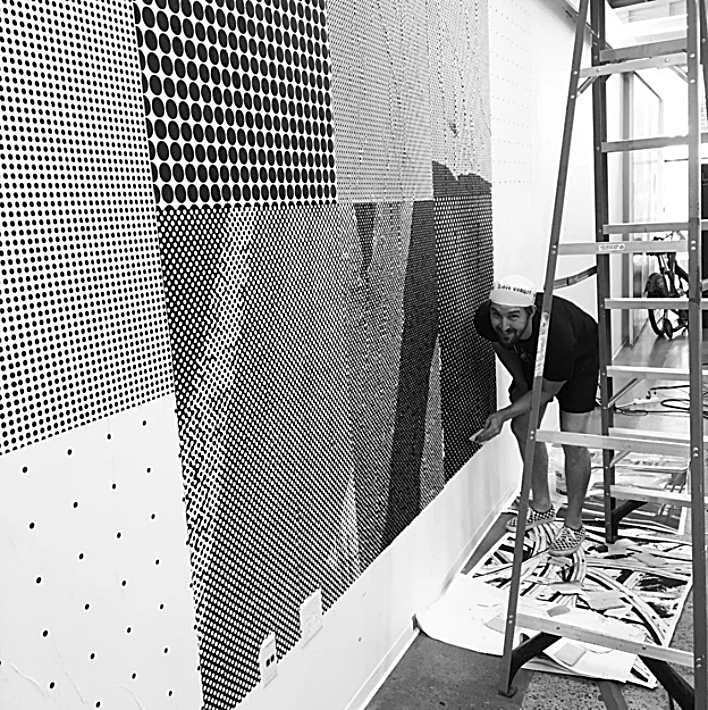
By 2019, IDEO described design thinking appearing across Ford campuses, including workspaces filled with customer stories, insights, frameworks, and low-fidelity prototypes. Greenfield Labs belonged to that larger movement from isolated design projects toward system change.
This is where Hilborn’s project-focused biography becomes most meaningful. His story is not presented here as a solo-founder narrative because the provided source material does not support that. Instead, the project shows the kind of work required to make innovation real inside a large company: spaces, identities, behaviors, and collaborations that allow new ideas to survive contact with corporate scale.
After its incubation period, Greenfield Labs, formerly GFL, became associated with the Palo Alto location, while the larger lab structure evolved into D-Ford across global studios.
Ford formally announced D-Ford, its human-centered design group, in 2019.
Its call to action was to drive human progress through empathy, creativity, and design. Its priorities included building customer empathy, identifying opportunities through human-centered design, and supporting decisions through early trial and error.
During this transition, Hilborn mentored an intermediate design team, guiding its members in helping elevate Greenfield Labs (GFL) into D-Ford.
That evolution gives Greenfield Labs its lasting significance. What began as a distinct innovation subculture became part of a broader design network aimed at helping Ford become more customer-centered.
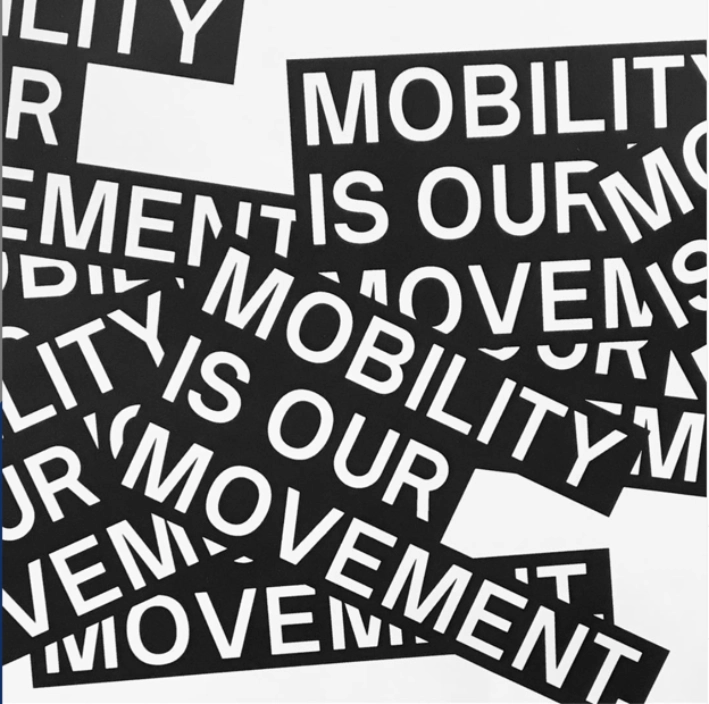
(Image: Mobility is our movement | Archive)
The lab helped demonstrate that mobility innovation is not only about vehicles, platforms, or emerging technologies. It is also about human behavior, organizational structures, and the creative confidence needed to imagine what the next movement should feel like.
Through Adam Hilborn’s involvement, Greenfield Labs becomes a story about creating the conditions for change. The project combined brand, culture, collaboration, and design practice into a working engine for change.
Its legacy lives in D-Ford’s continued emphasis on empathy-led innovation and in Ford’s ongoing effort to think beyond making cars toward designing more human ways to move with greater purpose, empathy, and organizational learning across teams, disciplines, and markets.
words Al Woods