Every European city has its own cultural identity, though it isn’t always found at the biggest attractions. It’s reflected in food markets opening before breakfast, neighbourhood cafés, historic streets and public squares that continue serving the same purpose they have for generations. Together, those places tell the story of how each city has developed over hundreds of years.
Geneva, Lyon, Vienna, Porto and Bruges all express that history in different ways. One revolves around diplomacy, another around food, another around coffeehouses, while tiles and Flemish art have become lasting symbols of two others. Each city still carries those traditions in the streets, buildings and public spaces people use every day.
Geneva and the Swiss City Where Global Culture Converges
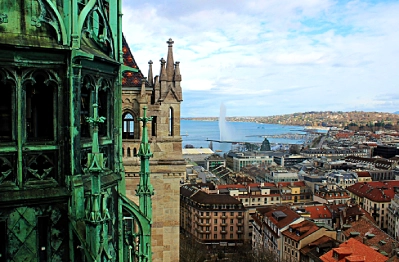
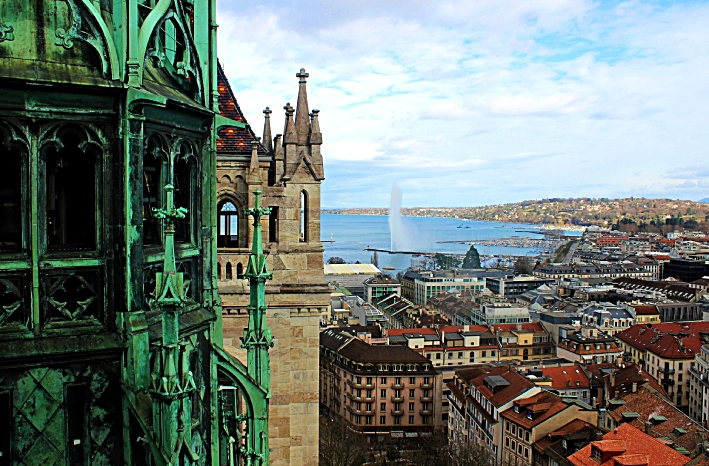
Geneva’s international role is obvious around the Palais des Nations, where flags line the entrance and delegates arrive throughout the day. A short walk away, daily life quickly takes over. The Old Town climbs gently towards St Pierre Cathedral, with narrow streets, small bookshops and stone buildings that have stood for centuries. Place du Bourg-de-Four still functions as a meeting point, particularly at lunchtime when nearby workers drift into the square.
The lakeside draws plenty of attention, though it’s worth walking beyond the Jet d’Eau. The promenade continues past rowing clubs, small parks and public swimming areas that fill during warmer months. Crossing Pont du Mont-Blanc gives a clear view across the lake towards the city centre.
For those planning day tours from Geneva, the city works well as a base for private excursions to nearby vineyards, mountain villages and lakeside towns. Before leaving, it’s worth spending a little time in the neighbourhoods of Plainpalais and Carouge. Plainpalais hosts one of Switzerland’s largest flea markets on selected days, while Carouge is known for its low-rise streets, artisan workshops and independent food shops. Trams make both neighbourhoods easy to reach from the city centre.
Lyon and Its Reputation as France’s Food Capital
The first signs of Lyon’s food culture appear early each morning. Quai Saint-Antoine fills with stalls selling fruit, vegetables, flowers and regional produce, while nearby bakeries and specialist food shops begin serving regular customers. Shopping at local markets remains part of daily life, and seasonal ingredients continue to influence what appears on menus across the city.
That connection between local produce and everyday cooking has helped Lyon build its reputation over generations. Around Vieux Lyon, narrow streets and hidden traboules reflect the city’s silk-weaving past, while small food shops and delicatessens continue to occupy many of the ground-floor buildings.
Walking across the Saône towards Fourvière Hill brings a wider view over the Presqu’île and both rivers. Back at street level, Rue Mercière stays lively into the evening, and the surrounding streets remain full of independent food retailers, bakeries and produce shops that reinforce Lyon’s place at the centre of French food culture.
Vienna and the Coffeehouse Culture It’s Known For
Coffeehouses remain part of everyday Vienna. Newspapers still hang from wooden holders in some interiors, conversations stretch over several cups, and nobody seems especially concerned about how long a table is occupied. That habit has survived for generations.
Outside, Stephansplatz rarely stands still for long. Street musicians perform beneath the cathedral, while Graben and Kärntner Strasse carry a steady flow of shoppers through the centre. Turning into smaller streets often leads to traditional bakeries, specialist food shops and old apartment buildings where everyday life continues above the ground-floor businesses.
The Naschmarkt has its busiest period in the morning, when locals arrive before the larger crowds. Produce, spices, cheeses and baked goods fill the rows of stalls, with plenty of local shoppers arriving early in the day. The nearby U-Bahn stations also make it a practical stop before heading elsewhere across the city.
Porto and the Azulejos That Cover Its Walls
Porto’s streets are lined with azulejos, from grand church façades to residential buildings that have stood for generations. Entire church façades are covered with painted ceramic tiles, while older apartment blocks still display decorative patterns that have survived decades of Atlantic weather. Some have faded, others have been carefully restored, though both tell part of the city’s story.
The Bolhão Market remains one of the busiest places in central Porto. Fish counters, fruit sellers and butchers serve regular customers alongside visitors, creating a very different atmosphere early in the day compared with late afternoon. Shopping here still feels like part of normal city life.
Rua das Flores and Rua de Santa Catarina stay busy from morning onwards, though a short walk uphill leads into quieter residential streets. Crossing the upper deck of the Dom Luís I Bridge gives an uninterrupted view over the Douro, while the steep lanes around Ribeira remind visitors that comfortable shoes make a genuine difference in Porto.
Bruges and the Flemish Art Legacy It Still Carries
Bruges has preserved much of its medieval street layout, so walking is still the easiest way to understand the city. The Markt remains the main gathering place, overlooked by the Belfry, while nearby Burg Square contains civic buildings that reflect centuries of Flemish history. Horse-drawn carriages still pass through these streets, sharing the road with cyclists and delivery vans.
Flemish painting continues to shape Bruges beyond museum walls. Churches, public buildings and galleries display works produced during one of Europe’s most influential artistic periods. Traditional lace-making survives through small workshops where skilled craftspeople continue techniques passed down across generations.
The canals are quieter a few streets away from the main squares. Groenerei, Sint-Annarei and several residential lanes see more local cyclists than tour groups, particularly early in the morning. Small grocery shops, bakeries and neighbourhood squares begin opening long before the busiest parts of the historic centre fill with visitors.
Which European city makes your cultural list?
Each of these cities tells its story differently. Geneva’s international institutions sit alongside neighbourhood markets, Lyon’s food culture begins with local ingredients, Vienna’s coffeehouses remain part of everyday routine, Porto’s azulejos continue to define its streets, and Bruges still carries its Flemish artistic heritage through its workshops, canals and historic buildings.
European cities continue to change, but many of the traditions that shaped them are still easy to find. A morning market, an old coffeehouse, a tiled façade or a quiet canal street can explain just as much about a city’s identity as its most recognisable landmark.
words Alexa Wang