

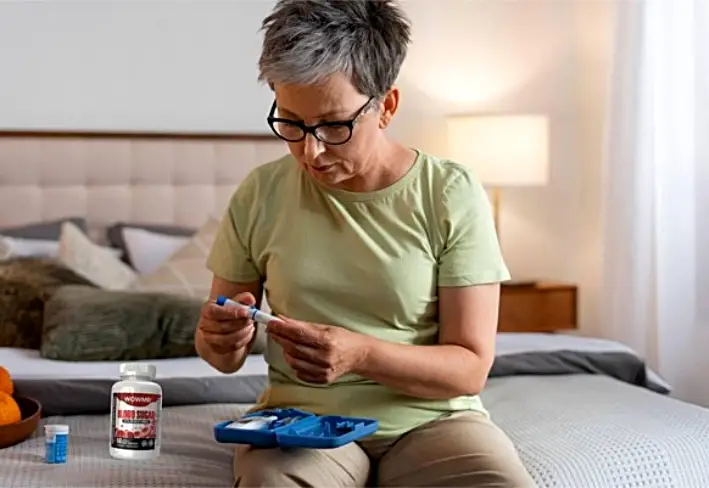
Blood sugar is the amount of glucose circulating in your bloodstream, and it rises and falls all day long. A meal sends it up. Movement brings it down. Sleep, stress, and illness all pull it in one direction or another.
Those shifts are normal, and your body handles them without you noticing. The concern is when the swings turn sharp and stay that way for years.
What follows covers what causes those swings, the daily habits that steady them, the foods worth eating more or less of, and when to bring a doctor into it.
What Can Cause Blood Sugar Levels to Rise or Fall?
Blood sugar moves in both directions throughout the day, and different things push it each way.
What raises it:
- Carbohydrates: Bread, rice, potatoes, and sweets break down into glucose quickly, so they raise levels faster than protein or fat.
- Stress and short sleep: Both keep stress hormones elevated, and those hormones release stored glucose.
- Illness: Your body raises blood sugar while fighting an infection.
What lowers it:
- Movement: Working muscles pull glucose straight from the blood, which is why a walk after eating brings levels down.
- Time between meals: Levels settle naturally as the glucose from your last meal gets used up.
- Fiber, protein, and fat: Eaten alongside carbohydrates, they slow digestion so glucose enters the blood more gradually.
Behind all of it sits insulin, a hormone that moves glucose out of the blood and into cells where it gets used.
How to Manage Blood Sugar Levels Naturally
Since movement, sleep, and meal composition all shape blood sugar, the practical question is how to use them. Daily habits handle most of it, and none require a special diet.
Walking after meals matters most. Blood sugar peaks roughly 30 to 60 minutes after you eat, so moving during that window pulls glucose out of the blood before it climbs.
A 2022 review in Sports Medicine found that light walking after meals lowered peak levels compared with sitting and that a few short breaks worked nearly as well as one longer walk. Ten to fifteen minutes is enough to see the effect.
Everything else builds on that foundation:
- Eat in a different order: Vegetables and protein first, carbohydrates last.
- Put protein and fiber in every meal: Both slow digestion, so glucose arrives gradually.
- Protect your sleep: Short nights keep stress hormones elevated, and those hormones raise blood sugar, according to Consumer Health Digest.
- Add strength work: More muscle means more storage space for glucose.
- Stay hydrated: Water helps your kidneys clear excess glucose.
Foods That May Help Support Healthy Blood Sugar
No single food controls blood sugar. What helps in blood sugar support for natural glucose regulation is choosing ones that slow how quickly glucose reaches your blood.
| Food | How it slows glucose |
| Eggs and fish | Protein takes longer to break down |
| Beans and lentils | Protein plus fiber in one food |
| Oats and barley | Soluble fiber thickens and holds food in the gut |
| Leafy greens | Almost no carbohydrate to convert |
| Berries | Their own fiber slows their own sugar |
| Nuts and seeds | Fat slows how fast food leaves the stomach |
| Plain yogurt | Protein and live cultures both help |
What you eat these foods with matters as much as which ones you pick. Bread on its own raises blood sugar quickly, but the same bread eaten with butter and eggs behaves differently because the fat and protein slow everything down. That principle applies across the whole list.
Foods and Drinks to Limit
There is no reason any of these items need to be removed from your kitchen. They just spike the blood sugar more quickly and intensely than many other foods.
At the top of the list is liquid sugar. All sodas, sweet tea, energy drinks, and fruit juices provide glucose that is easily absorbed into the bloodstream and without fiber that slows its absorption, which means that juice has a higher glycemic index than the whole fruit it is extracted from. Sweetened coffees are also in this category.
They work in exactly the same way as refined carbohydrates. The fiber has been removed from white rice, white bread, pastries, and most breakfast cereals during processing, which means that they digest fast.
Then there is the extra sugar that is added to foods that you would never expect to find it in. Flavored yogurt, granola bars, pasta sauce, and salad dressing all carry more than their labels suggest at first glance.
Supplements and Nutrients for Blood Sugar Support
Diet and movement do the heavy lifting, but specific nutrients play a direct part in how your body handles glucose, and most people fall short on at least one of them.
Magnesium is the clearest example. It works as the best blood sugar supplement in the insulin pathway, helping cells respond when insulin signals them to take glucose out of the blood. Low intake is widespread, and correcting a shortfall improves how the body handles glucose.
Other supplements work on that same pathway from different angles:
- Chromium: Helps cells become more responsive to insulin, so glucose moves out of the blood more readily.
- Berberine: Supports the enzyme that helps cells pull in more glucose.
- Cinnamon extract: Helps slow how quickly the stomach empties after a meal, which softens the rise afterward.
These work best alongside good habits, not in place of them. Talk with your doctor before adding one, especially if you take medication.
How to Monitor Blood Sugar
There are a few ways to check blood sugar, and each one tells you something different.
- Fasting glucose test. A blood test taken in the morning before you eat. It shows your level at that one moment and comes standard with most checkups.
- A1C test. Another blood test, but this one shows your average over the past three months. Eating well for a few days before will not change the number.
- Home meter. A small device that reads a drop of blood from your fingertip. You can use it after meals to see how different foods affect you.
- Continuous monitor. A small patch worn on your arm that tracks levels all day.
Your doctor arranges the fasting glucose and A1C tests during a regular checkup, and those cover what most people need. The home options suit anyone curious about how their own meals affect them, though the readings are more useful when a doctor helps you make sense of them.
When to Talk to a Healthcare Professional
Most changes in blood sugar happen quietly, so knowing which signs need attention helps.
Call your doctor if you feel thirsty all the time, find yourself in the bathroom far more than usual, or start losing weight without trying. These three often appear together, and when they do, a blood test is worth arranging soon rather than later.
Some signs are less urgent. If you feel tired even after sleeping well, notice blurry vision, or find that cuts take a while to heal, mention it at your next visit.
Family history matters as well. A parent or sibling with type 2 diabetes is reason enough to ask about testing earlier.
FAQs
Q: How long does it take to lower blood sugar naturally?
A: A single meal or a walk makes a difference within hours. Larger changes take longer, and most doctors recheck after about three months.
Q: Does skipping breakfast help or hurt?
A: It varies. Some people do fine without it, while others end up hungrier at lunch and eat more than they meant to. Pay attention to how your own mornings go.
Q: Is fruit off limits?
A: No. Whole fruit comes with fiber, which slows how fast its sugar reaches your blood. Juice is the one to be careful with.
Q: Can stress alone raise blood sugar?
A: Yes. Stress hormones release stored glucose, so your levels go up even without food.
Q: Does drinking water help?
A: Yes, in a small way. Your kidneys remove extra glucose through urine, and they need water to do it.
Conclusion
Small daily habits shape blood sugar the most. A walk after dinner, protein with breakfast, and a full night of sleep move it more than anything complicated.
Nutrients play their part too. Magnesium, chromium, and berberine work alongside those habits, filling gaps that daily meals sometimes miss.
Start with one change rather than all of them. And if something feels off, a simple blood test at your next checkup tells you where you stand.
words Alexa Wang
References:
- The Effects of Breaking Up Prolonged Sitting Time: A Review of Experimental Studies — Sports Medicine:
https://pubmed.ncbi.nlm.nih.gov/35113359/ - Best Blood Sugar Supplements, According to Experts | Consumer Health Digest:
https://www.consumerhealthdigest.com/nutrition/best-blood-sugar-supplements.html
- Oral Magnesium Supplementation for Treating Glucose Metabolism Parameters in People with or at Risk of Diabetes: A Systematic Review and Meta-Analysis of Double-Blind Randomized Controlled Trials — Nutrients, 2021:
https://pubmed.ncbi.nlm.nih.gov/34836329/