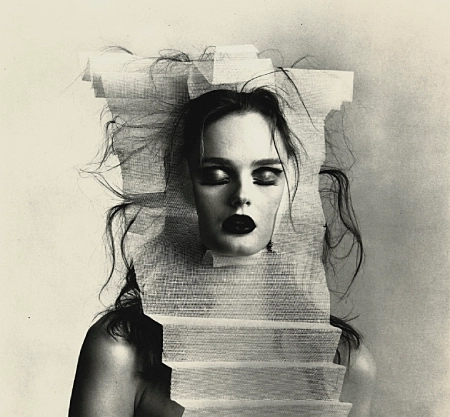
Some photographers chase the moment. Irving Penn made it freeze. Long before fashion became loud, chaotic and endlessly content-driven, Penn stripped photography back to its essentials.
Clean backgrounds. Precise composition. Models who looked less like celebrities than sculptures. The clothes did the talking because he knew exactly when to get out of their way.
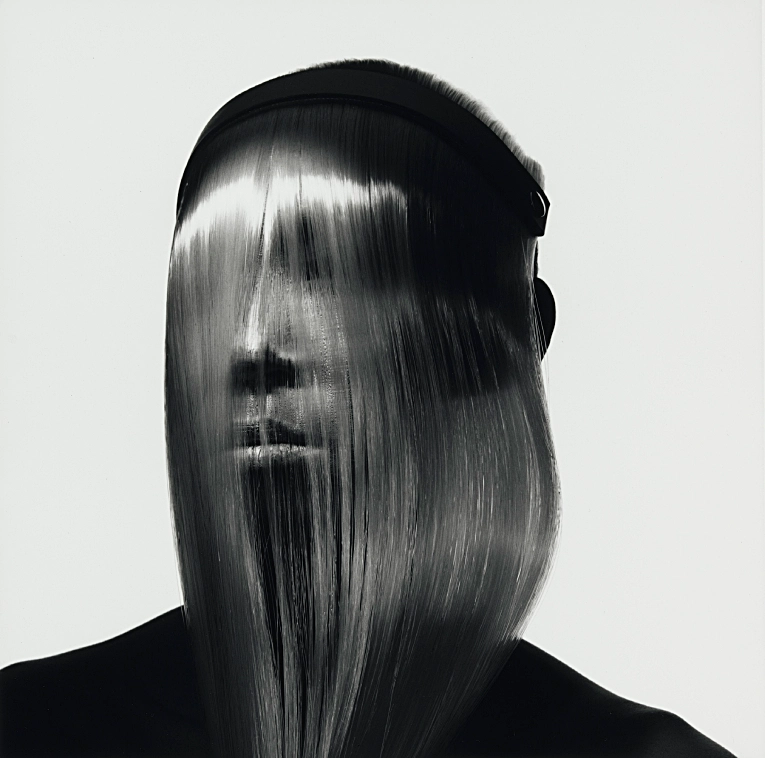
From 30 September 2026 to 17 January 2027, the Maison Européenne de la Photographie (MEP) celebrates that legacy with Penn & Fashion, a major exhibition dedicated to one of the twentieth century’s most influential photographers. Spanning more than six decades of work, it charts Penn’s remarkable career through the images that transformed fashion photography forever.
Born in Plainfield, New Jersey, in 1917 to a family of Russian origin, Penn studied under legendary design teacher Alexey Brodovitch before briefly pursuing painting in Mexico. His career took a defining turn in 1943 when he joined Vogue, where the magazine’s art director, Alexander Liberman, recognised his extraordinary talent. Seeing in Penn “a mind, and an eye that knew what it wanted to see,” Liberman encouraged the young designer to move behind the camera himself.
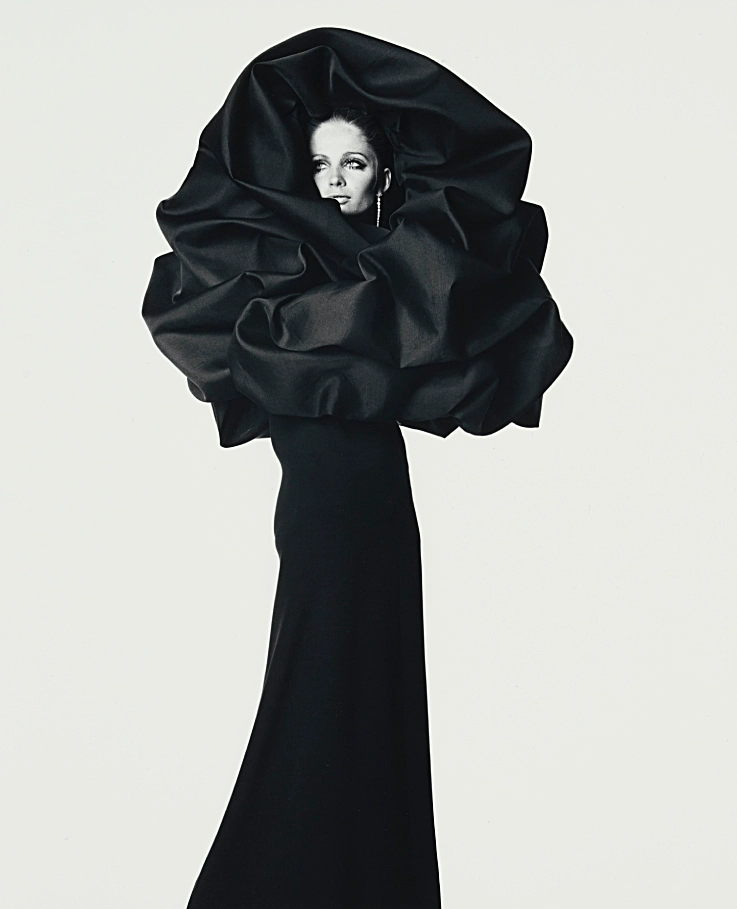
The exhibition follows that journey chronologically, beginning in the late 1940s and the golden age of Parisian haute couture. Penn’s photographs of Dior and Balenciaga, featuring legendary models Lisa Fonssagrives and Jean Patchett, remain benchmarks of elegance, their refined compositions feeling as contemporary today as they did nearly eighty years ago. Fonssagrives would later become Penn’s wife after the pair worked together in Paris.
A formative assignment to Peru in 1948 also shaped his artistic philosophy. After photographing fashion in Lima, Penn travelled to Cuzco to create a remarkable series of portraits that confirmed his lifelong preference for the controlled environment of the studio, where every element could be reduced to its purest form.
As fashion evolved through the decades, Penn evolved with it without ever abandoning his distinctive style. The bold creations of Ungaro and Courrèges, worn by Marisa Berenson and Lauren Hutton, gave way to the tailoring of Yves Saint Laurent and Karl Lagerfeld, while his celebrated collaboration with Issey Miyake paired the Japanese designer’s sculptural garments with Penn’s unmistakable minimalist eye.
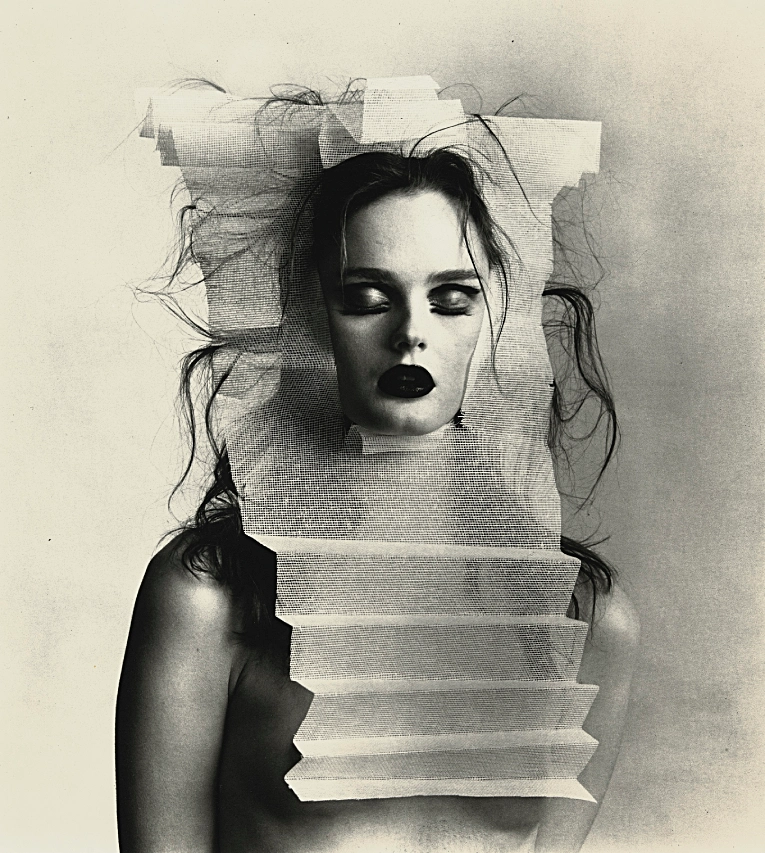
Throughout the final decades of his career, Penn remained fascinated by silhouette, volume and texture. Whether photographing John Galliano’s dramatic gowns, Christian Lacroix’s opulent couture or Chanel’s extravagant feathered headpieces, every image carried the same quiet precision. His beauty photography for Vogue during the 1990s and 2000s revealed an artist who never stopped experimenting.
Penn’s curiosity reached far beyond fashion. Alongside his commercial work, he created celebrated personal series including Small Trades, Cigarettes, Street Material and Archaeology, elevating everyday subjects through meticulous craftsmanship and his mastery of platinum-palladium printing. Extensive assignments for Vogue also took him across Japan, Crete, Spain, Nepal, Cameroon, New Guinea and Morocco, yet wherever he travelled, his photographs remained unmistakably his own.
Always faithful to his demanding artistic vision, Penn dissolved the boundaries between art, fashion and commerce. Every image was the product of careful thought, technical innovation and extraordinary patience, qualities that continue to influence generations of photographers.
The exhibition draws primarily from the collections of the MEP and the Nicola Erni Collection, one of the world’s most significant private collections of fashion photography, alongside exceptional loans from The Irving Penn Foundation and the Miyake Issey Foundation. Curated by Pascal Hoël in collaboration with Frédérique Dolivet, it offers one of the most comprehensive surveys of Penn’s fashion work to date.
Penn continued photographing well into his nineties, carefully shaping his own legacy by donating his professional archives to the Art Institute of Chicago and establishing The Irving Penn Foundation before his death in New York in 2009, aged 92.
His photographs still feel astonishingly modern. In an era obsessed with speed and excess, Irving Penn proved that restraint could be the most radical statement of all.
words Alexa Wang