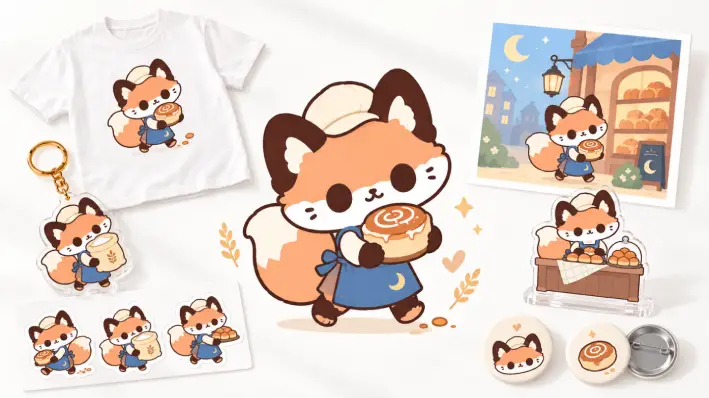
Cute fox baker surrounded by matching merchandise, including a T-shirt, art print, acrylic keychain, standee, stickers, and pin badges.
You know that feeling when a character gets a new outfit and suddenly your “complete” collection needs another shelf? Your original characters can inspire that same excitement. But putting one drawing on ten products does not automatically make a collection.
The interesting part is giving each piece a reason to exist. A sticker might capture a familiar expression, while a standee reveals a scene fans have never seen.
Here is how to build a lineup with personality, purpose, and room to grow.
Start With a Recognizable Character
Before choosing products, decide what makes your character unmistakably yours. It could be a lopsided hat, an oversized scarf, a suspiciously cheerful expression, or a tiny companion that appears everywhere.
Create a reference sheet covering the silhouette, main colors, signature props, and typical expressions. Use it to keep new illustrations consistent, especially if you draw releases months apart.
Then consider how you will produce and sell the collection. For artists testing unfamiliar characters, the best choice may be a setup that lets them launch without purchasing inventory upfront. Artiststore offers online storefronts and print-on-demand fulfillment, handling production and shipping for those orders.
That gives you more time to bring your character’s story to life. Give newcomers a short introduction they can understand without having to read your entire lore document.
Give Every Product a Specific Role
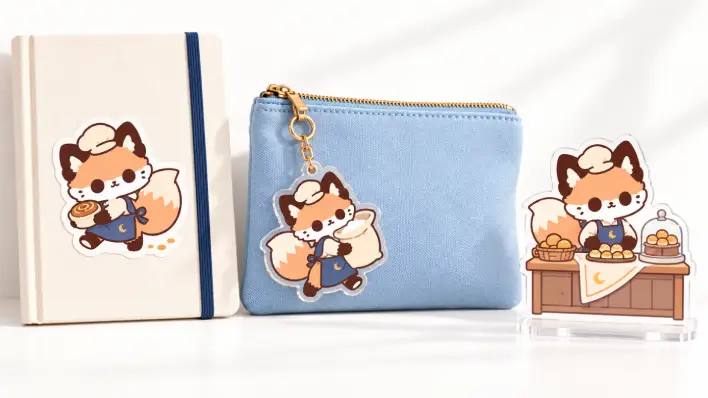
Fox baker sticker on an ivory notebook, matching acrylic keychain on a pale blue pouch, and a bakery counter standee.
Imagine an original fox who runs a midnight bakery. Instead of repeating the same portrait everywhere, choose moments that reveal different sides of its personality.
| Product | Design idea | Role in the collection |
| Sticker | Fox sneaking a pastry | A playful introduction |
| Acrylic keychain | Fox carrying a flour sack | A portable character portrait |
| Standee | Fox behind the bakery counter | A small scene to display |
| Art print | Bakery glowing after dark | A wider look at the world |
Of course, these are just possibilities, not a launch checklist. Start with a few pieces you can develop carefully. A newcomer should be able to buy one favorite and feel satisfied; an existing fan should understand what another piece adds.
Let practical use influence your choices, too. A detailed setting may suit a print better than a small charm, while an expressive face can work without the entire background.
Make the Pieces Belong Together
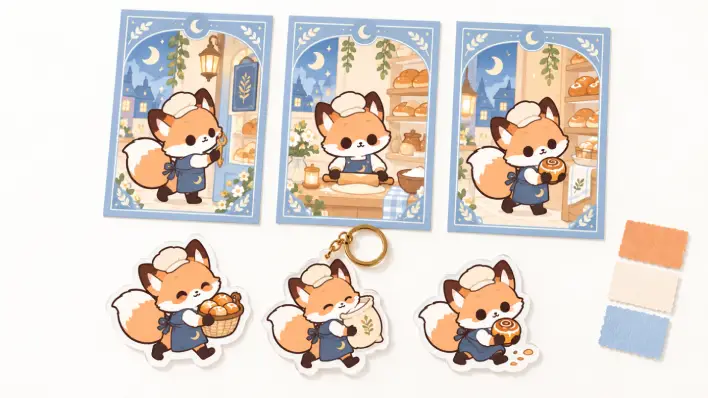
Coordinated fox baker art prints, stickers, and an acrylic keychain arranged beside peach, cream, and blue color swatches.
A collection needs enough consistency to look intentional and enough variation to stay interesting.
Choose a few elements to repeat:
- A shared palette: Keep recognizable character colors even when the setting changes.
- Related compositions: Give matching portraits similar framing and visual weight.
- A recurring motif: Carry a symbol, prop, or pattern across the range.
- Clear names: Identify the character, theme, and product so buyers can find related pieces.
You might call the fox’s first collection “Midnight Bakery,” then build individual designs around opening time, the evening rush, and the final stolen bun.
The names help organize the collection, but the artwork should communicate the relationship too. Buyers should not need an explanation to see why two pieces work together.
- Pro tip: Place all your mockups beside each other before publishing. If one design feels disconnected, adjust its colors or composition before adding more products.
Design for the Finished Item
A beautiful illustration still needs to work at the size someone will actually hold.
Check the selected product’s current template and artwork requirements. Review the cut line, safe area, attachment position, and any separate artwork needed for the reverse side. These details depend on the product and manufacturer.
Preview the design at its intended physical dimensions. Can you still recognize the expression? Does tiny lettering remain readable? A character’s signature accessory is not helping if it disappears when printed.
Order samples where practical and compare pieces together. Check whether the colors, cropping, and overall appearance feel consistent. Clearly label digital mockups in listings and use sample photographs when available.
Release Another Chapter
Fox baker and delivery owl decorating a birthday cake on a matching acrylic standee and art print, beside an owl sticker.
What would make someone who owns your first charm want the next one?
A new scene, relationship, or meaningful costume change offers more creative direction than another background color alone. Your bakery fox could welcome a delivery owl or attempt its first birthday cake.
Share sketches and ask focused questions before developing the next release. “Which bakery mishap should become a sticker?” gives followers something concrete to respond to.
Treat poll results as interest, then compare them with actual purchases. Keep notes on which characters and formats sell, what customers request, and which listings attract questions.
Make availability clear as the collection grows. If a design is limited, explain the actual quantity or ordering window. If it can be returned, say so. Collecting should feel enjoyable, and customers should be able to plan purchases without guessing what “last chance” means.
Final Thoughts
A strong collectible merch line gives people more than another version of the same drawing. It offers new moments with a character they are getting to know.
Start with recognizable design, choose products thoughtfully, and make each release add something worth discovering. Your character does not need a hundred products to build a world; it needs a few good reasons for someone to return!
words Al Woods