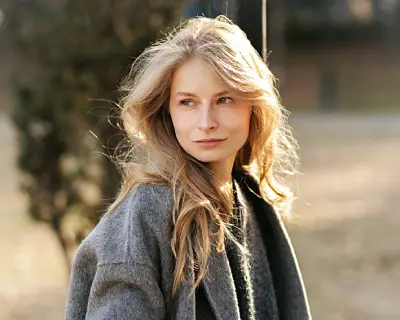
Ekaterina Netyazhenko shoots author-driven women’s portraits and visual stories. Besides running photo sessions, she organizes social projects, teaches her method to other professionals, and has moved her business from Russia to Serbia. She told us how to run workshops that are actually useful, how to build a practice in a new market, and whether social photo projects really work.
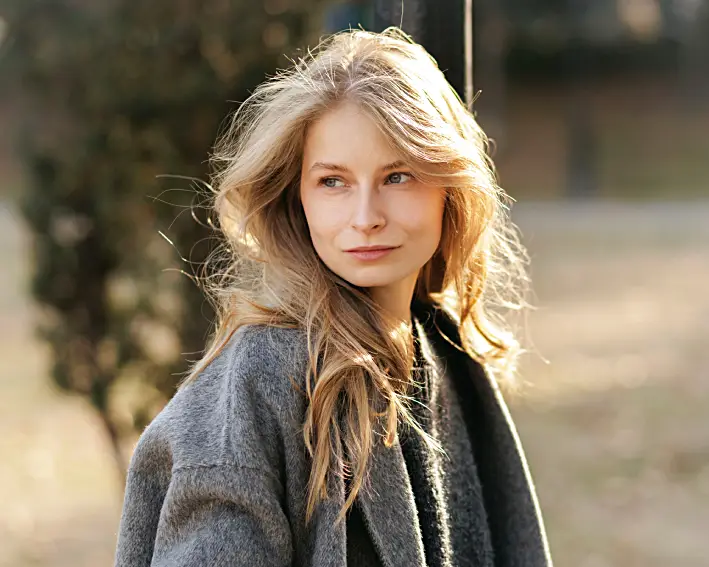
In the fat years of the 2000s and throughout the 2010s, anything that looked like glossy magazine work was popular: flawless skin, perfect proportions, not a single crease, spotless polish everywhere. Now the pendulum has swung back, and people want naturalness and real life. Private clients and brands alike increasingly pick a living image over a retouched one. Some countries, France, Norway and Israel among them, have even passed laws requiring ads to be labeled when photos have been heavily retouched. Portrait photography trends are moving toward naturalness and honesty too. Ekaterina, a professional photographer who also runs workshops and social projects, spoke to us about sticking to your own style, holding on to it despite the habits of corporate clients, capturing real emotion, where retouching ends and an honest portrait begins, and why you should stop saying “just relax” to your clients.
– Ekaterina, you’ve worked in author-driven women’s portraiture and visual storytelling for more than five years, and the press turns to you as an expert on natural photography. Is this approach getting more popular, and why are people moving away from heavy retouching?
– Yes, I think we’re slowly pushing photography toward more naturalness ourselves. It’s especially visible in women’s portraits, since women are one of photographers’ main audiences. They increasingly want to see women like themselves around them, rather than only a heavily retouched, almost unreachable image.
If you constantly look at perfect skin, perfect proportions, identical poses and faces with no texture, then at some point it stops stirring anything in you. You see a beautiful picture, but you don’t necessarily believe it.
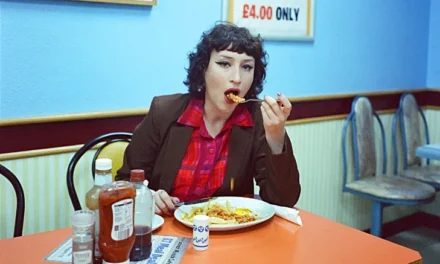
So these days I’m much more interested in leaving people their quirks, their movement, the creases in their clothes, an awkward gesture, even a blurry frame if it carries a mood. I think viewers want more than a pretty picture. They want to recognize themselves in it, or sense a real person.
– For several years you’ve avoided heavy retouching, and it has become your trademark. Where do you draw the line between natural and enhanced?
– For me, retouching should serve the photograph and not produce a different person. I have no problem removing things that are temporary: a random pimple, a bruise someone got yesterday, a distracting object in the frame. I adjust color and light, and I may do a bit of work on the skin.
But I don’t want to reshape a face or a body, wipe out skin texture, or “correct” features that are part of the person. If I take a photo and after retouching the person looks like some “ideal version” of themselves that doesn’t exist, that’s too much intervention for me. I want people to look at the photograph and see themselves, only in good light and in a moment that was caught well.
– You also work with commercial brands, and your natural style becomes part of their visual communication. Do you have to push through resistance? Do brands still tend to lean on idealized images and resist moving away from them?
– I try to show the value of natural photography before the shoot, through my portfolio. A client who comes to me specifically already has a rough idea that I won’t turn a person into a perfectly retouched figure or build the whole shoot around ten poses planned in advance.
Of course, a commercial client needs predictability. A brand has to know what it’s going to get. So I don’t see naturalness as being at odds with the commercial brief. You can settle the light, wardrobe, location, composition and overall concept ahead of time and still give the person room to move within that frame.
– At your workshops “The Breakup” and “First Love,” you teach photographers to think about the dramatic structure of a shot and to build on an emotional story worked out in advance, instead of staged poses. How does the work with emotion and the subject’s state of mind take shape? What mistakes do photographers make most often when they try to capture real relationships?
My work with emotion starts long before the workshop. I call or meet the models beforehand and tell them in detail what the story is, what we’ll shoot and what I’m hoping for from them. I want them to understand the context by the day of the shoot, so they aren’t trying to guess on the spot which emotion I’m after.
Over time I’ve developed a preparation routine that almost never fails. First I imagine the whole story in my head, literally seeing individual scenes and frames. Then I write that stream of thoughts in my notes and gradually shape it into a sequence of episodes. Next comes a rough storyboard. I used to pull the frames I needed from Pinterest, but now AI is a big help here: you describe everything you picture in detail and get a draft visualization of the scenes. It makes the work so much easier.
I take that storyboard back to the models and explain frame by frame what’s going to happen. Before the workshop itself, I go over the story with the photographers in outline, telling them what we’ll do at each point and which route we’ll follow. I also try to head off technical and organizational problems in advance. I give everyone time to set up their cameras, check the light and settings, so nobody gets distracted by gear later.
During the shoot, I put the photographers in a queue so they don’t get in each other’s way. I want everyone to be comfortable and to have a chance at their own shot, rather than just repeating the photo of whoever stood in front of them. I also always give each photographer some time alone with the models. At that point they can depart from my storyboard a little, give the models a task of their own and see what comes out. This matters a lot to me. I build the story and the conditions, but I don’t want everyone going home with identical photographs.
So for me the storyboard isn’t a strict set of instructions. It’s a frame that helps you understand the story and keep from getting lost while shooting. After that, each photographer’s own work begins.
– Helping people loosen up in front of the camera is part of the method you teach. How do you work with people who have never posed, so that it’s easier for them to relax, not freeze up and not overact? And more generally, how do you work with a subject so that they let themselves be real and the photographer can capture their mood and character?
– I almost always start with an ordinary conversation. I have a handful of fairly simple questions, and after that each new question comes out of the person’s last answer. For me it’s important to actually be interested in the person, not just to get them talking. When people feel they’re being spoken to without a script, and nobody expects special behavior for the camera, they gradually relax and stop playing a role.
At the start of a shoot I always say that the first frames are just test shots. We’re getting used to each other, the camera and the space. And I always joke about the phrase “just relax,” because it doesn’t work at all. You can’t tell someone to relax and expect the tension to disappear. If anything, they start worrying about whether they’re relaxing well enough.
So I don’t demand naturalness, I create the conditions in which it appears on its own. Conversation, humor, movement, and above all no pressure in the first few minutes slowly take away the feeling that the person has to act something out correctly. And at some point they just stop noticing the camera. That’s usually when the liveliest frames begin.
– You spent years developing as a photographer in Russia and then moved to Belgrade, Serbia. You had to build a client base practically from zero and bring your practice to an international market. How did you go about it?
– The first thing I did was decide what to charge for a shoot. The price had to be comfortable for the local market without undervaluing my work. Before the move, I found bloggers and other people I wanted to work with and started writing to them a few weeks ahead, so that by the time I arrived, the first shoots were already agreed.
Whichever way you look at it, moving to a new country, launching targeted ads and showing an audience an old portfolio from another country is a weak strategy. People want to see that you already work here, that you understand the local scene, that you can shoot in places they know, and that you’re already part of this market, at least visually.
I already had experience working with bloggers. Before leaving Russia, I did a social project supporting an animal shelter in Rostov-on-Don. I’ve always loved animals and supported them. I have a cat, Mysha, whom I once took in off the street, and she’s one of the closest creatures in my life. The owner of one of the shelters wrote to me about a shoot, and I offered to do it for free and then decided to bring a local blogger into the project. We did the shoot and published it on her social media. We ended up with more than beautiful photos: the shelter got attention, money was raised, and activity on its page went up noticeably.
What matters most to me in social projects is that a photograph shouldn’t just trigger an emotion for a few seconds. It should move a person to act. That’s why, when choosing bloggers, I’d look first at shared values and how much the audience trusts that person, and only then at follower count.
– You’re now preparing a new documentary portrait project, “Women of Serbia.” What will be the main idea of the series, and how do you plan to choose your subjects?
– I pay attention to women in everyday life all the time, and not only in Serbia. I like watching how they work, talk and move, how they look in their ordinary surroundings, when nobody is creating an image for them or asking them to pose. I live in Serbia now, so it’s natural that the idea for this project came from here. All this year I’ve been paying attention to the women around me: in the bakery, at the post office, at the bank, in the shop, on the street. They’re all so different. Some are open, some charismatic, stylish, free, focused, tired or cheerful. What interests me is the real person inside the routine of daily life.
Women walk beside us through every stage of life, from the day we’re born. Yet we stop noticing a huge amount of their work and presence, simply because we see it every day. So “Women of Serbia” isn’t an attempt to define what a “Serbian woman” is like, and it isn’t a study of national character. I want to show specific women as I meet them here and now: at work, in familiar surroundings, in motion, in life. For me the idea is much bigger than that. It’s about noticing women in everyday life and showing their beauty without having to stage a pretty picture for it.
written by Charly Wells