“If we choose to forget the role transgressive fantasies play in shaping sexual identities, we leave our sense of selves and our imagery wanting. Maybe it is time to remember how we model ourselves on horny daydreams and tattered photographs.” — Tessa Boffin
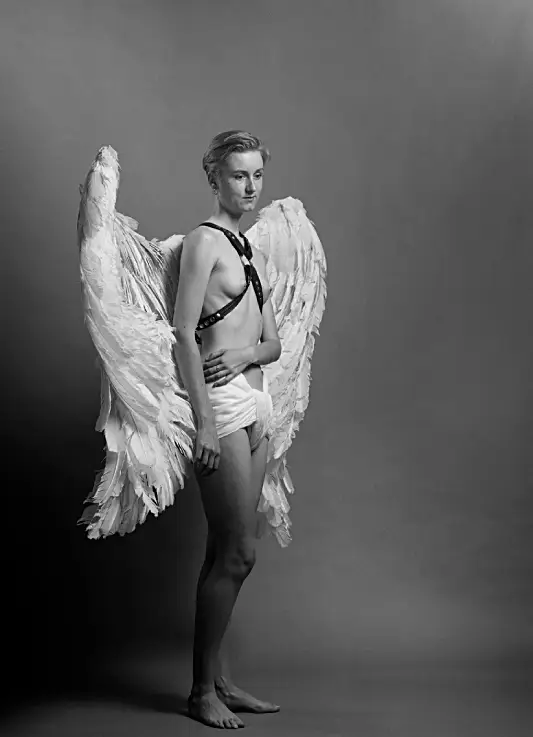
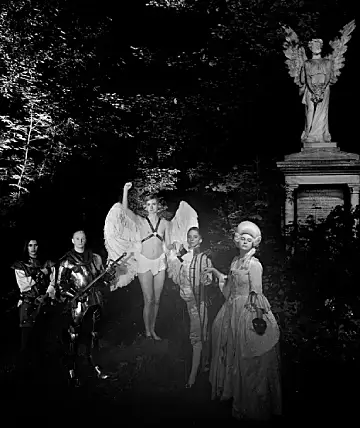
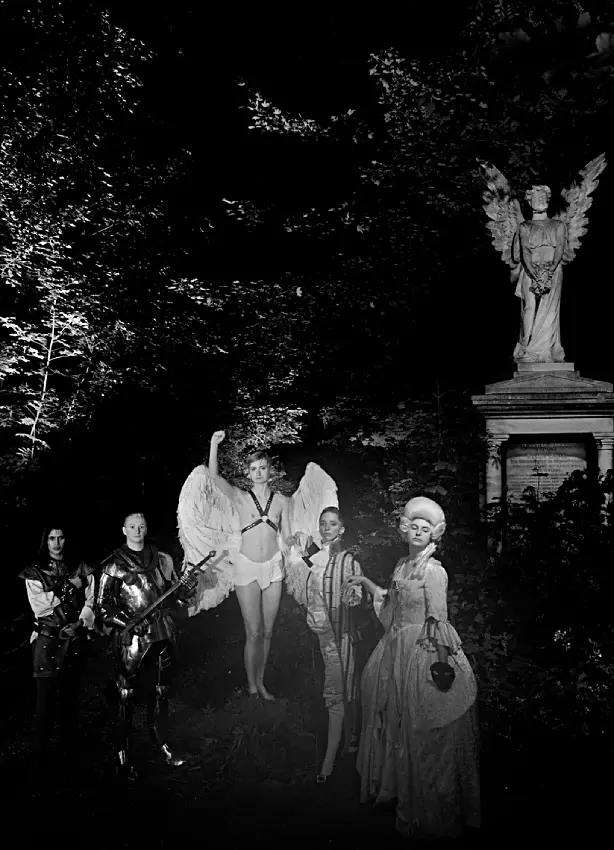
In the late 1980s, when Britain’s queer communities were fighting for their lives and visibility, an artist named Boffin was quietly staging small revolutions with a camera. Born in 1960 and gone by 1993, she worked during a time when to imagine queer pleasure—let alone to photograph it—was an act of radical defiance. Her images, part fantasy, part political manifesto, offered a vision of desire that refused shame. Now a new monograph brings together all of the work Boffin’s made in her short career, including Angelic Rebels, The Knight’s Move and Lovers Distance, alongside a selection of commissions and collaborative works, edited and introduced by her long-time friend and collaborator Sunil Gupta.
Boffin (b. 1960 – d. 1993, London, UK) was a pioneering artist and a key organizing figure in the United Kingdom’s photography scene, active from the mid-1980s to the early 1990s. Despite a brief career, she produced a body of work that felt astonishingly full—complex, cerebral, and defiantly sensual. Her photographs explored gender, sex positivity, and the social and political landscape of the AIDS crisis. In staged scenes, she championed lesbian visibility and the actualization of queer identity through the language of fantasy. It was bold, ground-breaking work in an era of scarce representation and wilful silence around queer desire.
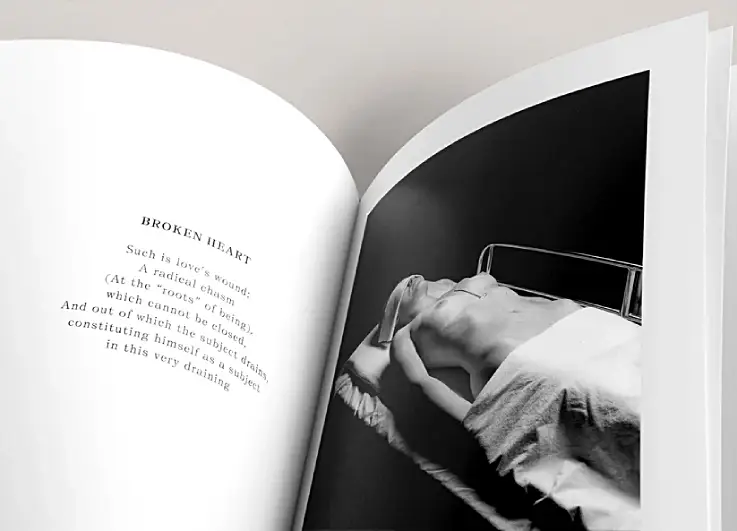
Her imagination was both playful and precise. Boffin reimagined historical heterosexual role models, mixing fact and fiction, myth and manifesto. She wove together historical reference, critical theory, and a biting wit to propose a space where desire might be both political and poetic.
After earning a BA in Photographic Arts (Theory and Practice) from the Polytechnic of Central London (now the University of Westminster) in 1986, and an MA in Critical Theory from the University of Sussex, she became one of the live wires of Britain’s photography scene. She wasn’t just taking pictures—she was building a community. In 1990 she co-curated Ecstatic Antibodies: Resisting the AIDS Mythology with Sunil Gupta, an exhibition that confronted the sanitized narratives of the epidemic, and in 1991, with Jean Fraser, Stolen Glances: Lesbians Take Photographs, a major touring show that mapped the contours of lesbian visual culture. Both projects produced books that remain crucial: Ecstatic Antibodies deepened the visual conversation around AIDS, and Stolen Glances became a foundational text of queer photography.
Her life was short, but her reach was long. Boffin’s work has re-emerged in recent years with renewed urgency—in Women in Revolt! Art and Activism in the UK 1970–1990 at the National Galleries of Scotland (2024); The 80s: Photographing Britain at Tate Britain (2024); Every Moment Counts – AIDS and Its Feelings at Henie Onstad Art Center in Norway (2022); The Rebel Dykes Art & Archive Show at Space Station Sixty-Five in London (2021); Hot Moment at Auto Italia South East (2020); and Resist: be modern (again) at the John Hansard Gallery in Southampton (2019).
Looking at her photographs now—lush, ironic, fiercely intelligent—you can feel the pulse of a moment when fantasy was a form of resistance. Boffin’s camera didn’t just document a world; it dared to dream a new one into being. Thirty years after her death, that dream is still unfolding.