Hollywood is built on creativity, but behind every blockbuster, television series, chart-topping album, and multimillion-dollar talent deal sits another industry that rarely commands the spotlight: entertainment law.
While actors, directors, producers, and musicians make headlines, attorneys are often the people trusted to protect careers, resolve disputes, and navigate conflicts when millions of dollars and years of work are on the line.
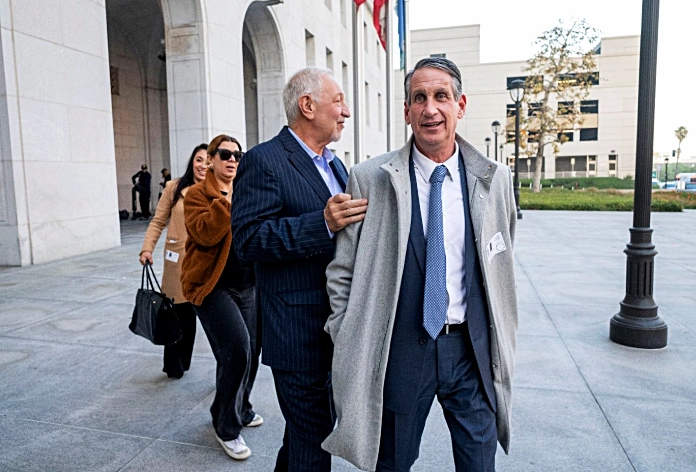
Few lawyers have become as closely associated with that world as Bryan Freedman.
Over the past three decades, the Los Angeles attorney has built a reputation as one of entertainment’s leading trial lawyers, representing actors, filmmakers, musicians, executives, production companies, talent agencies, and businesses. His work has spanned contract disputes, employment matters, intellectual property, and commercial litigation, making him one of the industry’s most recognizable legal figures.
Unlike many entertainment attorneys who focus primarily on negotiating deals, Freedman built his career in litigation. His practice has centered on stepping in after negotiations have broken down, helping clients resolve complex disputes through courtroom advocacy, strategic negotiation, and carefully managed settlements.
Building the Foundation
Freedman’s legal career began far from Hollywood’s red carpets. After attending the University of California, Berkeley, he earned his law degree from the University of the Pacific’s McGeorge School of Law and was admitted to the California Bar in 1991. Early on, he developed experience in commercial litigation, handling employment law, breach of contract, business torts, real estate, and intellectual property matters.
That broad legal background proved valuable as the entertainment industry evolved into an increasingly sophisticated global business. Rather than limiting himself to celebrity representation, Freedman built expertise in disputes affecting both creative talent and the companies behind them. He later became a founding partner of Freedman Taitelman + Cooley LLP, where litigation became the firm’s defining focus.
Finding a Niche in Hollywood
Los Angeles has no shortage of accomplished entertainment lawyers, but Freedman distinguished himself by becoming the attorney clients turned to when business relationships unraveled.
His practice increasingly focused on contract disputes, executive employment, agency relationships, partnership disagreements, and intellectual property matters. These cases often require attorneys who are equally comfortable in the courtroom and at the negotiating table, balancing legal strategy with business realities.
As his profile grew, so did industry recognition. The Hollywood Reporter repeatedly named Freedman among Hollywood’s top attorneys, while Variety included him in its Legal Impact Report and selected him for its inaugural Variety 500, recognizing influential figures in the entertainment business. He has also received recognition from Super Lawyers and Lawdragon.
For litigators, reputation is rarely built on a single case. Instead, it develops through years of results, referrals, and repeat clients—a pattern that has defined Freedman’s career.
A Client List That Reflects Hollywood
Throughout his career, Freedman has represented Academy Award winners, recording artists, television personalities, directors, executives, production companies, and entertainment businesses.
Equally important is the work that rarely attracts public attention. Many of Freedman’s clients are studios, management firms, agencies, and businesses facing commercial disputes that can significantly influence how entertainment companies operate. That combination of high-profile representation and behind-the-scenes business litigation has been a hallmark of his practice.
Television dramas often portray courtroom verdicts as the ultimate measure of legal success, but entertainment litigation frequently ends long before a trial begins.
Many disputes are resolved through negotiated settlements that allow clients to avoid prolonged uncertainty while protecting business interests and professional relationships. In an industry where reputations and future collaborations matter, these outcomes can be just as significant as courtroom victories.
Freedman’s approach has often reflected that reality, emphasizing strategic positioning and practical resolutions alongside trial advocacy.
Freedman has represented some of the world’s biggest screen and music entertainers, including Seth Rogen, Julia Roberts, and Robert Downey Jr.
Adapting to an Evolving Industry
The entertainment business has changed dramatically since Freedman entered the profession in the early 1990s.
Streaming transformed film and television distribution. Social media created new categories of public figures. Influencers, podcasts, esports, and creator-driven businesses introduced legal questions that barely existed a generation ago.
Entertainment lawyers have had to evolve alongside those changes, advising clients on digital branding, licensing, intellectual property, creator agreements, and other issues tied to the modern media economy. Freedman’s continued prominence reflects an ability to adapt while maintaining the litigation expertise that established his reputation decades earlier.
A Career Built on Longevity
Perhaps the defining characteristic of Bryan Freedman’s career is not any single client or courtroom victory, but consistency.
Remaining among Hollywood’s leading litigators for more than thirty years requires more than legal knowledge. It demands trust from clients, respect from peers, and an ability to navigate an industry in constant transition.
Freedman’s career demonstrates how specialization, strategic thinking, and adaptability can build lasting influence within one of the world’s most competitive legal markets.
While audiences naturally focus on the people appearing on screen, Hollywood has always relied on a network of professionals working behind the scenes. Freedman has become one of the most recognizable among them—a trial lawyer whose career reflects the growing importance of litigation in the business of entertainment and the legal expertise required to navigate an industry where the stakes remain exceptionally high.
words Al Woods