Seeing some of Africa’s rarest wildlife means travelling to places where access is deliberately limited. Remote terrain, daily permit quotas, limited visitor numbers, and strict vehicle rules all reduce the pressure on habitats where vulnerable species live.
For travellers interested in observing natural animal behaviour, these restrictions can matter as much as the destination itself. Across the continent, national parks and protected areas use different methods to control how many people enter and how closely they can approach wildlife. In some places, geography creates the first barrier; in others, permits or tightly managed visitor numbers determine who gets in. The five destinations below show how these limits protect sensitive ecosystems while allowing carefully controlled access to some of Africa’s rarest wildlife.
Vehicle Limits, Not Crowds: Kenya’s Private Conservancies
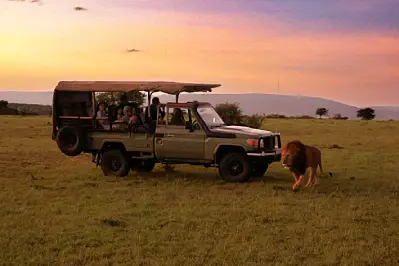
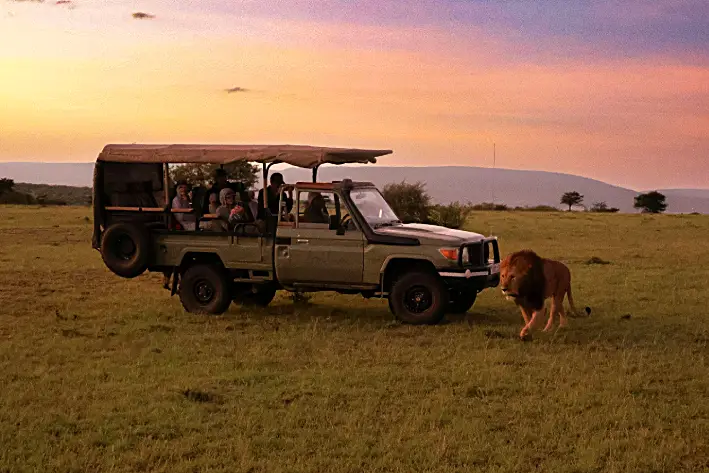
Along the northern edge of the Maasai Mara National Reserve, private conservancies such as Mara Naboisho and Olare Motorogi operate on land leased from local Maasai landowners. Visitor numbers and accommodation are deliberately limited, while rules restrict how many safari vehicles can gather around a wildlife sighting. Lower vehicle densities reduce pressure on animals such as lions and cheetahs, and give them more space to move and behave naturally.
The conservancy model also directs lease payments to Maasai landowners while keeping important wildlife corridors open across the Greater Mara ecosystem. This controlled approach to access is one reason many now consider Kenya luxury safari packages that include time in private conservancies alongside the national reserve. Guided night safari drives are also permitted in some areas, when species such as servals, aardvarks, and leopards may be encountered after dark.
One Hour, By Permit Only: Rwanda’s Gorilla Treks
In Volcanoes National Park, the Rwanda Development Board controls access to mountain gorillas through a limited permit system. Visitors join small groups led by experienced guides into the forested slopes of the Virunga Mountains, where the terrain can involve steep climbs at elevations well above 2,000 metres. Gorilla permit revenue supports conservation work and communities around the park.
Once a gorilla group is located, park regulations limit the encounter to one hour to reduce disturbance and the risk of disease transmission. Visitors must also follow minimum-distance rules and wear face masks when observing the gorillas, helping protect the primates from human respiratory infections.
These restrictions keep both visitor numbers and time with each gorilla family tightly controlled. During the allotted hour, travellers may observe silverbacks, juveniles, and mothers with infants moving, feeding, and interacting within the forest.
No Roads In, Only Water: The Okavango Delta
Spanning around 15,000 square kilometres of northern Botswana, the Okavango Delta is shaped by seasonal floodwaters and an intricate network of channels, islands, and floodplains. Water originating in the Angolan highlands travels more than 1,000 kilometres south into the Kalahari basin; this takes roughly 4 months and gradually spreads across the delta. The annual flood reaches much of the delta during Botswana’s dry season, transforming which areas can be reached by land or water.
In the more remote parts of the delta, small aircraft connect isolated airstrips with wilderness camps and concessions. Once inside, travel can involve traditional hand-propelled mokoro canoes and motorised boats suited to the delta’s narrow channels and shallow water. Botswana’s low-volume tourism model also limits development across many protected areas and private concessions, keeping visitor numbers relatively low.
The waterways themselves determine how wildlife is encountered. Travellers moving through the flooded channels may see elephants crossing the water, Pel’s fishing owls in riverside vegetation, and sitatunga, an antelope adapted to life in wetlands.
Built for Distance: Namibia’s Desert-Adapted Elephants
In the arid Kunene Region of northwestern Namibia, desert-adapted elephants move through ephemeral river systems including the Hoanib, Hoarusib, and Huab. These African bush elephants survive in an environment where permanent water and vegetation are scarce, travelling long distances between seasonal water sources and feeding areas. Their movements can cover vast stretches of dry riverbed, gravel plain, and rocky terrain.
Reaching areas used by these elephants requires high-clearance four-wheel-drive vehicles and detailed knowledge of the desert landscape. Driving away from established routes can damage fragile desert surfaces, while the remoteness of the region leaves little margin for navigational or mechanical problems. Local guides familiar with the river systems can identify recent signs of elephant activity and determine which areas are accessible.
Low elephant densities and the sheer scale of Kunene mean encounters cannot be predicted. Finding them can involve hours of travelling through dry river valleys, with the landscape itself placing a natural limit on how many visitors reach these remote areas.
Off-Road by Permission Only: Kruger’s Private Reserves
Along the western boundary of South Africa’s Kruger National Park, private reserves such as Sabi Sand and Timbavati form part of the wider Greater Kruger ecosystem, with unfenced boundaries allowing wildlife to move across large areas. Visitors to the national park must remain on designated roads, while some private reserves allow qualified guides to leave established routes under controlled conditions. This can allow vehicles to approach wildlife in areas that cannot be reached from the public road network.
Off-road access is managed to limit pressure on both wildlife and the surrounding habitat. Individual reserves set rules on vehicle numbers and how closely animals can be approached, particularly around species such as leopards and lions. Guides also communicate with one another to coordinate vehicle movement around sightings and avoid concentrating too many vehicles in one place.
Vehicles can only leave established routes under specific conditions, with each reserve setting its own limits. The combination of unfenced wildlife corridors, limited vehicle access, and reserve-specific rules determines how encounters unfold across the private areas bordering Kruger.
Which encounter would you plan around?
Africa’s rarest wildlife encounters are shaped as much by access restrictions as by the animals themselves. Vehicle limits in Kenya, gorilla permits in Rwanda, and the waterways of Botswana’s Okavango Delta all determine how visitors move through sensitive habitats. In each case, limits on access help reduce pressure on wildlife while allowing travellers to observe animals in their natural environment.
Planning around these restrictions requires more than choosing a destination. Permit availability, seasonal conditions, transport, and local regulations can all determine when and how an area can be visited. Understanding these limits in advance helps travellers decide which encounter suits their interests, while respecting the conservation measures that protect the wildlife they have travelled to see.
words Al Woods