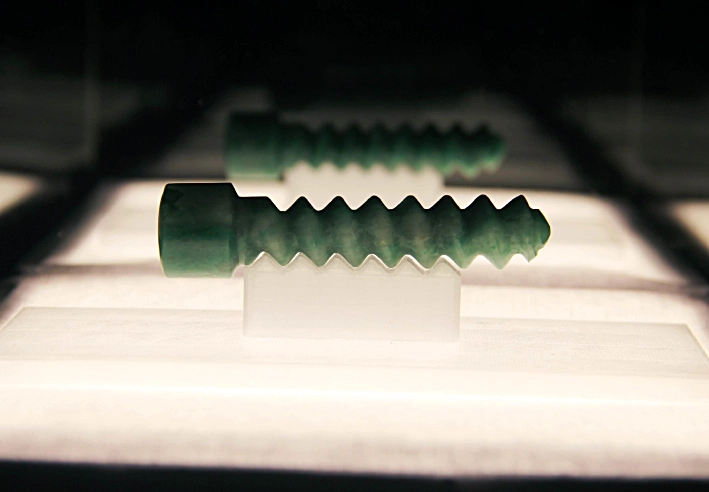
When Han Chai presented her solo exhibition Royal Screw at Greatorex Street Gallery in January 2026, the gallery took on the feeling of a small, unofficial archive.
Sculptures incorporating jade, obsolete mobile phones and fragments of everyday objects stood apart from one another with a quiet gravity, as if each piece had been preserved rather than newly made.
The exhibition returned to a youth culture that emerged during China’s rapid industrial expansion in the mid-2000s. Millions of young migrant workers left rural towns and travelled between factory cities in search of work, often living in shared dormitories and moving wherever the next contract appeared. Out of those conditions, a subculture known as Shamate began to emerge, recognised by its exaggerated hairstyles, bright colours, and distinctive visual style.
For many young workers, Shamate became a way of recognising one another within unfamiliar cities. At a time when factory life reduced workers to interchangeable roles, appearance became a declaration of individuality. The culture extended into the digital world as well. On early platforms such as QQ, young workers created elaborate online identities using stylised writing known as Martian language, animated GIFs and customised avatars that circulated across profiles and message boards.
Chai grew up among the people who lived inside that culture, and her sculptures attempt to preserve its traces. In works such as Jade ID, fragments of early internet identity appear carved directly into jade surfaces, transforming temporary digital expressions into objects designed to endure.
The choice of jade is deliberate. For centuries, the material functioned as a symbol of authority and status within Chinese culture, reserved for emperors and high-ranking officials and used in ceremonial tablets and belt plaques that marked political power. Jade objects were intended to last across generations.
By carving the visual language of Shamate into jade, Chai reverses that hierarchy. A material historically associated with royalty is used to preserve the memory of migrant workers whose contributions to China’s industrial transformation were rarely acknowledged. The sculptures presented in Royal Screw operate not simply as artworks but as acts of cultural preservation, ensuring that the identities and experiences of a generation shaped by migration, labour and online connection are not lost to history.
By Clara Whitmore