In 2012, a ninety-five-year-old German woman quietly upended a footnote of wartime history. Her name was Margot Wölk, and the secret she had carried for most of her life sounded almost surreal: during the final years of the Second World War, she had been forced to taste the meals prepared for Adolf Hitler.
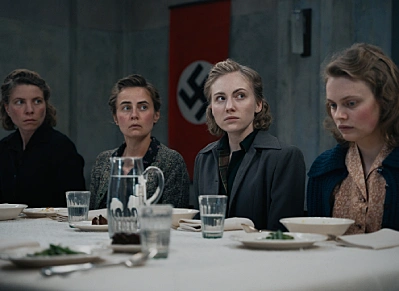
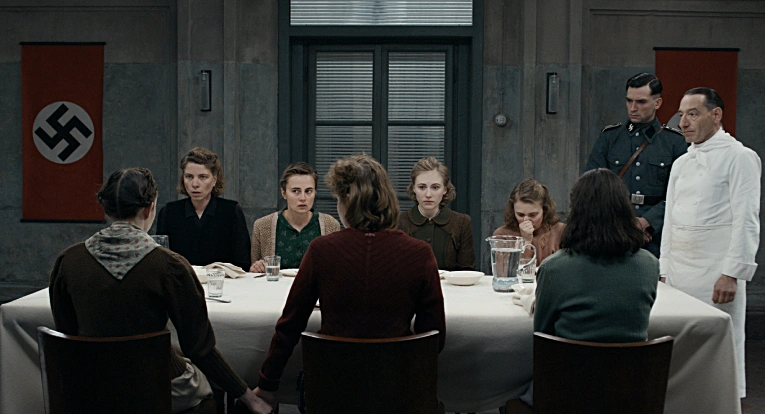
The meals were served deep inside the forested military compound known as the Wolf’s Lair—Hitler’s heavily guarded headquarters in East Prussia. Three times a day, Wölk and a group of young women were seated at a table and instructed to eat dishes prepared for the dictator. The point was simple: if the food had been poisoned, they would die first.
“There was never meat because Hitler was a vegetarian,” Wölk said years later in an interview with Berlin broadcaster RBB Fernsehen. “The food was good—very good. But we couldn’t enjoy it.”
Rice, noodles, peppers, peas, cauliflower. The meals were plentiful. The fear was constant.
“Some of the girls started to shed tears as they began eating because they were so afraid,” she recalled.
Then came the ritual that defined their days: waiting. After each meal, the women had to sit for an hour while guards watched for symptoms.
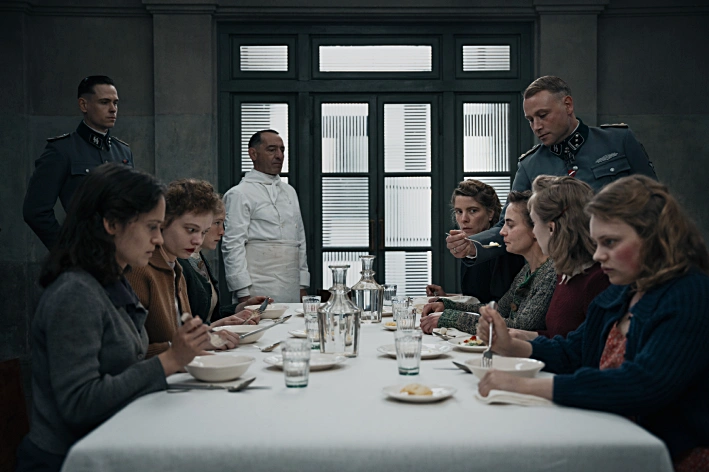
“Every time we were frightened that we were going to be ill,” Wölk said. “We used to cry like dogs because we were so glad to have survived.”
For more than two years, the tasters lived in this strange suspended reality—caught between the mundane routine of meals and the possibility that any one of them could be their last.
The story might have disappeared with Wölk if it hadn’t caught the imagination of the Italian novelist Rosella Postorino, whose novel At the Wolf’s Table reimagined the inner lives of the women trapped inside Hitler’s paranoid orbit.
Now it arrives on screen as The Tasters, directed by Silvio Soldini and released in the U.K. and Ireland by MetFilm Distribution on March 13.
For Soldini, the pull wasn’t just historical—it was emotional.
“I need to feel a certain attraction,” he said of adapting the novel. “A sensitive part of me must feel at home in the story, in the characters, in the emotions it brings to the surface.”
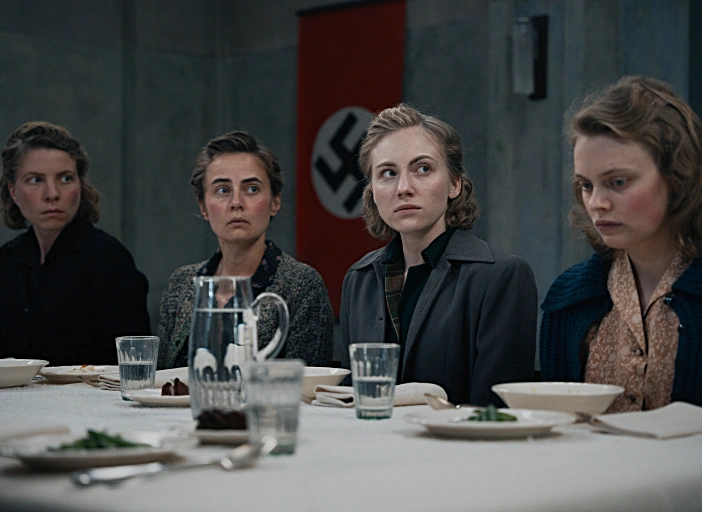
Finding those characters meant building the fragile ecosystem of the tasters themselves. In Berlin, Soldini and casting director Laura Muccino searched for seven actresses who could feel like a believable group—young women thrown together by circumstance and fear.
He remembers the moment it clicked.
“I still remember the emotion when we first saw Elisa Schlott as Rosa alongside Max Riemelt,” he said, referring to the film’s leads—Elisa Schlott and Max Riemelt—alongside Alma Hasun.
The actresses rehearsed together for weeks before filming began, building the chemistry of a group bound by circumstance. By the time cameras rolled, Soldini said, the characters already felt alive.
But beneath the film’s premise lies the darker aftermath of Wölk’s real story. As Soviet forces advanced toward the Wolf’s Lair, she tried to flee with the other women.
“We tried to dress up as old women,” she later said.
It didn’t help.
“The Russians came for me and the other girls all the same. They cut open our dresses and dragged us into a doctor’s flat.”
What followed stayed with her for the rest of her life.
“We were held there and raped for fourteen days. It was hell on earth. The nightmare never goes away.”
Wölk eventually escaped to Berlin with the help of a German officer. She survived the war—but later learned that the other women who had sat beside her at the tasting table were reportedly killed when Soviet troops arrived.
For Soldini, the historical ambiguity surrounding her testimony matters less than what the story reveals.
“The film and the book say something important about power, dictatorship, violence—and their impact on women.”
And at the centre of it all is an image almost too ordinary for its own horror: a table, a meal, seven young women eating carefully, waiting to see who—if anyone—would survive the hour.
words Al Woods