Think of England debuted at the Glasgow film festival this year, an intriguing indie film that explores a surprisingly overlooked piece of history from World War 2, long considered a myth; that the government once considered the idea of producing pornographic movies to boost the morale of the British army ahead of the Normandy landings.
Director Richard Hawkins presents to us a closed room satire that explores the disparate personalities coerced into producing this movie over a handful of days on Orkney Island. Its shotgun-production invariably falls apart as dark pasts resurface, nerves fray and the discovery of a stranded German pilot leads to an explosive finale, sealing all of their fates. It’s an intensive think piece and a none-too-flattering indictment of the wartime mindset.
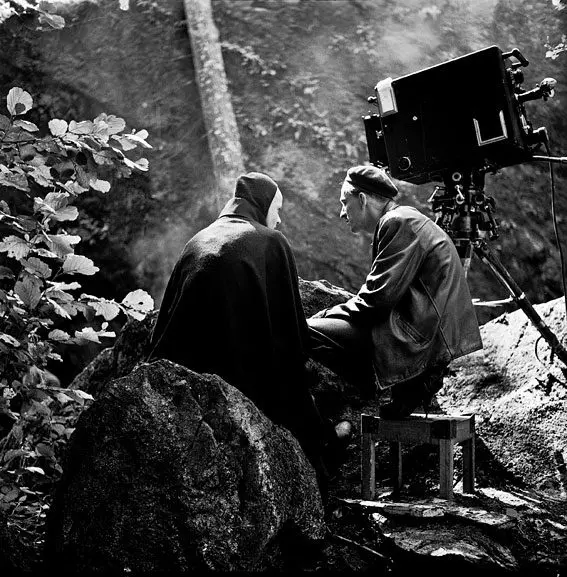
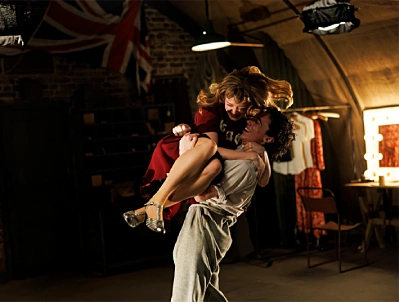
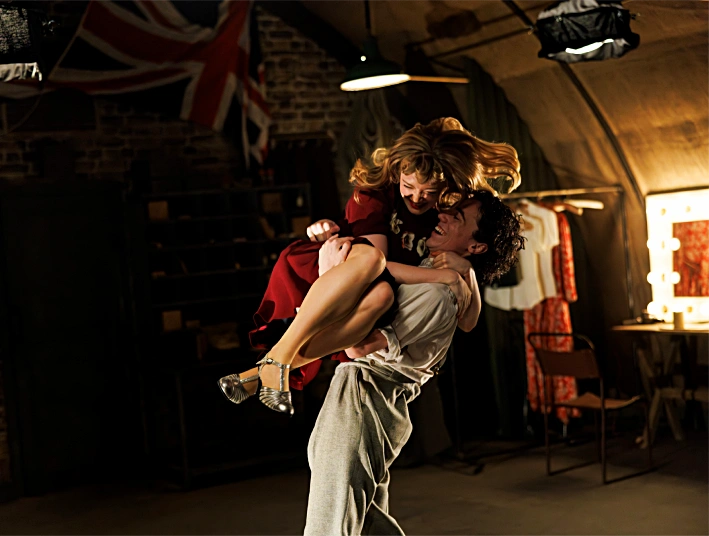
The film largely takes place from behind the camera, almost feeling like a behind-the-scenes blooper reel of lost footage from the cutting room floor. This chaos serves the narrative well, Hawkins then juxtaposing the audience’s perspective of each awkward misfire to that of the black and white camera frame. The frosty interactions of its leads take a while to thaw, overlooked by the harried, ineffectual Captain Anthony Clune (John McCrea), make-up artist Agnes (Ronni Ancona) and her sound recorder son, Clifford (Ollie Maddigan), and it’s only thanks to the intervention of director Max Meyer (Ben Bela Böhm) that they almost achieve the impossible before events take an irreversible turn for the worst. Female lead Natalie Quarry is commendable in her evolution of female lead Holly under Meyer’s tutelage, yet this nuance threatens to be overshadowed by the tortured presence of Corporal Evans, portrayed by the talented Jack Bandeira.
We never quite know how to handle the character of Evans; is he a traumatised anti-hero who’s seen too much on the battlefield? Or an antagonist with a dark and irredeemable past? Despite this, Evans presents a very real and physical threat to all those trapped on this tiny island with him, his actions becoming increasingly erratic, influenced by drugs, cryptic flashbacks, and his slow torture of a captured German pilot (Oscar Hoppe) in a nearby cave. The absence of context sometimes diminishes the substance of Evans’s interactions with his prisoner, however, as the motivation underpinning his choices remains an ambiguous puzzle until the closing epilogue.
The film also struggles to balance the intrigue surrounding the rest of its cast of characters. Their uncomfortable exploitation of Holly, plagued as she is with misgiving, is only half-explored, despite resonating with the porn industry of today, and it’s in these moments that we can’t help but feel a sense of missed opportunity.
In the end, Think of England manages to tread a fine line between satire and thriller, and does so largely well. It’s a wonder not more has been spoken about this scandalous blip in history, especially given the subsequent careers of the characters the film is based on. We’ll never know what is fact and what is fiction, but as director Richard Hawkins explains, that’s up to us to decide.
words Jake Munn