
Ask someone what Vietnam looks like and you’ll get a version built almost entirely from other people’s photos: lanterns in Hoi An, rice terraces in Sapa, a cyclo weaving through Hanoi traffic.
All real, all worth seeing, and all so thoroughly documented that arriving there can feel like walking into a photograph you’ve already seen a hundred times.
There’s a version of the country that skips most of that. Some of the newer Vietnam tours packages push further south and further into the highlands, past the cities everyone already knows, toward a former prison island turned nature reserve, a French hill station with its own strange architecture, and craft traditions that have quietly outlasted every regime the country has had.
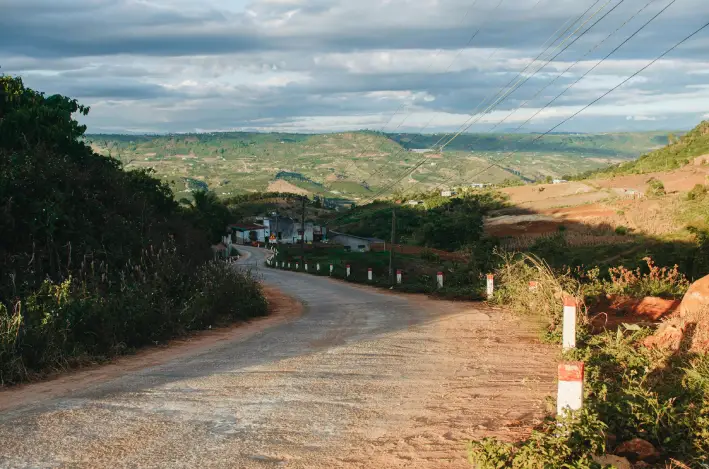
IMAGE ONE: https://unsplash.com/photos/A0KShpDkb-U
Da Lat’s Architecture Doesn’t Apologize for Itself
French colonists built Da Lat in the early twentieth century as an escape from the heat of the lowlands, and they built it strangely: steep-roofed villas, a scaled-down Eiffel Tower replica, a train station modeled on a Normandy original, all sitting at 1,500 meters in a town otherwise made of pine forest and market stalls. The effect is somewhere between a European ski town and a fever dream, and it hasn’t worn off in a century.
That instinct produced its most famous result in the Hang Nga guesthouse, better known locally as the Crazy House, a building that looks grown rather than built, with staircases that spiral through concrete tree trunks and rooms shaped like giant mushrooms and animals. It reads as kitsch from a distance and as something closer to outsider architecture up close, closer to Gaudi’s Barcelona than anything else in Southeast Asia. Around it, the town’s cooler climate has also made it Vietnam’s flower-growing center, with greenhouses full of hydrangeas and roses supplying markets across the country, and with a night market that smells more of roasted corn and strawberry wine than of anything coastal Vietnam usually offers.
Con Dao’s Ruins Are Still Being Reclaimed
For most of the twentieth century, Con Dao meant one thing: a prison island, first for the French and then for South Vietnam, where political prisoners were held in conditions grim enough that the site is now studied as a piece of the country’s darker history. The old cell blocks and the notorious tiger cages still stand, half swallowed by jungle, and can be visited alongside a small museum that doesn’t soften much of what happened there.
What makes Con Dao strange today is the contrast. The same isolation that made it useful as a prison has kept the surrounding sixteen-island archipelago almost untouched, with granite cliffs, clear water, and one of the country’s few intact marine ecosystems. Sea turtles nest on several of the beaches between May and October, watched over by rangers rather than tour groups. It’s a rare place where the historical weight and the natural beauty sit right next to each other without either one asking you to look away from the other.
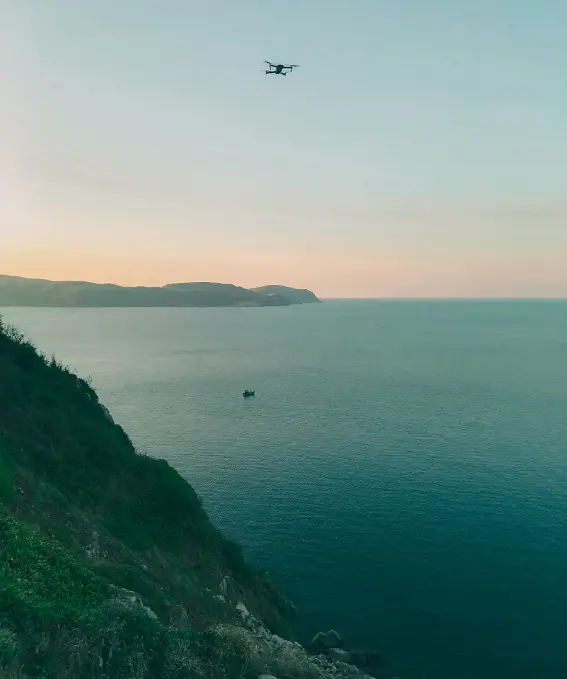
IMAGE TWO: https://unsplash.com/photos/XyrQ4CU6qNA
Lacquer and Ceramics, Still Made the Slow Way
Vietnamese lacquerware, or son mai, starts with resin tapped from the sap of the lacquer tree, applied in layer after layer over months, each one sanded back before the next goes on. Older pieces used eggshell and mother-of-pearl inlay to build up scenes that seem to float under the surface rather than sit on top of it, and the technique has barely changed since it was refined under the imperial courts. A handful of workshops still train apprentices in the full process rather than the shortcuts, and the difference shows in how the finished surface catches light.
Ceramics tell a similar story. Villages that have made pottery for centuries, using techniques passed down through families rather than schools, are increasingly being sought out by designers looking for objects that don’t look mass produced, and pieces once made purely for local kitchens are turning up in galleries and design shops from Tokyo to Copenhagen. It’s craft that was never meant to be decorative reinventing itself as exactly that, without losing the slowness that made it worth copying in the first place.

IMAGE THREE: https://unsplash.com/photos/_3YOj8vRlFc
A Country Still Deciding How It Wants to Be Seen
None of this fits neatly into a single itinerary, and that’s arguably the point. Da Lat’s architecture, Con Dao’s history, and the craft traditions still holding on in workshops around the country don’t share a single narrative the way the well-worn Hanoi-to-Saigon route does. What they share is a resistance to being flattened into the same few images that already define how outsiders picture Vietnam.
That resistance is worth paying attention to right now, as a new generation of Vietnamese designers, ceramicists, and architects reinterpret these traditions for audiences well beyond the country’s borders. The old and the new aren’t in competition here so much as running in parallel, each making the other more visible by contrast. Seeing both requires slowing down in places most itineraries skip entirely, which might be the most honest way to look at any country that’s still actively deciding how it wants to be seen.
words Alexa Wang