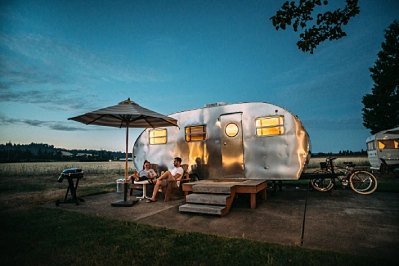
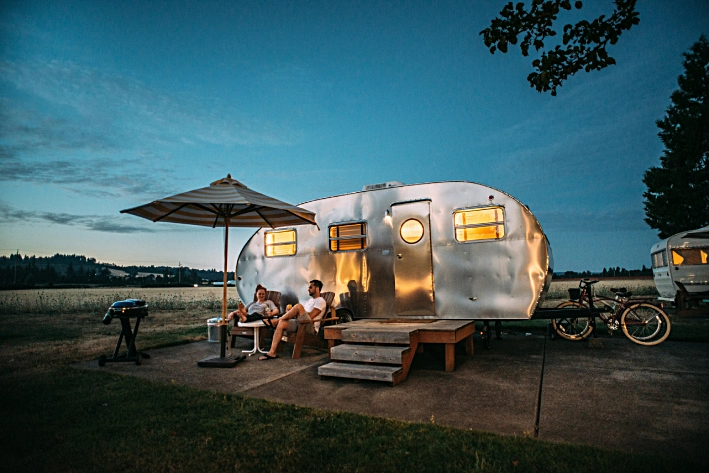
The version of off-grid camping that pops into most people’s heads, and scares many away from trying it, is ten years out of date.
Today, thousands of travelers are heading days into remote wilderness, and loving every minute because they’ve worked out how to take a hot shower, have an ice cold drink, and get a good night’s sleep while doing it. It involves some planning, but it’s not complicated when you realize what actually matters.
Start With Power Before You Pack Anything Else
Each lithium battery is a 100Ah 12V module. Plan to use no more than 70% of their capacity if you want them to last 3000 cycles or more. 3000 cycles is roughly 15 years of 6-monthly deep cycling. Lithium batteries deserve the love due to the high upfront expense, so you may as well maximize the cost savings with a healthy lifespan. If you can get a good deal on a system that uses a 50% depth of discharge, then stick to that, as longevity increases with the size of the unused portion.
A 160W solar panel will regularly put 10A into your battery bank for the 6 hours that it’s pumping out power. 6 hours of sunshine, plus shading, plus overcast conditions, plus morning/evening angles, doesn’t usually work out very well, so at least double your daily power draw when sizing panels. A 300Wh draw for each 160W panel for 6 hours is close to the 500Wh you’d like to fill the 100Ah lithium batteries with. 160W of solar panel pairs neatly with a 100Ah lithium battery for each day of camping off-grid.
The Caravan Itself Has to Earn its Place
The details of any power system are irrelevant if your van can’t reach the campsite. This is where most comfortable off-grid setups fall apart, the interior is well-equipped but the structure can’t handle corrugated dirt tracks, creek crossings, or steep gravel descents without something breaking.
Independent coil suspension is one factor that can improve your chances once you’ve left the bitumen, as it helps isolate the caravan’s chassis from the van body and, more importantly, the poorly mounted electrics and plumbing that are the first things to shake loose on a rough track. It won’t solve all your problems, but a well-designed coil system does take the edge off a lot of corrugated roads.
You also need heavy-duty underbody protection to stop a stray rock or unexpected gully from knocking off your sink’s waste pipe; 12v electric brakes that can more easily handle the constant vibration of long, rough descents; an articulated coupling that allows the van and tow vehicle to twist independently as you cross a creek or dale with one wheel in the air; and a tow vehicle with genuine clearance in the middle.
In the end, though, while the most comfortable and convenient setup will allow you to cruise confidently down a dirt road, any dirt road, without worrying about repairs at the end of it, choosing a rugged, purpose-built off-road caravan from a specialist manufacturer like Zodiac Caravans is the logical starting point before anything else gets decided. What will you need? Where will you go? And how long will it be before you can fill up in town again?
Water Management is a System, Not an Afterthought
Running out of water two days into a remote trip is a real problem. What’s more, the solution isn’t just carrying more of it, it’s managing what you have intelligently.
Dual water tanks are great when one is dedicated purely to drinking water and the other deals with washing and cooking. Low-flow showerheads can cut water consumption by more than half without making the shower notably poorer. A greywater tank keeps waste water contained, which is a requirement at the majority of national parks and eco-sensitive sites, you won’t get access to some of the best free camping spots without one.
A water filtration system adds another step of flexibility, allowing you to top up from natural sources where that’s permitted and safe. This is not a substitute for carrying enough water to begin with, but it extends your range quite a lot.
Comfort is Mostly an Engineering Problem
Remaining at a comfortable temperature within extreme heat or cold conditions, without having to keep the air conditioning on all day, depends on the construction of the van, and not particularly on the size of the battery bank. Double-glazed windows minimize the heat transfer to the maximum. Heavy-duty insulation in walls, floor, and ceiling means that the van maintains a given temperature for a longer period of time. Cross-ventilation, windows and vents that are in a position to catch the prevailing breezes, deals with moderate conditions and doesn’t consume any power at all.
Connectivity and Safety in Remote Areas
Satellite communication has made the concept of remote camping pretty different for anyone who’s considering it seriously. Starlink type units will give you internet in real cellular blackspots, but the more important bit is having a two-way satellite communicator to call for help with if things go wrong. Changes the risk calculation for heading somewhere genuinely remote.
Pair that with Leave No Trace principles (packing out waste, camping on durable surfaces, minimizing fire impact) and you can access areas that have restrictions on unprepared campers, which is usually where the best spots are anyway.
Off-grid camping at a comfortable level isn’t a contradiction. It’s just a question of planning the systems properly before you leave the driveway.
words Al Woods