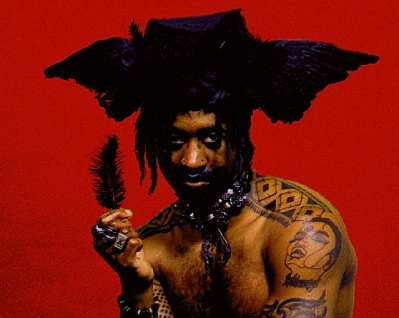
Some artists arrive with a sound. Freddy Forbidden arrives with a manifesto.
Raised in Newham, East London, he’s carving out his own lane with AFROCORE—a collision of grime’s urgency, punk’s refusal, indie’s vulnerability, bedroom pop intimacy and West African rhythm. It’s less about genre than friction: the point where identities, histories and emotions crash together hard enough to make something new.
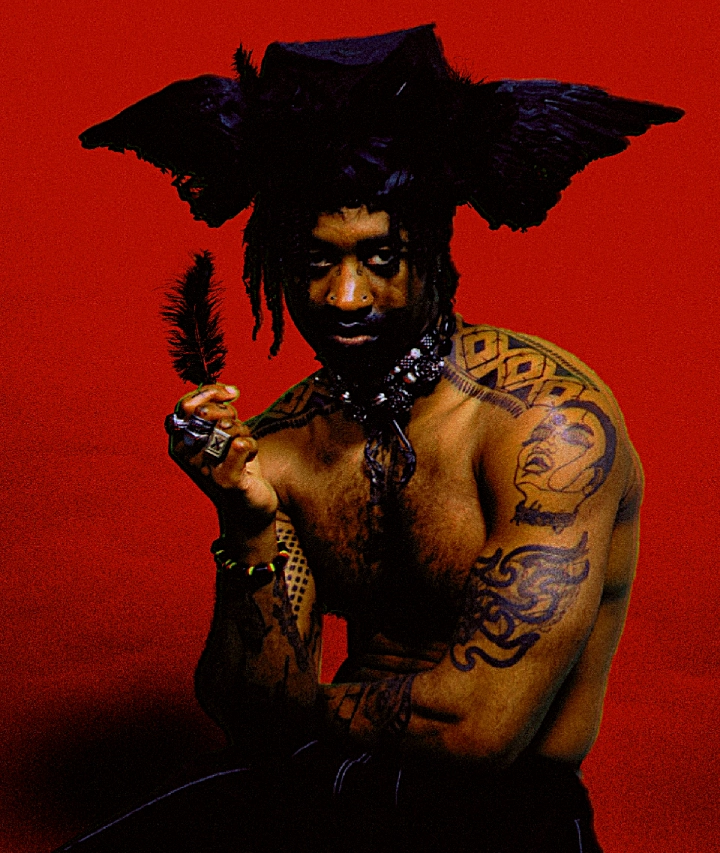
Nothing about Freddy‘s trajectory has been straightforward. After surviving a violent assault in which he was robbed and run over, he spent weeks in hospital recovering from multiple broken bones and extensive surgery. Instead of retreating, he rebuilt. Music stopped being an ambition and became a necessity.
That sense of survival runs through Breach, his debut EP, arriving July 27. The record isn’t interested in neat resolutions. It’s about rupture—between past and present, self and society, silence and expression. Written with one eye on personal recovery and the other on a world increasingly fractured by division, Breach channels anger into momentum, vulnerability into resistance.
Lead single ‘Quiet’ captures the contradiction at the heart of the project. Against distorted basslines and volatile punk energy, Freddy searches for stillness inside information overload. It’s a song about trying to hear yourself think while the world shouts over you; about finding conviction without becoming another voice in the algorithmic chorus.
History also echoes through the record. Freddy traces his lineage to Samori Touré, the nineteenth-century founder of the Wassoulou Empire and one of West Africa’s most formidable anti-colonial leaders. Rather than treating heritage as aesthetic shorthand, Breach carries that legacy forward as an act of resistance—connecting ancestral resilience to contemporary Britain through sound rather than symbolism.
Recorded at London’s legendary Studio 13, the EP pushes his AFROCORE vision to its fullest expression, weaving Afro rhythms through punk abrasion, grime cadences and indie guitar textures. The result feels instinctive rather than engineered: music built to provoke conversation as much as movement.
That instinct has already translated on stage. Freddy has quietly become one of London’s most compelling emerging live performers, selling out every headline show to date, opening for Alewya at Scala, touring alongside Boko Yout and making his festival debut at Tramlines. Each appearance has reinforced what the records suggest: this isn’t performance as spectacle, but performance as release.
In a landscape obsessed with fitting artists into playlists and micro-genres, Freddy Forbidden is busy inventing his own vocabulary. Breach doesn’t ask for permission. It tears a hole through convention and invites everyone else to follow.
words Alexa Wang