Call it childhood nostalgia or a symptom of the ‘loneliness epidemic’, whatever you chalk it up to, collectively, we homeowners are experiencing an all-encompassing hankering for more social, chatter-inducing spaces in the heart of our homes.
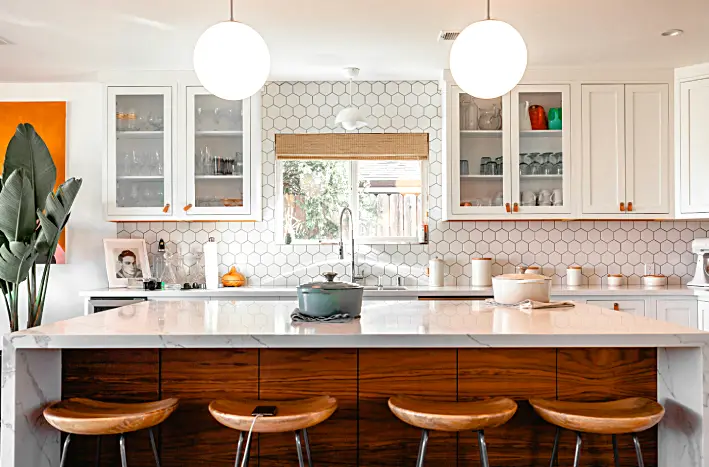
I’m here to tell you that, along with human-centric design choices, the iconic kitchen island accompanied by the right bar stools might be just the answer.
Kitchen islands are often dubbed the social hub of the kitchen, and they’re built to be that way; however, it’s how you style them that really makes the difference, from placement to seating.
So, if you’ve been fantasising about weekly supper clubs, thinking about enhancing potluck Thursday or adding a positively chic twist to pre-drinks on Friday night, these tips are for you.
Why are Kitchen Island Bar Stools Inherently Social? Well, They…
…Are Layout-Friendly Features, Conducive to Flow & Flexibility
A kitchen island alone is just a glorified countertop, however eye-catching the flowing marble form. Add a handful of bar stools into the mix, however, and it instantly becomes a home office, dining space, breakfast nook, party buffet or combination of each.
This multi-purpose quality extracts untold versatility from the kitchen, whilst naturally zoning open plan spaces. The stools serve as linking pieces, a common thread of continuity throughout the kitchen, without compromising on the floorplan’s efficiency.
Top tip: If you frequently host dinner parties or have a large family, flexibility is key. Here, lightweight, slim breakfast bar stools are a major asset, since you can lift and reposition them with ease.
Bridge Disparate Zones, Connecting Cooking With Chatter
We all know that islands are a wonderful space for people to casually gather around, but have you ever thought about why? Well, the biggest reason of all is the bar stool’s tendency towards conversation.
Bar stools sit at counter/bar height, which allows those seated to be at eye level with someone whipping up a meal in the kitchen or serving drinks. Naturally, this helps the conversation to keep following along with the cocktails.
At the same time, they’re practically made for open concept connection; they bridge the gap between functional zones, such as the living room and kitchen, which means no one is excluded from the chatter.
Top tip: Kitchen islands with integrated appliances are super swish, but the reality is that they tend to pile up with dirty dishes, kitchenware and other annoyances that act as subconscious stressors or a visual block between the chef and seated guests.
Are Exceptionally Comfy & Ergonomic
Seating that looks as comfortable as it feels naturally invites people to sit and chitchat. In the case of kitchen bar stools, that’s designs with sculpted saddle seats, wide armrests, a crossbar on which to pop your weary feet and a tall, curved back that makes you feel more cradled than seated.
Top tip: There’s a balance to be made between comfort and easy maintenance. Fuzzy boucle is indulgent but a pain to clean. Thus, you might want to consider a compromise material like Italian leather, which is plush, yes, but just as wipeable.
Take Up a Smaller Physical Footprint
Generally speaking, bar stools take up less physical floor space than their dining chair counterparts, but this is not all: because many have these slender frames and more compact footprints, they’re more easily tucked away under the lip of your island overhang, completely out of sight. Neat freaks rejoice!
Top tip: Be careful with your bar stool heights. If they’re designed with backs, you might struggle to hide them beneath your island’s overhang. Here, backless stools might be the preferable option.
Add Less Visual Weight Than Traditional Chairs
Compared to traditional dining chairs, which tend to fall onto the chunkier end of the spectrum, bar stools feel more light-touch in the kitchen. And this is something you can happily lean into, with gorgeous results.
A slimline backless stool or one with a pedestal base, for example, doesn’t create as much visual noise owing to the simplicity of the design. This means your sightlines are extended, allowing the room to seemingly expand just a tad.
Top tip: Light, airy bar stools still need to be substantial enough to feel like they belong in the room. Be sure to pick designs that strike that balance between breezy and grounded.
Enhance Your Kitchen’s Overall Décor
The popularity of kitchen islands goes back to the post-World War II era and the rise of open plan living, as does the beauty of kitchen bar stools.
True conversation starters, their seamless design is difficult not to remark upon. Personally, I’m a fan of the farmhouse style designs – those featuring warm wood tones, rich grain patterns, and a solidity to the build – but equally stunning are sleek metal stools with their effortlessly eclectic gastropub look. There’s something out there for everyone.
Top tip: Visual cohesion requires some interplay between your breakfast bar stools and the broader kitchen environment. Echo colours and finishes from other features, be they metallic light fixtures above or natural wood to complement the cabinetry.
Naturally Anchor the Island in the Space for that ‘Magnetic’ Pull
Alone, an island feels aimless, ‘floaty’, in your interior. What it’s crying out for is something to ground it in place. Luckily, this is where the right bar stools come to the rescue.
Here, they:
- Provide structure and intentionality
- Determine the layout
- Provide visual weight or, in other words, a ‘sense of gravity’
- Tie everything in that zone together, not necessarily as a focal point (although you’re welcome to make them the stars of the show)
Speaking of focal points, I recommend complementing your social island hub with layered décor and a centrepiece to provide your eyes somewhere to focus on and a hierarchical path to follow. Sweeping rugs, flower arrangements, coffee table books, dramatic colour, a statement pendant light positioned above, or even a hand-moulded earthenware set fit the bill
Top tip: For a harmonious look, consider the most apt spacing. Symmetry ought to deepen that unmistakable ‘pull’ emanating from your kitchen island.
Conclusion: Bar Stools are Conversation Starters, in More Ways Than One
One of the most persistent interior design mistakes to plague British kitchens is getting all carried away with furniture and fixtures before properly understanding how people like to socialise, move around the space and generally feel in situ. You’re better than this, though.
Plus, now that you know the hidden benefits of bar-style seating and how to style your kitchen stools, creating a conversation-sparking scheme in the heart of your home should be a doddle. Think snug, well-lit, social hubs that connect people through layout, intimacy and comfort. Exactly what your kitchen island deserves.
Frequently Asked Questions on Sociable Kitchen Bar Stools
To round things off, here are a handful of FAQs I’ve seen homeowners ponder on, in different corners of the internet, but also IRL.
What Makes the Kitchen Island Such a Sociable Set-Up?
Because of its versatility and magnetic pull. A focal point feature, the kitchen island draws the eye and naturally invites people to gather round. Simultaneously, it bridges the cooking area with mingling guests who sit at eye level with the chef. Combined with the casual profile of the bar stools, the ambience is casual and chic.
How Can I Make My Kitchen Island More Sociable?
If the objective is to carve out a social hub around the kitchen island, your priorities should be: to make your bar stools as comfortable as possible, encourage eye contact between visitors and host via the layout, layer your kitchen lighting, incorporate an island overhang and leave its top for drinks, snacks and tasteful décor, not clutter.
What Are the Ideal Bar Stool Dimensions? (Height, Clearance & Seat Size)
It depends on the height of the surface. For standard islands (105cm tall), bar stools should be 75-85cm tall to leave ample overhang for legroom. Also, allow 60-70cm of counter space per stool, measured from one seat’s centre to its neighbour’s, plus 90cm behind for people to walk comfortably behind. Seat width should be 40-60cm.
Which Bar Stool Placements are Most Conducive to Chatter?
If you want to encourage chit-chat between a cooking host and seated guests, place the bar stools looking towards the prep areas to increase eye contact. In open plan areas, with multiple seating zones, you may want to angle them towards a nearby armchair cluster or dining table. Swivel bar stools are a handy compromise.
written by Alexa Wang