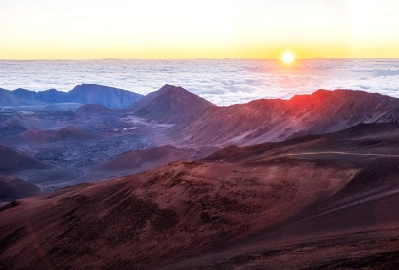
Five reasons a paniolo town on the slopes of Haleakalā keeps winning over painters, potters and glassblowers, and what it really takes to move a studio there.
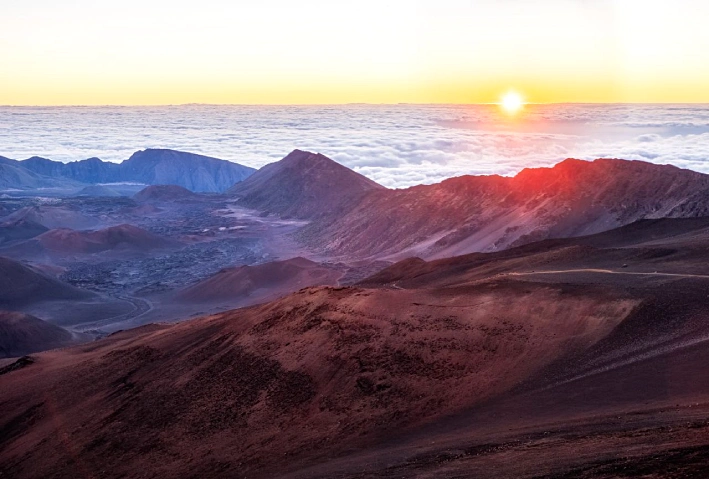
Photo by James Wheeler: https://www.pexels.com/photo/a-mountain-during-sunset-3878170/
Drive up from the coast and the air changes first. It cools, the eucalyptus thickens and the road narrows into a town that still looks like the set of a western.
Makawao has two streets that matter and one crossroads everyone knows. It also has more galleries per block than far larger towns, and a reputation that travels well beyond Maui.
The state’s official tourism site says Makawao was once named one of the top 25 arts destinations in the United States, and its rodeo is Hawaii’s largest paniolo competition. Here is why artists keep packing up and heading upcountry.
1. An Arts Center Older Than Most Galleries
Most art towns grow around a scene. Makawao grew around an estate.
According to the Historic Hawaii Foundation, architect C.W. Dickey designed the Kaluanui mansion, completed in 1917. In 1934, Ethel Baldwin and her daughter founded Hui No’eau there with 20 women who met to draw, paint and work with clay.
The Hui is now a nonprofit visual arts center with studios, classes and exhibitions spread across the old grounds. For a newcomer, it is a ready-made community with equipment most solo artists could never afford alone.
The light seals the deal. Mornings tend to be bright and crisp, then clouds drift up the mountain in the afternoon and soften every color. Landscape painters get two studios in a day without moving an easel.
Art here is not a luxury add-on. It has been part of the town’s furniture for nearly a century.
2. A Maui Moving Company Can Handle the Hardest Part
Artists do not move like everyone else. A single studio can hold a kiln, a flat file of prints, glass in progress and canvases too big for a standard doorway.
That is why the choice of mover matters so much. Wailea Movers, a Maui moving company in Kihei, runs an owner-operated crew that packs framed artwork and mirrors in picture boxes or custom crates, then disassembles, blanket-wraps and reassembles furniture at the new address. It holds a 4.9-star Google rating from 424 reviews.
It also does not broker jobs out to strangers, which matters a great deal when the cargo is a year of work.
Good movers start with a consultation and a written quote, so the price reflects what a studio actually holds rather than a guess.
For painters coming from the coast or another island, a careful local crew and a little secure storage can mean the studio opens with work on the walls rather than a stack of insurance claims.
3. The Rodeo Is a Muse, Not a Distraction
Every Fourth of July, Makawao becomes a festival of hooves, ropes and dust at Oskie Rice Arena. PBS reported that the rodeo began in 1956, and the families of its original organizers still keep it going.
The parade, with its mounted riders and floats, sets the tone for the week.
Artists could treat it as noise. Most treat it as material. Paniolo hats, horse trailers and saddle leather turn up in paintings, ceramics and photography across town.
That local subject matter gives Makawao work a distinct identity. Collectors can tell it did not come from anywhere else.
4. Hawaii Takes Public Art Seriously
Artists tend to settle where art is valued, and Hawaii has a head start. It was the first state to pass a percent-for-art law, in 1967, setting aside one percent of construction costs of new state buildings for artwork, according to Hawaii’s arts agency.
That long commitment means public buildings across the islands carry original work, and artists have a clearer path to commissions than in many places.
For someone building a career, that is not a small thing. It turns a lifestyle move into a professional one.
5. The Scale Is Human
Makawao is small enough that people notice what you make. The potter sells at the market, the printmaker knows the barista and the glassblower’s door is usually open.
That visibility is hard to buy in a big city. Here, a first show can draw a crowd simply because everyone walked past your studio all year.
The mix helps too. Ranchers, farmers, yoga teachers and artists share the same sidewalks, and that friction produces better work than a room full of people who all think alike.
The Catch Nobody Puts in the Brochure
Makawao is not a bargain. Upcountry housing is expensive, and studios with good north light are scarce.
The climate cuts both ways. Cool, damp nights feel lovely after the coast, but they are hard on raw canvas, paper and anything glued. Plan for dehumidifiers and climate-aware storage from day one.
Driving down to coastal galleries and the airport also takes time, so many artists group their studio days and delivery days to cut the mileage.
And downsizing is part of the deal. Shipping to Hawaii is costly, so most artists bring the irreplaceable tools and restock the rest after landing.
How to Move a Studio Without Wrecking the Work
- Photograph every finished piece before it is packed, for insurance and for your portfolio.
- Ask your movers how they crate glass and oversized canvas, and get the answer in writing.
- Measure doorways, stairs and the studio entrance before moving day.
- Book short-term storage if the studio is not ready, rather than stacking work in a carport.
- Unpack the kiln and the easel first. Everything else can wait.
Makawao has always drawn people who work with their hands, from paniolo to potters. The town simply swapped some of the rope for brushes.
If you are thinking of joining them, come for a week first. Sit on a bench at the crossroads, watch the clouds roll up Haleakalā and see whether the light gets under your skin. For a lot of artists, it already has, and the crates never go back down the hill.
written by Al Woods