
A Thai night market doesn’t simply serve food after dark – instead, it turns cooking into theatre.
The cook works within arm’s reach, queues form their own temporary communities, and a dish can travel from neighbourhood favourite to global screen sensation within hours.
Bangkok, Chiang Mai and Phuket each stage this differently, but the essential appeal remains physical: heat, movement, proximity and the promise that the most compelling plate may come from the smallest stall.
The kitchen faces the audience
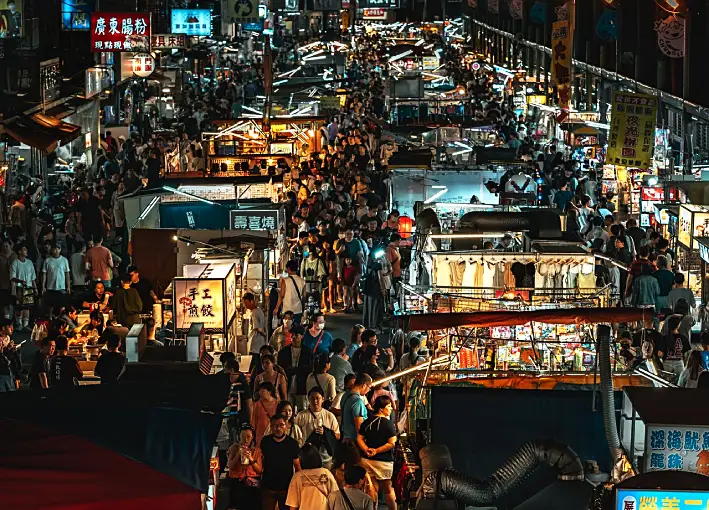
A conventional restaurant conceals much of its labour, whereas the night-market stall puts everything on view. Smoke and fragrance announce the dish before signage does; the queue becomes both review and advertisement. This visibility gives the cook a presence that many formal dining rooms reserve for celebrity chefs.
Bangkok intensifies the performance through scale. In Yaowarat, food vendors occupy a dense urban setting where passing traffic, shopfronts and streams of diners become part of the scene. Newer markets may use stronger branding and more deliberate lighting, yet they rely on the same immediate exchange: the customer sees the process and the vendor reads the response. A 2026 study of Bangkok night-market traders found that layout, zoning, signage and infrastructure strongly shaped visitor experience, while customer engagement and digital promotion also mattered. The stall succeeds as both kitchen and set.
Travellers exploring Thailand holidays through night-market food culture will find that this format changes across the country. Chiang Mai’s walking streets place northern dishes within a slower sequence of crafts, temple grounds and street performance. Phuket adds island ingredients and a visitor-facing energy, but its strongest markets still provide space for local snacks and everyday social life rather than functioning only as tourist spectacles.
Familiarity forms the first network
The market’s original social network doesn’t require a screen, as it develops through recognition. Exchanges may look casual, but repetition gives them structure. The vendor remembers a regular’s order; the customer brings somebody new; one queue directs attention towards another stall.
Food helps these connections form because it removes much of the ceremony associated with dining out. People can browse before choosing, split their evening between several cooks and stay for ten minutes – two hours. The absence of a fixed table plan allows conversation to happen sideways, between strangers waiting for skewers or negotiating the last free stool. FLUX has previously explored the people and evolving stories behind street-food culture, and the Thai night market makes that relationship unusually visible: entrepreneurship, appetite and sociability occupy the same few metres.
Phuket Walking Street offers a clear example of this layered role. Its official profile describes food, souvenirs, activities and student areas set among Phuket Old Town’s historic architecture, with local music, dance and youth performances changing from week to week. The market therefore acts as more than just an outdoor food hall. It gives performers an audience, makers a shopfront and residents a recurring place to meet, even as visitors enter the same network for an evening.
The camera creates a second stage
But social media has added another audience to the market even here. A dramatic pour, oversized seafood platter or perfectly cut dessert now performs for the phone as well as the person waiting to eat it. Short videos can turn an obscure stall into a mapped destination, extending its reputation beyond local recommendation. The digital queue begins before the physical one.
That visibility can help independent vendors build an identity without the expense of a conventional restaurant. A recognisable dish, repeated consistently, becomes a logo in edible form. Customers post the preparation, tag the location and supply a continuous public archive of the stall’s work. FLUX’s portrait of a Thai family pop-up built around home cooking and shared memory shows how food can communicate identity across settings; the market compresses that storytelling into a counter, a recipe and a recognisable performance.
Yet online fame can distort the room it celebrates. A viral queue may block neighbouring traders, while dishes designed for visual impact can dominate quieter local specialities. Digital popularity also moves quickly, whereas repeat trade depends on reliability. The healthiest relationship between the two networks emerges when online discovery brings someone to the stall and the in-person experience gives them a reason to return. Social media may amplify a stall far beyond Bangkok, Chiang Mai or Phuket, but the screen cannot reproduce the hiss of the wok or the quiet satisfaction of being recognised on a second visit. The digital network creates reach; the physical one gives the market its life.
written by Amy Turnbull