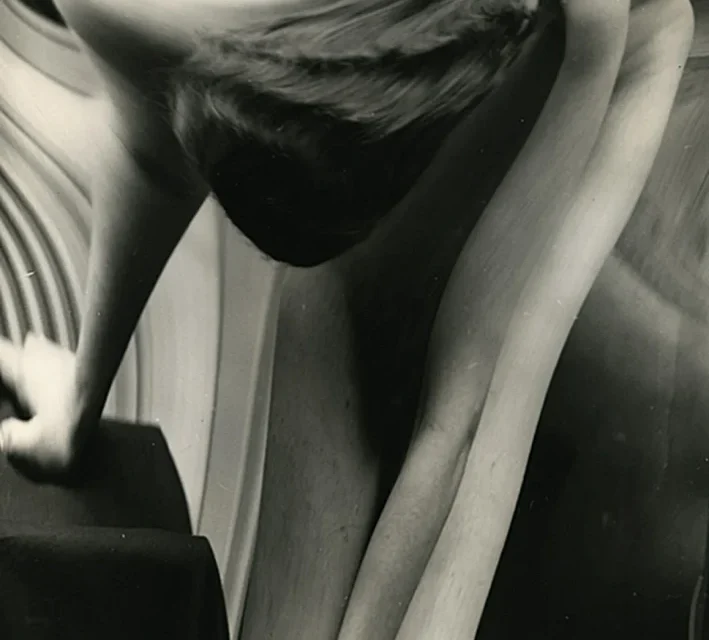
I’ve always been into art that messes with your sense of what’s real. The kind that slips reality sideways, makes it feel elastic, slightly off, like it could rearrange itself at any moment. That’s probably why M. C. Escher hit so hard early on.
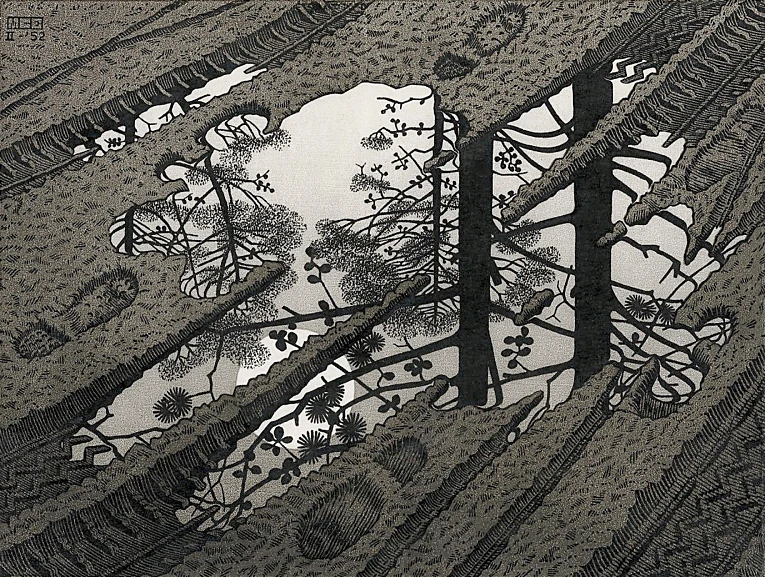
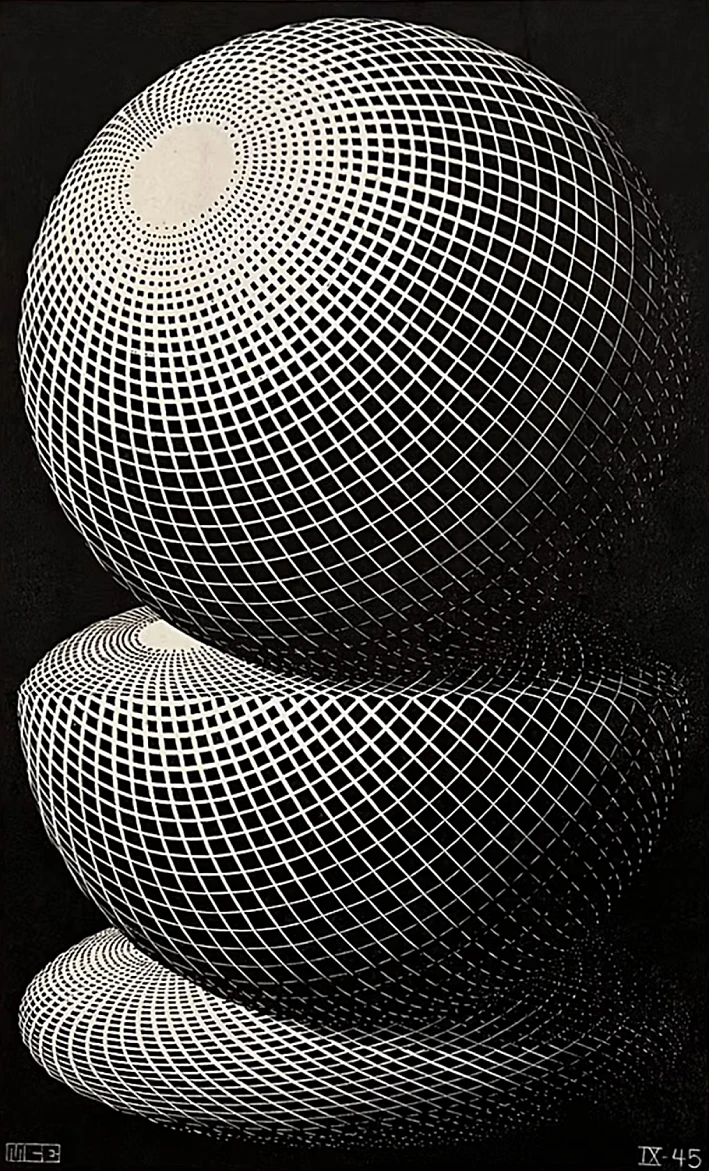
Escher’s images don’t just depict impossible worlds — they calmly insist on them. Staircases loop endlessly, buildings refuse gravity, and perspective becomes something you negotiate rather than trust. What’s wild is how grounded it all feels. His illusions come from intense observation, from looking closely at the rules of the world and then bending them until they reveal something stranger underneath. Escher doesn’t reject reality — he exposes how weird and wonderful it already is. A new exhibition Between Order and Chaos: André Kertész and M. C. Escher at the Bruce Silverstein Gallery looks at two artists who, by playing and distorting reality, help us see the world in a different way.
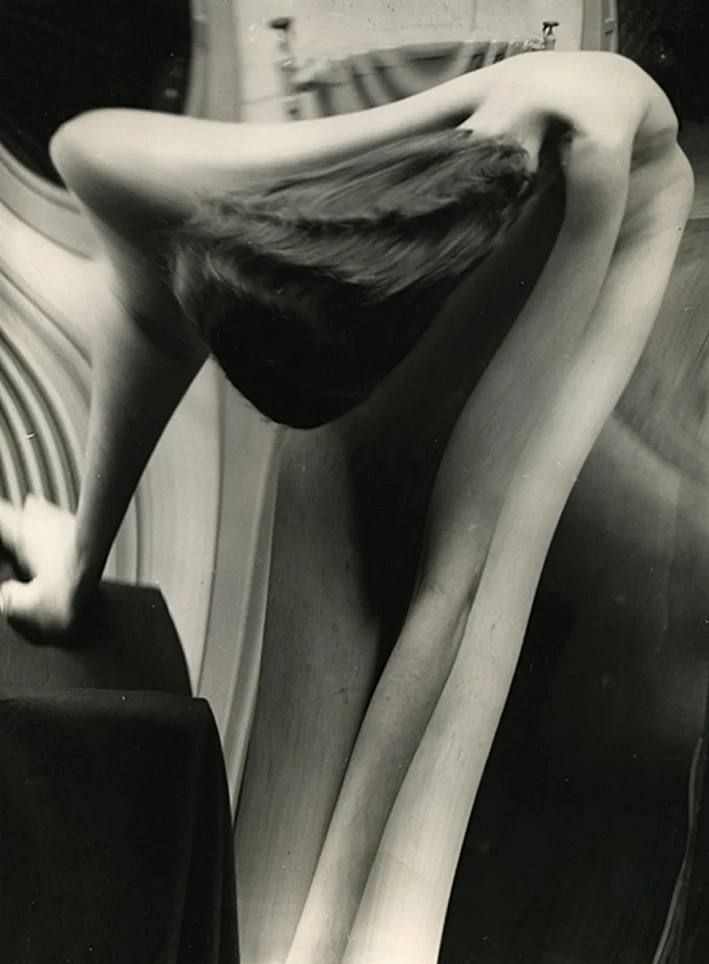
This exhibition puts Escher in dialogue with André Kertész, a pairing that feels unexpected but instantly clicks. Kertész, working with a camera rather than woodblocks and ink, explored similar ideas through photographs that quietly disrupt how we see. Reflections fracture bodies, angles skew space, shadows behave like characters of their own. Nothing is forced — the distortion arrives softly, almost accidentally.
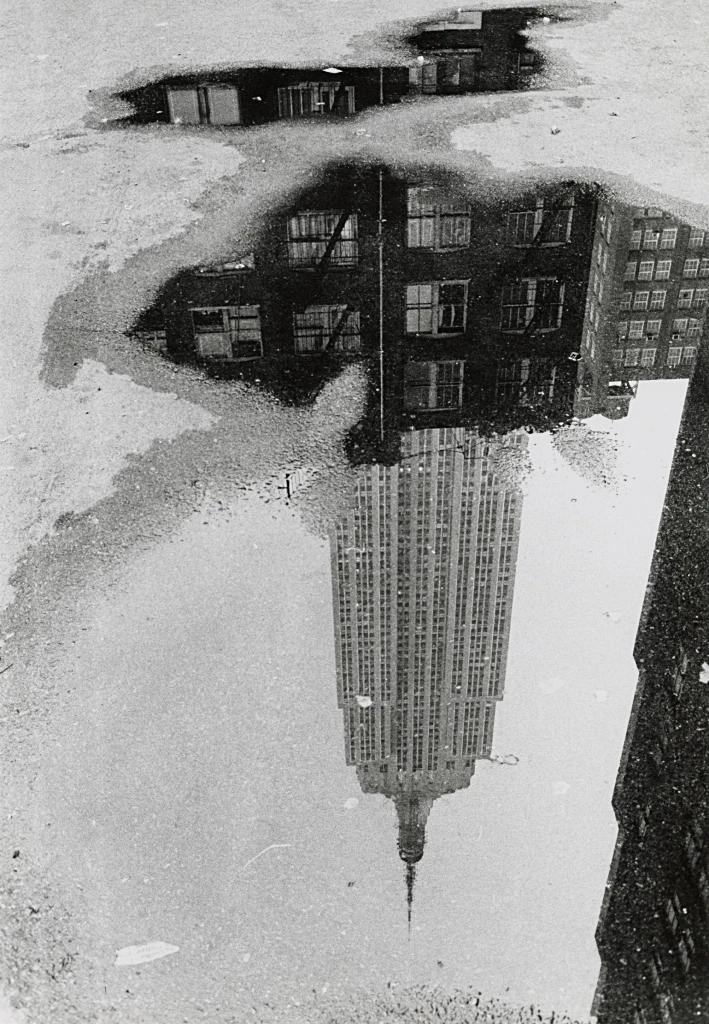
Born in Hungary in 1894, Kertész spent much of his career ahead of his time. His off-kilter compositions and experimental viewpoints were once considered too strange, too personal. He never felt fully recognised while he was alive. Now, he’s seen as one of the key figures of 20th-century photography, a pioneer of modern composition and the photo essay — proof that subtle revolutions often take the longest to land.
Together, Escher and Kertész map out parallel ways of seeing. One builds worlds from geometry and printmaking, the other captures fleeting moments with light and film. Both sit at the intersection of order and chaos, showing how reality isn’t stable, but something constantly negotiated through perception. The exhibition brings together a tightly curated selection of Escher’s original prints alongside vintage photographs by Kertész spanning eight decades, including works rarely — if ever — shown before.
The conversation continues beyond the walls. On February 3 at 6:00 pm, as part of Master Drawings Week and the Master Drawings New York art fair, the exhibition hosts a discussion between Dena Woodall and Robert Gurbo. Woodall, Curator of Prints and Drawings at the Museum of Fine Arts, Houston, curated the major retrospective Virtual Realities: The Art of M.C. Escher and recently published a definitive book on his work. Gurbo, President of the André and Elizabeth Kertész Foundation, worked closely with Kertész during the final years of his life and has spent over five decades safeguarding his legacy.
What emerges is a shared obsession with perception — with how images shape, stretch, and destabilise the real. This isn’t nostalgia or technical mastery for its own sake. It’s a reminder that reality has always been slippery, and that sometimes the clearest way to see it is to let it bend.
Between Order and Chaos: André Kertész and M.C. Escher – January 22nd to March 21st, 2026
words Alexa Wang