There are few films with a reputation quite like The Exorcist 2: The Heretic. Released in 1977 as the follow-up to one of the most successful and frightening films ever made, John Boorman‘s sequel quickly became a byword for cinematic disaster.
There was James Earl Jones in a giant locust costume. There was the hypnosis. There was the ESP. There were the baffled audiences, the disastrous reviews and Gene Siskel declaring it the worst major motion picture he had seen in almost eight years. It was, in other words, not exactly the triumphant sequel Warner Bros. had in mind.
But Boorman and the Devil, David Kittredge’s new documentary about the making of the film, suggests that the story behind The Exorcist II is considerably more interesting than its reputation as a spectacular turkey would suggest. In fact, depending on how the original film is viewed, the documentary may completely change the way its infamous sequel is understood. What looks from the outside like a cynical cash grab was, in reality, an extraordinarily ambitious attempt to make something strange, philosophical and deeply personal within the machinery of a major Hollywood studio.
The giant locust, naturally, remains difficult to explain.
Kittredge has been working on Boorman and the Devil since 2018, collecting interviews, archive footage and animation into an original 196-minute cut before shaping it into the 112-minute theatrical version. The result is a funny, occasionally surreal and surprisingly moving documentary about filmmaking, artistic ambition and what happens when an audience rejects something that its creators believed in completely.
There is certainly plenty of conventional behind-the-scenes chaos. The Exorcist II had enough production problems to sustain several documentaries. Boorman contracted San Joaquin Valley fever, a potentially life-threatening illness that shut production down for five weeks. Kitty Winn and Louise Fletcher both required emergency gall bladder surgery. The script went through extensive rewrites. The budget grew. Test screenings went disastrously. The film was re-edited in an attempt to satisfy increasingly unhappy audiences. William Friedkin, director of the original The Exorcist, contributes a particularly entertaining and merciless recollection of one such screening, while the critical response eventually became legendary in its own right.
But Boorman and the Devil isn’t particularly interested in adding another punchline to the story. Its much more compelling discovery is that The Exorcist II wasn’t really intended to be a straightforward horror sequel at all.
Boorman had originally been approached about directing The Exorcist itself but turned it down, partly because he disliked the way Regan was treated in the story and was uncomfortable with putting a young actor through such material. When he received William Goodhart’s early draft for a potential sequel, however, he found something much more appealing. This version wasn’t simply about putting Regan through another demonic ordeal. Instead, she would be a force for good, and the film would explore ESP, hypnosis, morality, consciousness and the eternal struggle between good and evil.
The screenplay was heavily influenced by the ideas of Jesuit theologian Pierre Teilhard de Chardin, who believed that life was continually evolving towards a greater state of consciousness. In Boorman’s version of the story, Regan represented a step in that evolution. The little girl who had been subjected to unimaginable horror in the original film would no longer simply be its victim. She would become something closer to a spiritual figure, transcending what had happened to her.
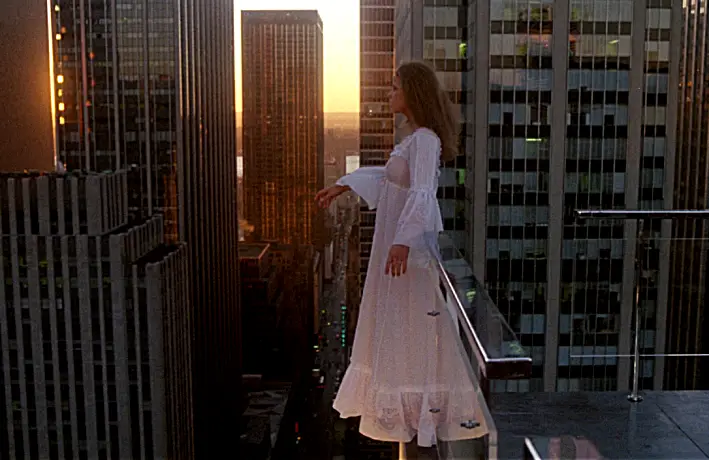
Almost none of that survived in the form originally imagined. Yet understanding the ambition behind it makes the finished film considerably more fascinating. Boorman wasn’t interested in repeating William Friedkin’s bleak vision of evil. He wanted to challenge it. Where The Exorcist presented a world in which innocence could be violated by something incomprehensibly cruel, Boorman wanted to make a film about the possibility of goodness overcoming that darkness.
It is a remarkably earnest idea to have smuggled into a blockbuster sequel.
That tension between artistic ambition and audience expectation becomes the heart of Boorman and the Devil. After the success of Point Blank and Deliverance, Boorman had established himself as a filmmaker who could take familiar genre material and turn it into something unpredictable. Point Blank transforms a revenge thriller into a fragmented, almost dreamlike experience. Deliverance begins as a wilderness adventure and gradually mutates into something closer to existential horror. Even Zardoz, however divisive, is almost aggressively uninterested in behaving like a normal science-fiction film.
The Exorcist II was therefore a very Boorman project. The problem was that the audience didn’t necessarily want a very Boorman Exorcist.
Kittredge’s documentary gives considerable attention to the people who had to turn that vision into reality. Linda Blair returned because this version of Regan was a person rather than simply a victim. Louise Fletcher took on the role of Regan’s therapist, originally written for a male actor. Screenwriter Rospo Pallenberg brought his own eccentric ideas to the increasingly complicated story, while Garrett Brown, inventor of the Steadicam, found himself having to consider the logistics of filming a locust’s point of view.
Yes, there was actually a person whose job involved figuring out how to shoot a giant insect.
That detail captures something essential about filmmaking. The finished image might look ridiculous, but getting it onto the screen requires hundreds of people to take the ridiculous completely seriously. There are designers, technicians, operators, costume departments, effects artists, script supervisors and, apparently, locust wranglers. Boorman and the Devil understands that this collective labour is part of the art.
It also makes the film’s eventual rejection more painful.
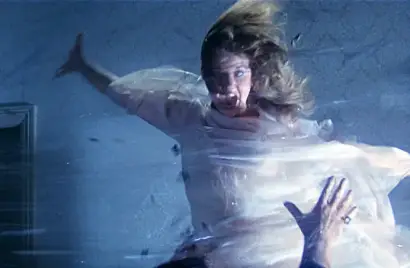
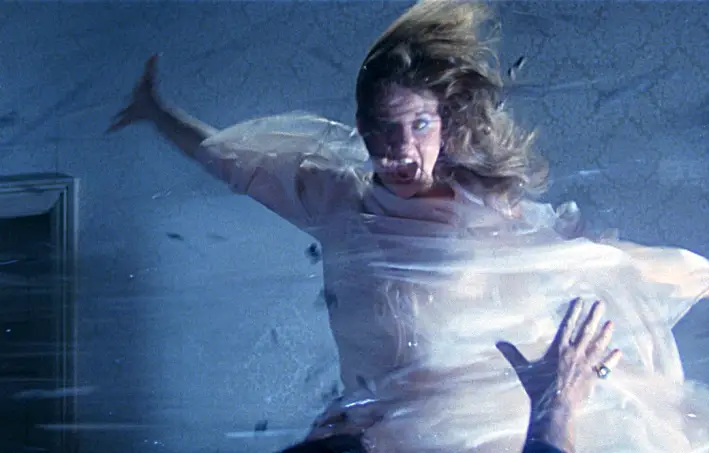
One of the documentary’s most effective sequences explores a special effect involving Regan and the Devil, created using a ghost-glass technique. The scene doesn’t necessarily achieve the emotional impact Boorman was aiming for, but the physicality of the effect is beautiful. It is a reminder of how much invention and craft can disappear beneath the surface of a finished film, particularly when the audience has already decided that the film itself is a failure.
That idea becomes increasingly important as Boorman appears on screen. Interviewed at his home in Wicklow, Ireland, he is surrounded by reminders of his career, including a Zardoz head and Excalibur, with the Holy Grail sitting nearby. Initially, the interviews are charming and funny. Then it becomes apparent that discussing The Exorcist II still causes him genuine pain.
That is where the documentary becomes something more than a film about a notorious Hollywood flop. It becomes a meditation on what it means to make art and then lose control of how that art is understood. Who is a film actually for? The director? The people who paid for it? The audience? The critics? And when a filmmaker is given an enormous budget, does that financial investment mean they have a responsibility to give audiences what they expect?
There are no easy answers, but Boorman and the Devil makes a strong argument for the value of taking the risk in the first place.
The documentary doesn’t need to convince anyone that The Exorcist II is secretly a masterpiece. Its achievement is more interesting than that. It shows that a film can fail and still contain enormous amounts of imagination, craft and genuine artistic conviction. It can be misguided and fascinating at the same time. It can be ridiculous and sincere. It can even be a critical and financial catastrophe while remaining evidence of what happens when a group of talented people are given the freedom to attempt something nobody quite understands.
Perhaps that is why the giant locust has endured. It is funny, undeniably strange and almost impossible to forget. But behind it sits an entire production full of people trying to make something meaningful, beautiful and different.
Boorman and the Devil ultimately asks audiences to look beyond the disaster and consider the ambition that produced it. It is a film about failure, but not a cynical one. Its message is that making art is painful, expensive, humiliating and occasionally absurd — but that none of those things necessarily make the attempt worthless.
Sometimes the audience rejects the work. Sometimes the critics tear it apart. Sometimes the studio loses patience. Sometimes the director nearly dies.
And sometimes, after all of that, the most memorable thing anyone remembers is the giant locust.
Perhaps that isn’t such a bad legacy after all.
Boorman and the Devil is in cinemas 25 September 2026
words Alexa Wang