Up and down the UK as well as across other parts of the world, boutique hotels have carved out a special place in the travel market.
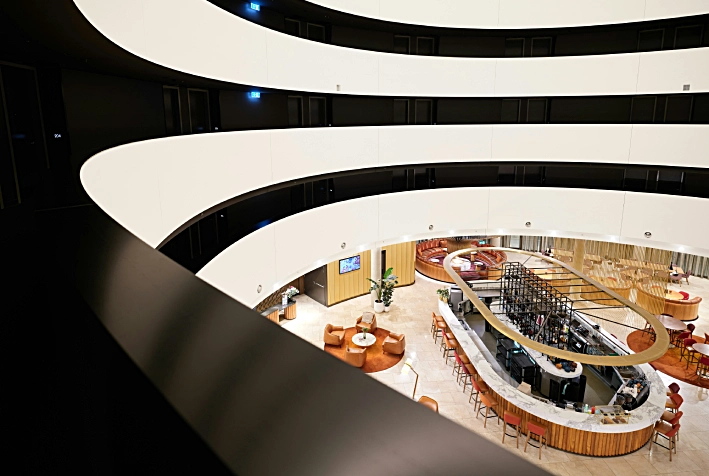
These small, stylish, and independent lodging establishments – ranging from chic Edinburgh townhouses to countryside retreats in the Cotswolds – have gained renown due to their unique character, personalised service, and a distinct sense of place.
If you operate a boutique hotel, you are likely to have benefitted from many travellers’ inclination these days to seek out authentic experiences over “cookie-cutter” chains.
It Isn’t Always Easy, Though, For Boutique Establishments to Excel and Grow Online
As inviting as a boutique hotel can be for many would-be overnight stayers, there is still no shortage of challenges and issues that the owner of such a business has to confront.
In the late 2020s digital landscape, it isn’t enough for a given boutique accommodation provider to be merely “easy to find” online. After all, this is an era in which online travel agencies (OTAs) like Booking.com and Expedia can swallow about 15% to 25% of revenue in commissions.
That’s money the given boutique hotel could have been getting instead, if prospective guests always booked with the establishment directly.
It should be no great surprise, then, that significant numbers of boutique hotel owners are turning to search engine optimisation (SEO). Such decision-makers are realising that a well-formulated hotel SEO strategy could make a big difference to their efforts to drive more direct bookings, reclaim profit margins, and build a durable lifestyle brand.
What Steps Are Boutique Accommodation Providers Taking with Their SEO Strategies?
The leading boutique hotels today recognise that they can’t depend on simply optimising for generic keywords. This is why they place a big emphasis on the high-intent, experience-led search strategies that can be so effective at bypassing the “middleman” and connecting directly with discerning travellers.
Here are some key areas of priority for boutique hotels right now:
- Driving Direct Bookings: Beyond The ‘Book Now’ Button
Attracting greater numbers of direct bookings is what almost any boutique hotel clamours for. It is the “gold standard” for profitability, allowing for higher profit margins and complete control over the guest relationship.
The most successful boutique providers in this regard aren’t competing for broad search terms like “London hotels”. Instead, they’re targeting longtail phrases that signal a ready-to-book mindset; think such examples as “boutique hotels in Edinburgh city centre”, “dog-friendly B&Bs near York”, and “luxury spa resort with private pool”.
Another potential barrier to getting more direct bookings, is an unnecessary level of friction in the booking process. The average proportion of travellers who start a booking but don’t complete it, is reportedly 81%. So, investing in a mobile-first, two-to-three-step booking engine will be time and money well-spent for your boutique hotel.
- Building a Lifestyle Brand Through Content
Boutique accommodation providers very much thrive on their “brand DNA”. By this, we’re referring to the unique story of the hotel’s design, heritage, or local connection.
Your own hotel establishment’s online content can help it make the most of such “DNA”. You can mark out your business as a local authority, for instance, through the creation of “informational content” like blog posts covering things to see and do in your city. Such efforts can be key to positioning your hotel as a cultural curator, rather than merely a place to sleep.
Don’t overlook the power of well-done visual storytelling, either. The sharing of high-quality and original imagery and short-form video (15 to 30 seconds) on platforms like Instagram and TikTok can enable you to tap into search engines’ increasing tendency to reward visual-rich content that enhances user engagement.
- Refining The Technical Edge: Speed And AI
As of 2026, technical performance is a direct ranking factor. This is the case not only for traditional search, but also in relation to the various AI-driven discovery tools that have come on stream over recent years.
So, as a boutique hotel owner or decision-maker, you should be making sure your establishment’s website loads in under three seconds, in line with Google’s recommendation. If your site is slow, you can expect it to achieve lower rankings and fail to achieve the best conversion rates.
In our present era in which AI overviews on search engine results pages (SERPs) have come to the fore, as well as tools such as ChatGPT summarising travel information, it is also crucial for hotels to use structured data (schema markup).
This “behind-the-scenes” code helps AI to understand such aspects as the given hotel’s amenities and room availability. This, in turn, heightens the boutique establishment’s likelihood of being featured in AI-generated recommendations.
Is Your Boutique Hotel Realising Its Greatest Digital Potential?
If you suspect the answer to this question is “no”, the present moment is the time to look into how these strategies can be integrated into your business’s website.
Success in doing so will allow you to transform the website of your boutique hotel from a mere digital brochure, into a potent revenue engine that builds long-term guest loyalty.