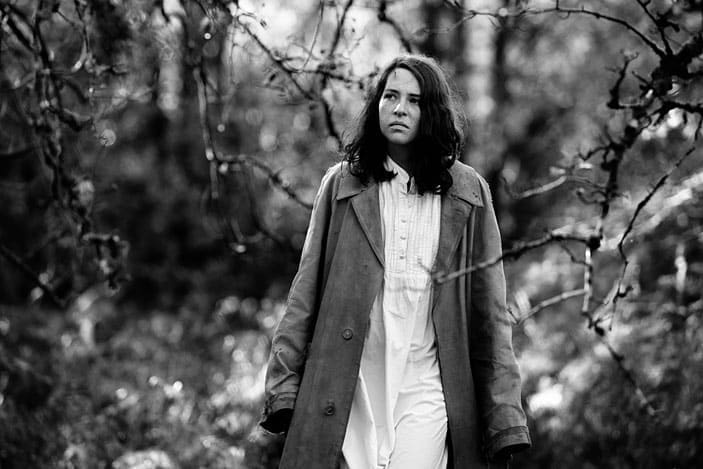
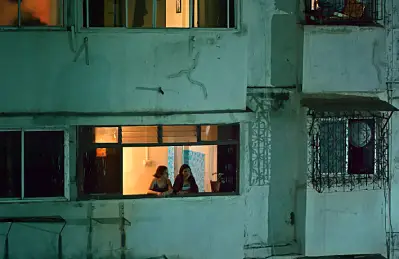
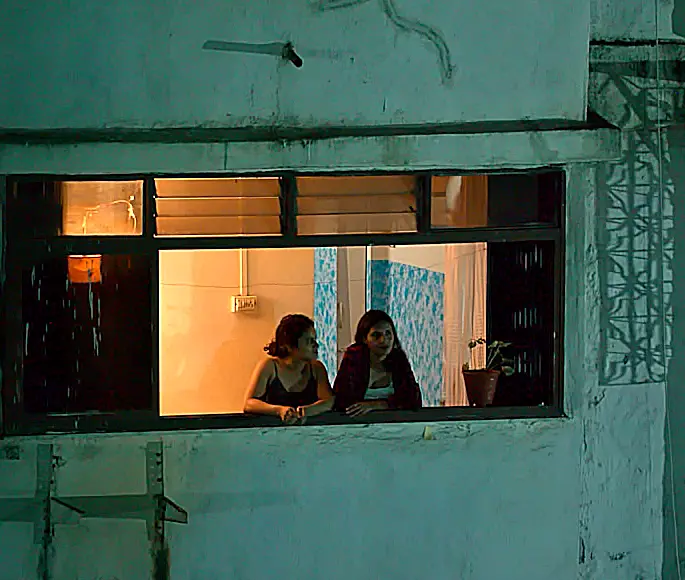
Indian director Anuparna Roy’s feature debut Songs of Forgotten Trees, tells the story of migrant Thooya (Naaz Shaikh), an aspiring actress who uses her apartment to moonlight as a sex worker.
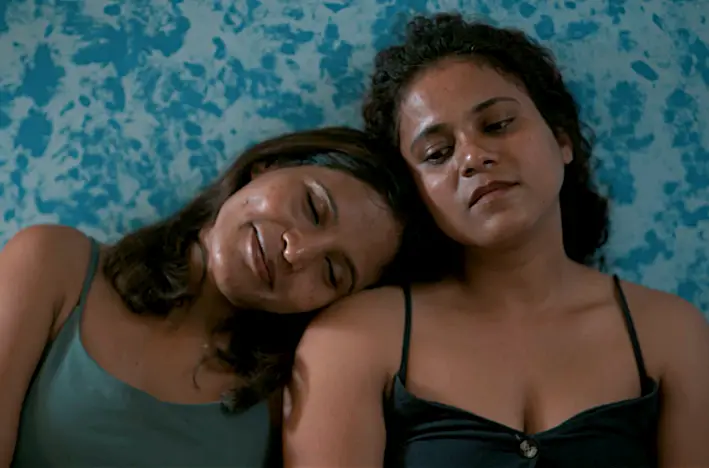
When she rents out a room to Shweta (Sumi Baghel), a remote call centre operative, the two women find in each other someone they can rely on. As their bond grows, they turn their apartment into their own little world amid the hustle and bustle of the city. Their conflicting lifestyles, however, put pressure on their seemingly unbreakable bond and tests the resilience of their friendship.
Songs of Forgotten Trees, which was awarded ‘Best Director’ in the Horizons section of the 2025 Venice Film Festival, acknowledges women as complex and deep characters — a rebuke of traditional Indian culture. Roy’s film, which is rooted in the personal, is a sensitive exploration of femininity, identity, and friendship.
Roy has previously directed the short film Run to the River, and her sophomore feature Lovers in the Blue Night has been selected to play at the 2026 Venice Film Festival.
In conversation with Flux Magazine, Anuparna Roy discussed divine intervention, truth and art, politics and revolt. She also reflected on the film’s personal roots and her own transformation through cinema.
The following has been edited for clarity.
HOW WOULD YOU DESCRIBE YOUR RELATIONSHIP TO CINEMA?
In my village, as it is in Indian society, cinema is often the biggest source of entertainment for most people. And yet, it is seen as something forbidden for most women, who are not even allowed to go to the cinema hall.
At first, I used it as a way to escape the real world by transitioning into another, but now I’m an adult, I realise cinema cannot only be a source of entertainment and romance, it has to be an art form that reflects on the pain and misery felt around the world. So, it needs to be narratively realistic in terms of what it shows and represents, especially when you are an Indian filmmaker, whose industry is already corrupted by the male gaze, and the volume of entertainment-centric films. We need to talk about bigger things, including Third World problems.
So, yes, I see cinema differently now than I did when I was a child.
IS IT ESSENTIAL THAT CINEMA IS TONALLY SERIOUS?
Not necessarily serious, but it has to have somewhat of a realistic approach towards society. For example, in my film I’m portraying a minority character, and I have to be honest about their surroundings. The situation for minority people is not great, and so I can’t showcase it in a way that is romantic, because that drifts from reality.
WHAT WAS THE GENESIS OF THE IDEA FOR SONGS OF FORGOTTEN TREES?
It came from personal experience. Songs of Forgotten Trees talks about the complicated sexual relationship between two women who fall in love. I knew what I was writing about having fallen in love with a woman and not receiveing a response. So, I wrote this from the perspective of a lover, and the hesitation between the two characters expresses something personal, because I haven’t ever experienced intimacy with a woman.
IN YOUR DIRECTOR’S STATEMENT, YOU MENTION YOUR CULTURAL UPBRINGING BEING PART OF THE ROOTS OF THE FILM.
I wouldn’t be able to portray something that wasn’t personal; something that I hadn’t seen or felt before. I wouldn’t be able to write a ghost story because I’ve not seen a ghost… just kidding. But no, I believe in writing something that’s deeply personal, and something I’ve felt or witnessed people go through.
Growing up in a patriarchal culture where women were objectified, this is why I chose not to showcase female nudity. Instead, I chose to showcase male nudity. Both are having sex and so it cannot only be the woman lying naked on the bed.
All of my decisions were a consequence of Indian culture, and I was trying to insert my own relationship with my father into the film through Thooya, with the constant talk about the father.
So, the style is personal, although I don’t think I have a style yet.
WHAT DO WE NEED MOST FROM CINEMA AT THIS MOMENT IN TIME? WHAT PURPOSE DOES CINEMA SERVE?
As a global citizen, I would suggest that we need cinema to be truthful. Without truth, you’re not doing justice with any art. Cinema is an amalgamation of all the other art forms, which makes it that much bigger and better. Through cinema, we can use this vast canvas to portray the truth about our society. And while I don’t think a film can create change, the least you can do is be honest through your art.
WE TALK ABOUT CHANGE IN A DRAMATIC WAY, BUT CHANGE TAKES PLACE IN SMALL INCREMENTS, BY CREATING SHIFTS IN A PERSON’S PERSPECTIVE. SO, THIS IS HOW A FILM BEGINS TO CHANGE THE WORLD.
Exactly, and I’d love to believe that. Film has brought a change to my life in the way that I think about things.
I’ll share an anecdote. When I was shooting my very first short film, we had to showcase poverty in the 1930s Dalit community. They are the most vulnerable group in society who don’t have anything. The house we were going to shoot in had an orange tree full of oranges. And being a terrible director, I cut down all the oranges to showcase the poverty — of course, we gave the family some money. I’m being bluntly honest, and I’ve learned from my mistakes. My perception has changed, but back then I thought a poor person couldn’t have an orange tree. Now, looking back to that time, I feel I was naïve and silly. You can’t do these types of things just because you’re a director and you’re making a film.
WHAT WERE YOU LOOKING FOR IN YOUR TWO ACTRESSES WHEN CASTING SONGS OF FORGOTTEN TREES? AND WHAT MADE YOU THINK THEY WERE RIGHT FOR THE FILM?
Songs of Forgotten Trees was three friends making a film inside an apartment we rented, with a camera we borrowed. We did auditions for the sake of doing auditions, and we workshopped the film together for three months in that apartment, where we cooked, ate, slept, and fought.
Our intentions aligned, and I feel it was divine intervention — it was meant to be. The three of us were dying to make a film and I already had a story in mind about two women. I saw these two jobless actors, and I was a jobless director, and we ended up making a film together. And here we are now.
I ALSO READ IN YOUR STATEMENT THAT YOU WEREN’T TRYING TO MAKE THE CHARACTERS METAPHORS. INSTEAD, YOU WANTED TO PRESENT THEM AS DEEP AND COMPLEX WOMEN, WHICH CHALLENGES HOW WOMEN ARE SEEN IN INDIAN CULTURE.
Women in India are always perceived as being ethical and without flaws. So, there’s a lot of ethical pressure on female characters in Indian cinema. They are ethical or they’re dancing to a certain type of song. It’s something I don’t understand.
As I said, the story was personal. Jhuma Nath, was a childhood friend I lost because of the caste system. My father told me, “You cannot talk to them.” That’s how the caste system works, but back then I didn’t understand. Losing Jhuma really hurt me, and when I was 22-years-old, I learned about the government’s complicity. They were not promoting education; they were promoting marriage for Dalit kids aged 12 and 13-years-old by giving money to the community. I felt there was no difference between my father, Jhuma’s father, and the government.
I wanted to make a documentary in response, but I couldn’t get the funding. I suppose I questioned whether I really wanted to meet my friend or did I just want to portray my sadness about losing her? I was critical of myself, and at the same time, I was still offended by her actions — why the hell did she get married? I’m still that kid in some ways, and while I know it was her father and the government, she could have said no to the guy and dismissed the marriage.
So, I ended up making a film about her without getting her permission. Of course, it’s metaphorical because those trees meant a lot to both of us. My father always told me I couldn’t go there and the myth surrounding those trees was you’d lose your loved one. And we did lose each other — it came to be true. It’s very romantic to think like that.
IS SONGS OF FORGOTTEN TREES A POLITICAL FILM AND AN ACT OF RESISTANCE?
Of course, and in India, a woman who is a sex worker and wannabe actress who falls in love with another woman, is itself a revolt. In Europe, it’s not, but it is in India and a woman choosing another woman as a lover is political. Also, the references to casteism make it political. We didn’t intend to rebuke the government because we can’t afford to, but yes, everything is political. Losing Jhuma was not only personal but political, because of the government’s role. It’s not just society but the government, and I often feel society is very performative.
Songs of Forgotten Trees is in UK cinemas now, courtesy of New Wave Films.
words Paul Risker