
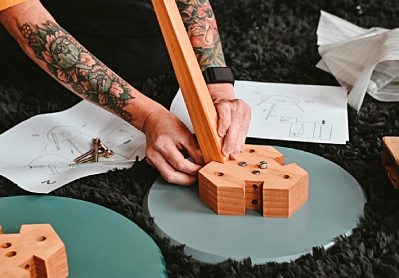
If you have ever noticed that you learn better by doing rather than just reading or listening, you are likely a tactile learner.
Tactile exercises tap into the sense of touch and hands-on interaction to help the brain process and retain information more effectively.
Whether you are a parent, educator, or someone exploring new ways to absorb knowledge, understanding how tactile learning works can genuinely change the way you approach education. This guide breaks down exactly what tactile exercises are, why they matter, and how you can put them into practice.
What Tactile Exercises Actually Are
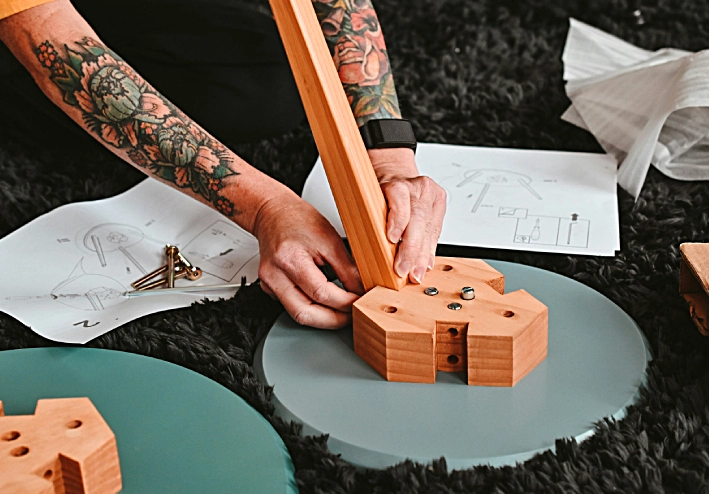
Tactile exercises are learning activities that involve direct physical contact, touch, and the manipulation of objects or materials. Rather than passively receiving information through text or audio, tactile learners engage with their environment by touching, building, assembling, or physically interacting with the subject matter at hand.
According to Soundsory’s guide on tactile exercises, this form of learning activates sensory pathways that connect physical experience to cognitive processing. In other words, your hands communicate directly with your brain, forming stronger neural associations than visual or auditory input alone can achieve.
Think of a child who learns to count by physically moving blocks from one pile to another. That hands-on interaction does not just teach numbers: it builds a sensory memory of the concept. The same principle applies to adults who learn instrument techniques, surgery procedures, or mechanical repairs through practice and touch.
In educational settings, tactile exercises can take many forms: clay modeling, textured letter boards, hands-on science experiments, or even simple activities like writing in sand. What connects all of them is the direct involvement of the sense of touch as a bridge to deeper understanding.
How Tactile Learning Differs From Kinesthetic Learning
Many people use the terms tactile and kinesthetic interchangeably, but they are not exactly the same. Understanding the difference helps you choose the right approach for your specific learning goals.
Kinesthetic learning refers to learning through whole-body movement and physical activity. A kinesthetic learner might absorb information best through role-playing, sports drills, or walking while studying. The focus is on gross motor movement, where large muscle groups are in action.
Tactile learning, by contrast, is specifically about the sense of touch and fine motor interaction. It does not require full-body movement. Instead, it relies on the feedback your fingertips, palms, and hands send back to your brain. Activities like tracing letters with a finger, molding shapes from clay, or sorting textured objects fall firmly in the tactile category.
Of course, there is overlap. Many hands-on activities combine both tactile and kinesthetic elements. But when you design learning experiences, it helps to distinguish between them. A student with strong tactile preferences might thrive with a desk-based textures activity, while a purely kinesthetic learner may need to move around the room to stay engaged.
Recognizing where these two styles diverge lets you tailor the experience more precisely and get better results from your teaching or self-study strategy.
Key Benefits of Tactile Exercises for Learners of All Ages
Tactile exercises are not just for young children in a classroom. Their benefits extend across age groups and learning contexts, from early childhood development to adult professional training.
Stronger Memory Retention and Concept Understanding
One of the most well-documented advantages of tactile learning is improved memory retention. Research in sensory learning consistently shows that multi-sensory experiences create stronger and more durable memory traces in the brain. For example, a student who physically assembles a model of the solar system is far more likely to remember the order of the planets than one who simply reads a list.
This happens because tactile input activates the somatosensory cortex, the brain region responsible for processing touch. That activation works in parallel with areas responsible for language and visual memory, so the concept gets encoded in multiple ways at once. The result is a deeper understanding that is harder to forget.
For learners who struggle with abstract concepts, tactile exercises offer a concrete pathway in. Instead of trying to visualize something intangible, you get to hold it, shape it, or manipulate it in space. That physical grounding makes even complex ideas more accessible.
Improved Focus, Engagement, and Motivation
Tactile exercises also have a direct impact on attention and motivation. Passive learning, such as lectures or reading, can make it difficult for many learners to stay focused. But the moment you introduce a hands-on component, engagement rises noticeably.
This is especially true for learners with attention difficulties or those who find traditional classroom formats frustrating. The physical act of doing something gives the brain a secondary anchor, a sensory thread to hold onto, which keeps distraction at bay.
Beyond focus, tactile activities tend to feel more rewarding. There is a clear sense of accomplishment that comes from completing a hands-on task. That feeling of success builds intrinsic motivation, which is a far more sustainable driver of learning than external pressure or grades alone.
For adults, tactile exercises in professional training, craft learning, or therapeutic contexts carry the same motivational boost. You stay present, you stay curious, and you are more likely to return to the material.
Effective Tactile Exercise Examples to Try
Now that you understand why tactile exercises matter, here are some practical examples you can introduce into learning environments or daily routines.
Textured Writing Boards
For early literacy learners, tracing letters on a textured surface, such as sandpaper or a grooved board, builds letter recognition through touch. The texture provides immediate sensory feedback that reinforces the shape of each character in a way that pencil on paper alone cannot match.
Sensory Bins
Fill a container with rice, sand, small stones, or dried pasta and hide objects or letters inside. The learner searches by touch, identifies the item, and connects it to a concept or word. This works brilliantly for vocabulary development, shape recognition, and early numeracy.
Clay or Dough Modeling
Ask learners to sculpt letters, numbers, geometric shapes, or even representations of concepts they are studying. The process of shaping and refining a form with their hands accelerates understanding and makes abstract ideas tangible.
Hands-On Science Experiments
Experiments that involve mixing, measuring, and physical observation give learners direct sensory contact with the subject. For example, a simple chemistry experiment where you mix substances and feel the temperature change delivers a memorable sensory lesson.
Sorting and Categorization Activities
Provide a collection of objects with different textures, weights, or shapes, and ask the learner to sort them by category. This type of activity builds classification skills, scientific thinking, and sensory discrimination all at once.
Finger Tracing Maps or Diagrams
Instead of simply studying a map or diagram, trace it with your finger. This turns passive observation into an active tactile experience, which helps with spatial memory and directional understanding.
Each of these tactile exercises can be adapted for different age groups and subjects. The key is to find activities where the sense of touch carries real informational weight, not just novelty.
Conclusion
Tactile exercises offer a powerful, evidence-backed approach to learning that goes well beyond novelty or childlike play. By activating the sense of touch, these activities strengthen memory, improve focus, and make complex ideas far more accessible. Whether you are designing a curriculum, supporting a child at home, or looking to sharpen your own learning process, adding tactile elements can make a real difference. Start small, stay consistent, and let your hands do some of the thinking.
All activities should be age-appropriate and supervised by an adult. If you have concerns about your child’s development, consult a pediatrician or therapist.
words Al Woods