William Blake never played by the rules of reality. Angels in trees. Spirits at the window. A whole belief system invented from scratch. Now, in spring–summer 2026, his strange, ecstatic inner world takes over the National Gallery of Ireland with William Blake: The Age of Romantic Fantasy (16 April–19 July), a major exhibition bringing more than 100 works from Tate to Dublin for the final stop on an international tour.
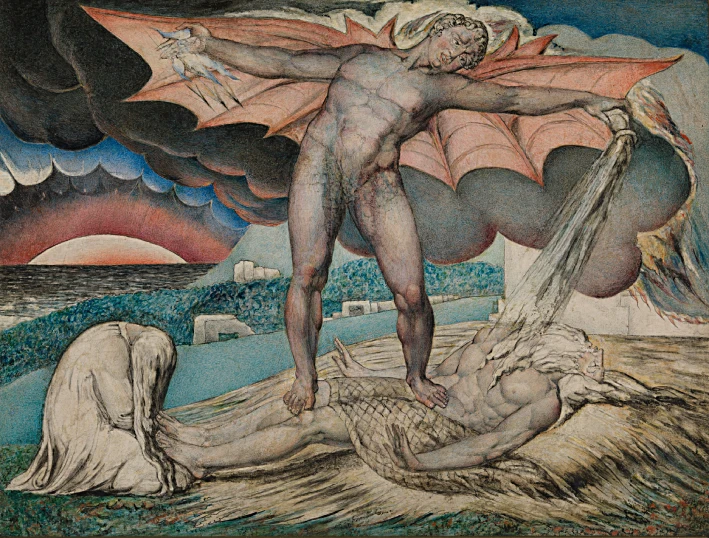
Blake’s influence is everywhere and nowhere at once — from Bob Dylan and U2 to Allen Ginsberg and Martin Scorsese — but the art itself still feels radical, unruly, and faintly dangerous. This show embraces that energy, placing Blake alongside his Romantic peers to reveal a late-18th- and early-19th-century obsession with the supernatural, the gothic, and the psychologically extreme.
The exhibition opens with three of Blake’s most iconic colour prints. The House of Death imagines humanity’s future suffering with almost cinematic dread; The Night of Enitharmon’s Joy introduces a figure from Blake’s own private mythology, surrounded by witchy, Shakespearean creatures; and Satan Exulting over Eve fuses heaven, hell and flesh in swirling washes of watercolour and fire.
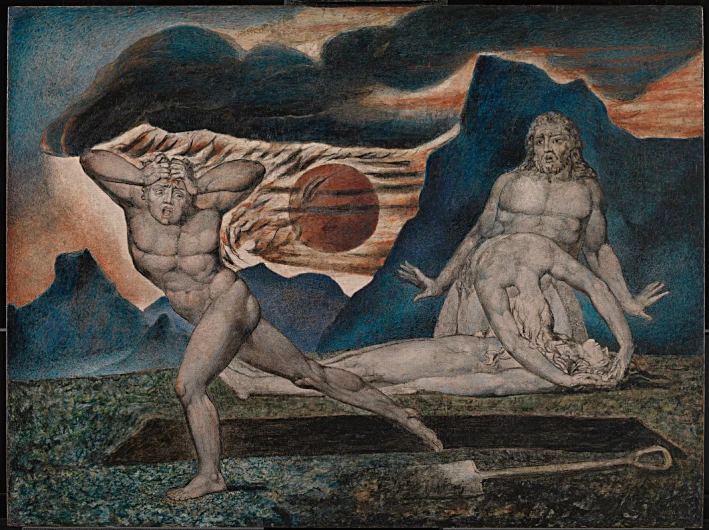
One of the most unsettling works on display is also one of the smallest. The Ghost of a Flea (1819–20) — a muscular, blood-holding demon painted with gold highlights — was supposedly sketched from a spirit Blake encountered during a séance. It’s grotesque, absurd and hypnotic, proof that scale means nothing when imagination is unhinged.
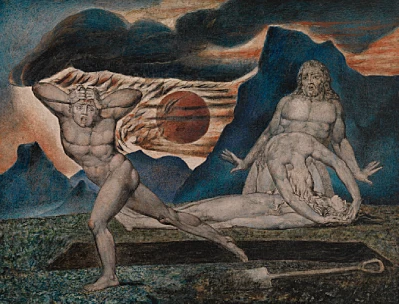
Not all of Blake’s visions are dark. His fairy-filled Oberon, Titania and Puck shows a softer, enchanted side of fantasy, while his religious works — from tormented visions of Job to grief-stricken biblical parents — twist familiar stories into something raw and personal. Blake didn’t illustrate scripture; he rewrote it.
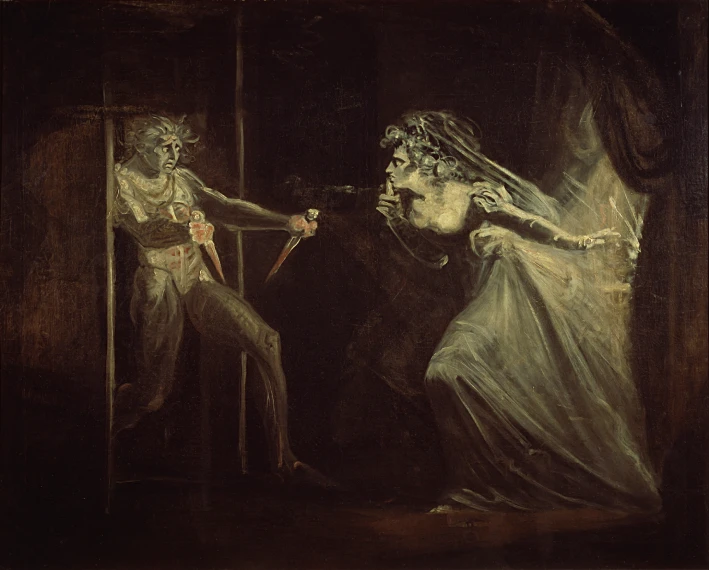
Surrounding Blake are the artists who shaped — and were shaped by — this feverish moment in Romanticism: Henry Fuseli’s nightmarish Shakespeare scenes, Francis Danby’s apocalyptic floods, Turner’s mythic storms, and gothic visions by James Barry, Philip James de Loutherbourg and others. Skeletons, devils, avalanches and sea monsters crowd the walls, reflecting a world rattled by revolution, war and spiritual doubt.
Blake was once dismissed as eccentric, even mad. Now it’s clear that the visions were the point. William Blake: The Age of Romantic Fantasy isn’t about tidying him up — it’s about letting the weirdness breathe.
words Alexa Wang