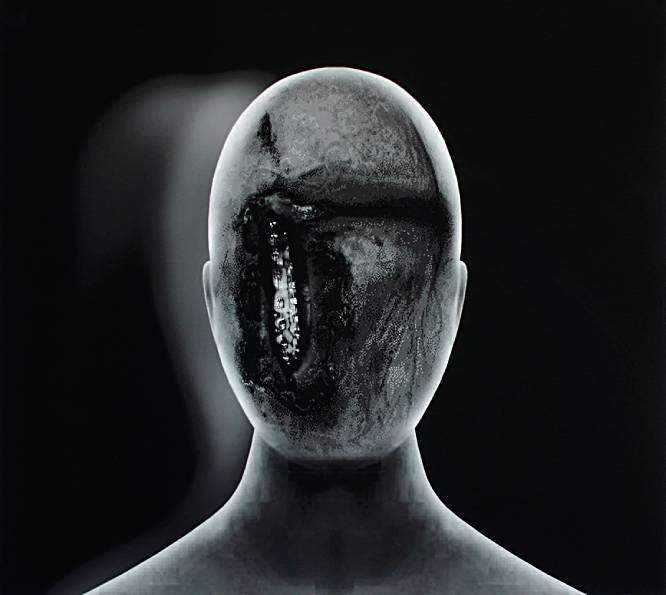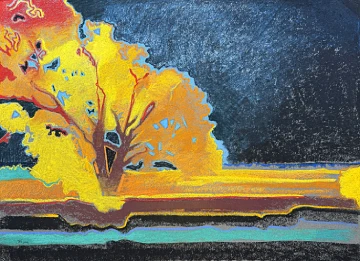
Before virtual worlds became fashionable subjects within contemporary art, they were already becoming spaces people inhabited emotionally on a daily basis. For artists growing up alongside rapidly shifting digital technologies, the boundary between physical and virtual experience was never entirely stable. Screens stopped being passive surfaces long ago.
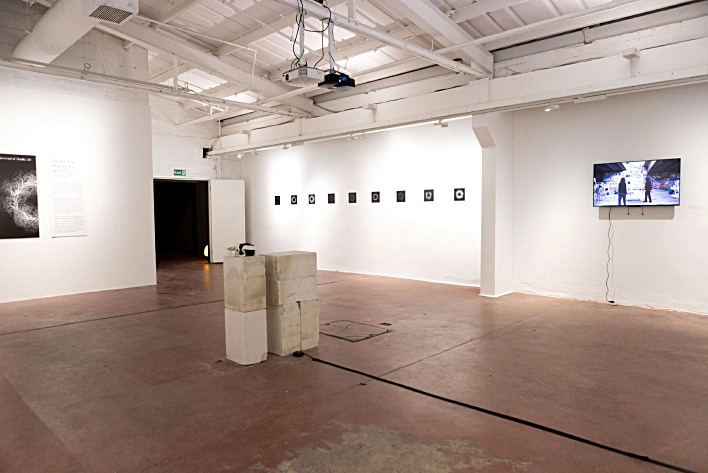
They became places where people communicated, formed memories, and increasingly understood themselves. Xiyan Chen belongs to a generation shaped by that transition, but rather than treating digital space as something detached from reality, her work explores how technology can expand the ways art is experienced, navigated, and emotionally understood. Born in China and now based in London, Xiyan approaches digital media less as a technological spectacle and more as a new artistic threshold. Her practice moves across virtual reality, moving image, generative systems, interactive installation, and digital sculpture, yet the work itself remains grounded in deeply human concerns. Questions of touch, memory, curiosity, intimacy, and shared presence sit beneath everything she creates. Technology becomes the space through which those experiences are reimagined.
The growing attention around her work has already carried into a busy run of exhibitions throughout 2026. Earlier this year, Eternal Genesis: Reversal of Duality 2.0 appeared in the Milan exhibition Duality at MA-EC Gallery, while her London solo exhibition Before Us, During Us, After Us at Greatorex expanded many of the same ideas into immersive installation and virtual interaction. Alongside these projects, her selection as a finalist for Arte Laguna Prize 2025 reflects the wider momentum building around a practice operating at the intersection of contemporary art and emerging digital experience. Part of the reason this trajectory feels significant is the way she avoids the language often surrounding digital art. There are no grand declarations about innovation or technological disruption. Instead, the work feels exploratory and carefully observational, allowing viewers to move through environments that feel emotionally driven rather than technically imposed. The digital landscapes she creates are not cold simulations or distant futures. They resemble spaces suspended somewhere between memory, dream, and physical reality.
That atmosphere becomes especially visible in Eternal Genesis: Reversal of Duality 2.0. The work begins with the familiar symbols of computer language: asterisks, ampersands, plus signs. At first, they sit rigidly across the screen with the precision of coded instruction. Gradually, however, the system loosens. Symbols begin clustering together, spreading outward and branching into formations resembling root systems, microscopic organisms, coral growth, or cellular structures seen under magnification.
Watching the piece unfold feels less like observing software and more like witnessing a strange digital ecology forming in real time. Rather than using technology to imitate nature superficially, Xiyan draws attention to the deeper similarities between computational systems and biological growth. Both rely on repetition, variation, and emergence. Slowly, the neat separation between the organic and the artificial begins to dissolve until the digital no longer feels mechanical at all.
The same sense of immersion carries into Before Us, During Us, After Us, where viewers move through virtual environments shaped by proximity, gesture, and interaction. Instead of standing outside the work looking in, audiences become physically implicated within it. Space reacts subtly to movement, digital structures shift and respond, and the environment develops through the viewer’s presence inside it. Rather than using technology simply as a viewing tool, the exhibition treats virtual space as something navigated bodily and emotionally. In MetaTouch, the relationship between body and technology becomes even more tactile. Hands press against illuminated responsive surfaces, triggering visual ripples, distortions, and shifting digital forms across the installation. Interaction here is not framed as control or command. It feels closer to contact, as though the work is testing how physical sensation might continue to exist inside increasingly virtual environments.
Projects such as Rebuild the Unknown expand these ideas further through immersive worldbuilding and speculative environments that audiences can explore rather than simply observe. Fragmented architectural spaces, shifting structures, and evolving digital landscapes create the sensation of entering unfinished worlds still in the process of forming themselves. Rather than presenting fixed narratives, she allows viewers to navigate uncertainty directly, encouraging curiosity, disorientation, and discovery to coexist. Taken together, the works suggest a broader rethinking of how contemporary art might operate within increasingly technological realities. Xiyan is not abandoning traditional artistic concerns. If anything, she extends them. Painting transformed flat surfaces into imagined worlds. Installation art reshaped physical space. Her work pushes that same lineage into immersive digital territory, building environments audiences can physically enter, emotionally navigate, and actively experience in real time.
This perspective places her among a growing generation of artists redefining how digital technology functions within fine art practice. In these environments, virtual space is never treated as spectacle alone. It becomes another way of exploring presence, connection, and human perception at a moment when reality itself is increasingly experienced through layered physical and digital worlds. Across her recent exhibitions, one thing becomes increasingly clear: Xiyan Chen is less interested in representing the future than constructing new ways for audiences to experience the present.
words Alexa Wang
22/5/26