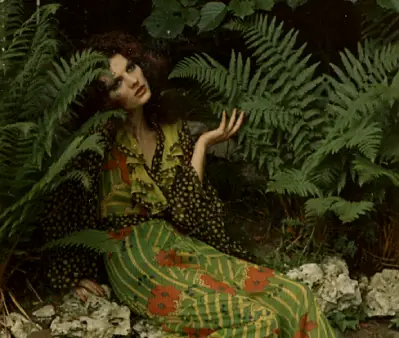
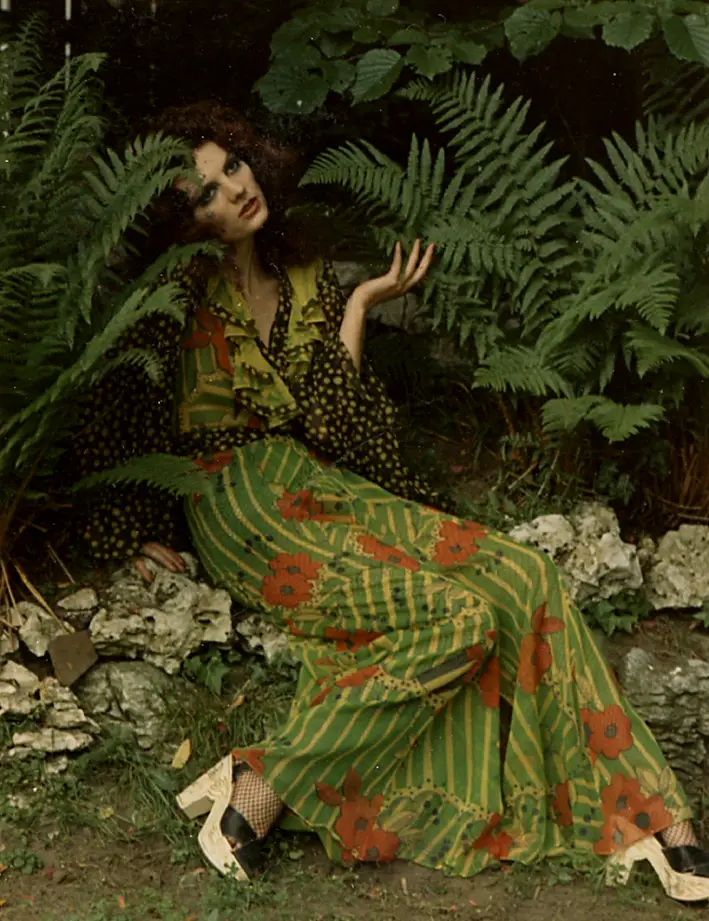
Before fashion became content, Ossie Clark and Celia Birtwell understood that clothes could be a scene. The dresses were only the beginning: slinky bias cuts, clouds of chiffon, slim-hipped flares, glossy python jackets and prints alive with flowers, birds and psychedelic geometry.
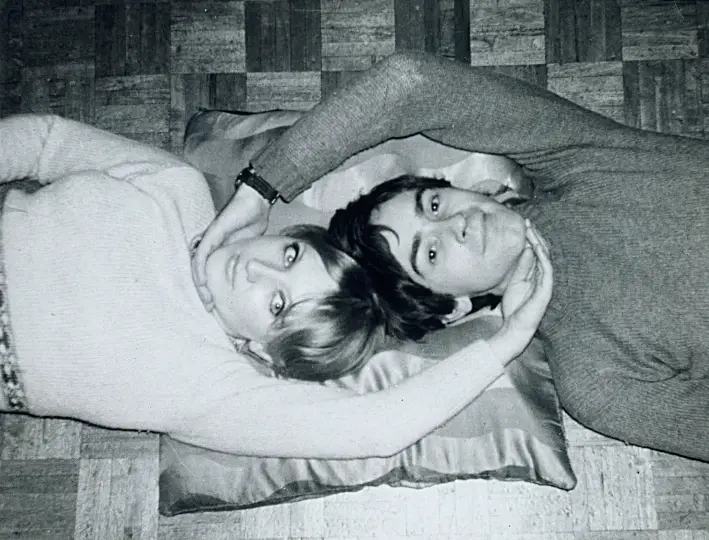
Then there was everything around them — the music, the parties, the models, the lovers, David Hockney, the Rolling Stones. Clark and Birtwell didn’t just dress late-Sixties London. They helped give it a silhouette.
Now, more than half a century later, Ossie Clark + Celia Birtwell, at the Fashion and Textile Museum from October 2, 2026 to April 11, 2027, brings together more than 120 garments from the couple’s years together and their later independent careers. It is an opportunity to look beyond the mythology and back at the clothes themselves: the construction, the prints, the sex, the sheer technical audacity.
“Fashion isn’t just clothes, it’s what’s happening at the moment in everything” – Ossie Clark
Clark and Birtwell arrived at exactly the right moment. The old rules were collapsing. Young people were becoming a powerful cultural force, London’s boutiques were turning dressing into a form of identity, and music and fashion were beginning to operate as part of the same conversation. At Quorum, the West London boutique where their partnership flourished, Birtwell’s romantic, nature-filled prints met Clark’s extraordinary understanding of the body. She supplied the fantasy; he worked out how to make it move.
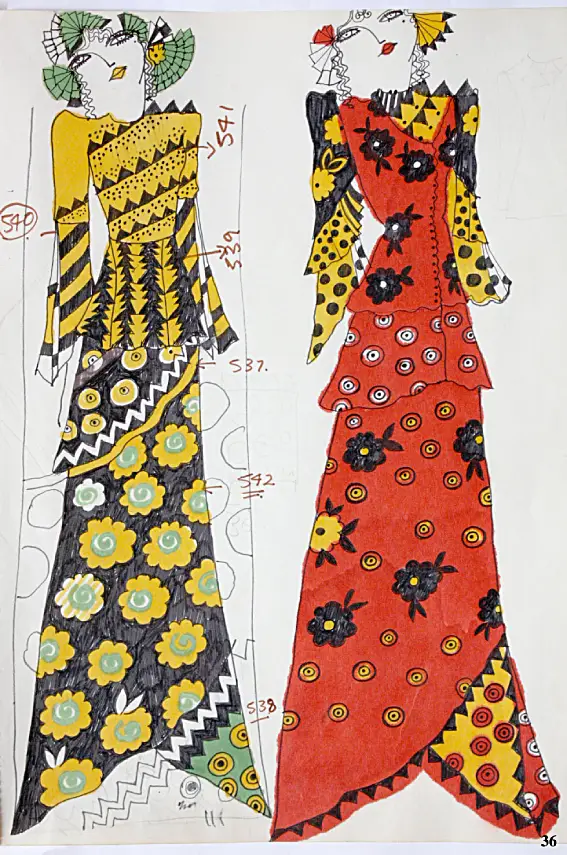
Their early work already had an appetite for experimentation. The 1966 paper dress, made by Ascher Ltd, emerged during the brief craze for disposable paper clothing, when fashion became cheap, graphic and deliberately temporary. Clark even created his own range of “throwaways”. It was an appropriately irreverent idea for a decade increasingly interested in rejecting the rules of the past.
But Clark’s real obsession was making glamour physical.
“Whereas in the 1930s and 1940s satin bias, feather boas and lace were worn by goddesses of the screen, we thought: why can’t people on the street wear them?” – Ossie Clark
The answer was clothes that took the fantasy of old Hollywood and threw it into the street. The powder-blue Ziggy Stardust dress is the perfect example. Clark had studied the work of Vionnet, Chanel, Poiret and Schiaparelli at the V&A, and its construction is almost absurdly clever: a spiral of chiffon cut on the straight grain and wound around the body. Birtwell’s print — black birds, flashes of golden flowers — makes the technical feat feel weightless.
Then there is the 1968 Lamborghini jacket: long, satin and unapologetically sexy, worn with trousers in a black, red and cream Chinoiserie-style print. Twiggy wore it. So did Rolling Stone Bill Wyman. The clothes were glamorous, but never respectable. That distinction mattered.
By the late Sixties, Clark and Birtwell’s fashion had become inseparable from pop culture. Their shows were less polite catwalk presentations than happenings, staged at places including the Royal Court Theatre and Chelsea Town Hall. The Beatles sat in the front row. Clark and Birtwell vacationed with the Rolling Stones. Jimi Hendrix, David Bowie, Marianne Faithfull and Bianca Jagger wore their designs, while Mick Jagger and Liza Minnelli became part of their expanding celebrity clientele.
The gender rules were getting blurry, too. Their chiffon and satin shirts were worn by men and women alike. As Vogue put it in 1968, the shirts were “ not to be hidden under a jacket they were splendid enough to wear just with trousers”.
The silhouettes changed with the times. The neat mini of the early Sixties gave way to longer, fluid shapes; plunging necklines and diaphanous fabrics replaced rigid geometry. Python skin arrived in tight-fitting jackets that combined biker attitude with something distinctly erotic. Clark’s clothes could look effortless, but underneath the fantasy was an extraordinary precision of cut.
Clark and Birtwell married in 1969. Celia’s wedding dress, the Ophelia, is one of the exhibition’s emotional centrepieces: almost entirely chiffon, combining her “Floating Daisy” and “Lollipop” prints, its volume making it resemble a floating kaftan. It is romantic and ethereal, but also startlingly revealing.
David Hockney, who was a witness at the wedding, later immortalised the couple in Mr and Mrs Clark and Percy (1970–71), with Birtwell wearing Clark’s Heavenly Twins dress. The painting became one of the defining portraits of British fashion and bohemian culture of the period.
But the exhibition refuses to leave them frozen inside that image.
After their split, Clark continued to explore the body through jersey, creating dresses and jumpsuits that were quieter but no less sensual. His work remained rooted in draping, cut and an intuitive understanding of the human form.
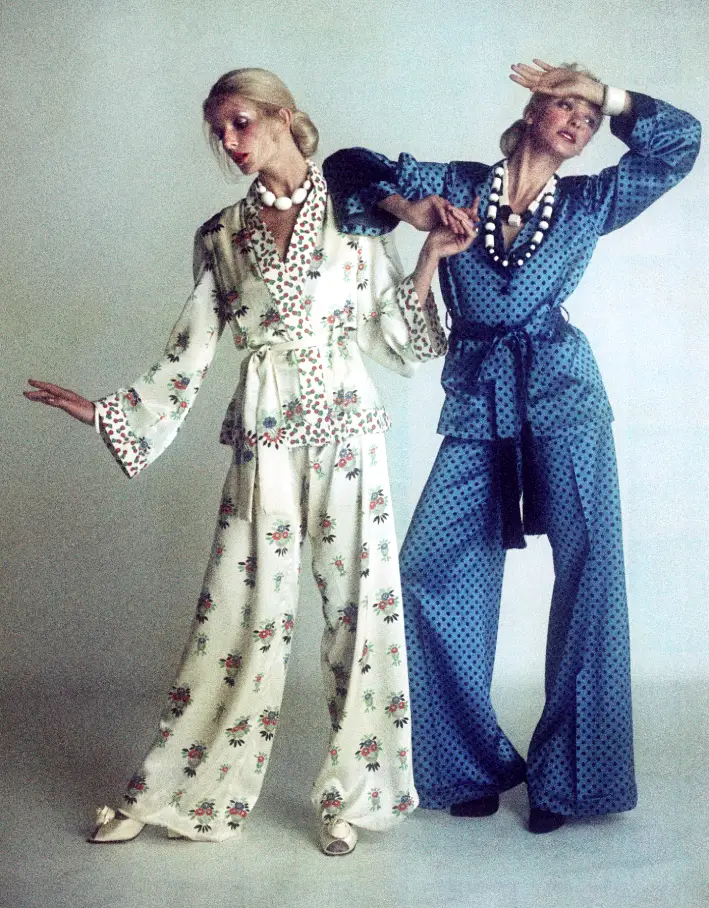
Birtwell, meanwhile, developed her own visual language through textiles, interiors and illustration. Her later work retained the flowers, geometrics and historical references that had made her prints instantly recognisable. Her 2006 collaboration with Topshop introduced her distinctive designs to a new generation.
That separation is crucial. For years, Clark and Birtwell have been packaged almost as a single aesthetic: his cutting, her prints, their beautiful friends. This exhibition pulls those elements apart and lets each talent breathe.
The accompanying book, Ossie Clark and Celia Birtwell, published on September 21, follows the story from 1965 to 1974 and into their later independent careers. With text by curator Teresa Collenette, a foreword by Anna Sui and an epilogue by fashion historian N. J. Stevenson, it expands the story beyond the clothes and into the creative partnership that produced them.
“The contribution of Ossie Clark and Celia Birtwell helped define the London look of the late 1960s and early 1970s. Clark’s contributions to fashion – his skillful cutting and innate understanding of the human form – may not have had the recognition of other designers of the era, whose businesses had longevity. We hope this exhibition, which features a large collection of their work, will help to redress the balance.”- Dennis Nothdruft, Head of Exhibitions, Fashion and Textile Museum
The clothes still look dangerous. That might be their greatest achievement. Half a century later, Clark and Birtwell’s world doesn’t feel like a museum piece. It feels like an invitation: dress up, turn the music up, ignore the rules and go out.
Ossie Clark and Celia Birtwell is at the Fashion and Textile Museum from 2 October 2026 – 27 April 2027
written by Alexa Wang