Reading Festival Style Update (September 2026): Reading Festival 2026 showed that festival style is no longer just about wellies, denim and whatever can survive three days in a field.
Victoria Beckham generated fashion coverage with a characteristically understated festival look, while elsewhere Palestinian flags and political messaging became some of the weekend’s most prominent visual symbols. Kneecap’s headline set in particular blurred the boundaries between performance, politics and visual identity, with highly politicized flags draped across the DJ deck as the group voiced their strong, and sometimes controversial, opinion throughout their performance. That contrast tells us something important about celebrity fashion today.
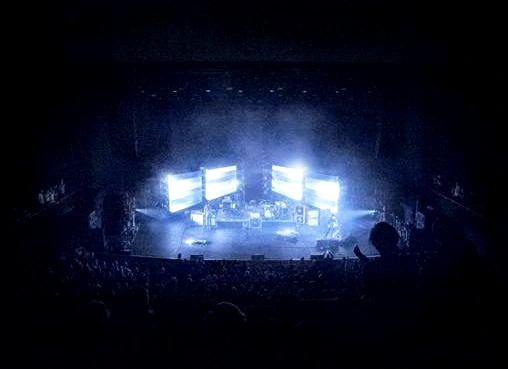
Festival style has always been a form of self-expressioarn. But at Reading 2026, clothing, flags, symbols and stage design showed how easily fashion and visual culture can become vehicles for political messaging. For audiences, brands and celebrities, that raises a more difficult question: when does personal expression become political campaigning, and does it belong in spaces traditionally associated with fashion and entertainment?
Reading 2026 was about more than music and clothes
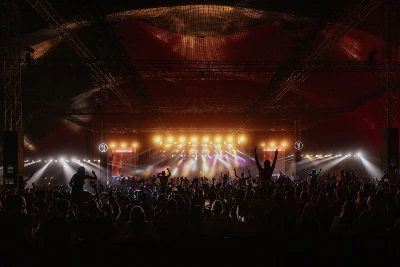
Reading Festival took place at Richfield Avenue from 27 to 30 August 2026, bringing together a line-up that included Charli xcx, Dave, Raye, Florence + The Machine, Chase & Status and Fontaines D.C. Fashion has long been part of the experience.
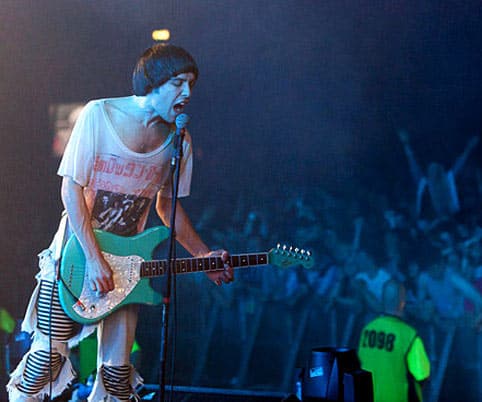
Unlike a red carpet, festival dressing is supposed to look spontaneous. Clothes have to contend with mud, rain, crowds and hours spent outside. That has created an entire visual language around British festivals: wellington boots, oversized jackets, denim, sunglasses and clothes that become progressively less pristine as the weekend continues.
Reading’s own environmental programme demonstrates the sheer scale of the culture surrounding the clothes and equipment people bring with them. Its sustainability campaign was designed to reach more than 100,000 attendees, while more than 10,000 festivalgoers booked into its environmentally focused Meadow campsite in 2025. The festival also distributed 10,000 vouchers to encourage people to take their tents home and estimated that 65 per cent of tents were ultimately removed from the site.
In 2026, however, another visual language was difficult to ignore: politics.
When festival style becomes political
Politics at music festivals is hardly a 2026 invention.
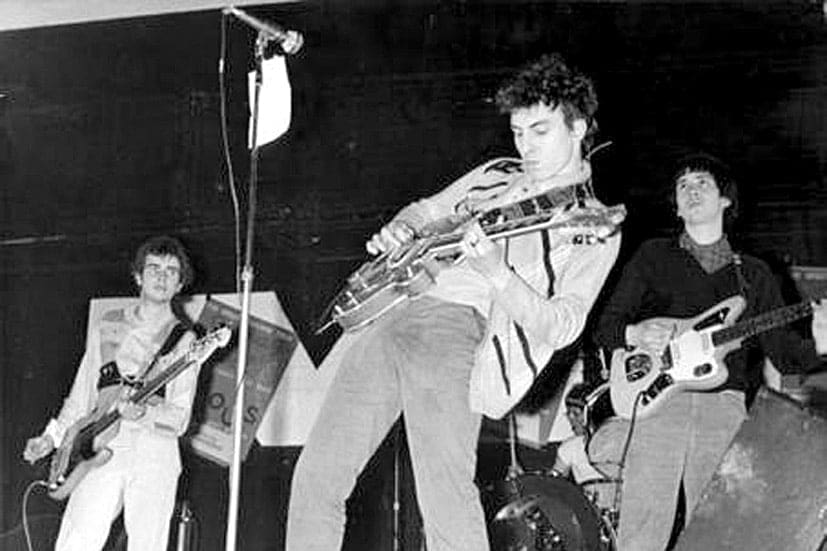
Artists have used clothes, badges, banners and stages to communicate political beliefs for generations. Punk made political identity part of its aesthetic. Protest T-shirts have repeatedly moved between activism and mainstream fashion. Even something as simple as a badge or flag can transform an otherwise ordinary outfit into a political statement.
Reading 2026 provided a particularly visible example.
During Kneecap’s headline appearance on the final day of the festival, a Palestinian flag was draped over the group’s DJ deck. The West Belfast trio combined their music with explicit and vulgar political statements and expressions of solidarity with Palestinians.
They went on to refer specifically to “our brothers and sisters in Palestine” while using crass and quite violent language to get this message across.
The flag was therefore not incidental decoration. It formed part of an explicitly stated political message.
And that distinction matters when discussing what Reading 2026 says about celebrity fashion and visual culture today.
Kneecap turned visual identity into part of the message
Kneecap’s political identity does not begin or end with Reading.
The group’s performances have repeatedly incorporated political slogans and Palestinian imagery. At London’s Wide Awake festival in 2025, an estimated 22,000 people attended their headline set, where the crowd was encouraged to chant Kneecap’s political beliefs alongside him. Their political messaging has also attracted significant controversy.
In March 2026, the High Court rejected an attempt by prosecutors to revive a terrorism case against member Liam Óg Ó hAnnaidh, known as Mo Chara, over an allegation connected to a previous performance. The judgment stressed that the outcome rested on a narrow legal issue and that Ó hAnnaidh had neither been convicted nor acquitted of the alleged conduct.
Therefore, by the time Kneecap arrived at Reading, then, audiences were unlikely to view the Palestinian flag simply as part of the stage decoration. He has made it his entire identity.
This is where the boundaries between celebrity style, performance and politics become increasingly difficult to separate. When a performer repeatedly incorporates a symbol into concerts, photographs and public appearances, it becomes part of how that performer is visually recognised.
For supporters, that can represent authenticity: an artist wearing or displaying something because they genuinely believe in it.
For critics, it can feel like a political narrative being inserted into an entertainment space where audiences have paid primarily to see music.
Both reactions help explain why apparently simple visual choices can now dominate the conversation around a festival.
Victoria Beckham represented a very different kind of Reading style
The other side of Reading 2026 looked far more familiar.
Victoria Beckham attended to watch her son Cruz Beckham perform with The Breakers and immediately attracted fashion coverage.
Her outfit was remarkably simple: an olive-green fitted T-shirt tucked into high-waisted black jeans, finished with tinted aviator sunglasses.
British Vogue noticed something particularly interesting. Beckham had dressed in an almost identical way at Live 8 in Hyde Park 21 years earlier, in 2005.
There was no elaborate attempt to manufacture a “festival look”.
There was also, as Vogue pointed out, no obvious rain poncho or pair of Wellington boots. Instead, Beckham essentially dressed like Victoria Beckham.
That consistency is significant.
Modern celebrity fashion works best when audiences believe the clothes actually belong to the person wearing them. Beckham’s outfit communicated a recognisable fashion identity without needing a slogan, flag or explanation.
Her children leaned further into conventional festival dressing. Vogue noted Cruz Beckham’s patch-covered double denim, Romeo Beckham’s camouflage tracksuit and Harper Beckham’s apparent Victoria Beckham x Gap parka with Hunter wellies.
Together, the family demonstrated the more traditional role of festival fashion: practical clothes becoming part of a celebrity’s public image.
A flag can now be as visually powerful as a designer outfit
What Reading 2026 demonstrates particularly clearly is that visual impact no longer necessarily comes from clothes.
A flag positioned behind an artist can become more memorable than the designer label they are wearing.
A slogan on a screen can dominate photographs of a performance.
A political symbol can travel across TikTok, Instagram and news websites without audiences ever hearing the song being performed when the photograph was taken.
That changes the relationship between fashion and celebrity culture.
For decades, fashion houses understood the value of putting recognisable clothes on recognisable people. A celebrity wears a dress, photographs circulate, audiences identify the designer and the fashion house receives exposure.
Political symbolism can now operate through exactly the same mechanism.
The difference is that the “brand” being communicated is an idea or cause rather than a fashion label.
At Reading, this was particularly obvious because Kneecap were not the only performers bringing political commentary into their sets. British rapper Loyle Carner also voiced support for Palestinians during his main-stage performance and made comments about Reform UK leader Nigel Farage.
The politics was therefore part of the wider visual and cultural conversation surrounding the weekend, rather than one isolated image.
Should political narratives dominate fashion and entertainment spaces?
This is where the debate becomes more complicated.
Artists have freedom to express political beliefs, and music has a long history of protest. Festivals themselves have frequently been associated with political movements, environmental campaigns and social causes.
Reading itself actively promotes certain values. Its official sustainability programme has partnered with organisations including Climate Live and No Music on a Dead Planet, while its safeguarding material says it wants the festival to be a place where everyone feels “welcomed, valued, and safe”.
So the idea that festivals have ever been completely detached from social issues is difficult to sustain.
But there is still a difference between a festival having values and an individual performer using a stage to advocate a particular political position.
Audiences may strongly agree with that position. Others may strongly disagree. Some may simply want the music. And for the festival goers that paid money to to enjoy a festival, some argue is it fair to spend money to listen to people spew their political beliefs at them? Especially when they disagree.
For fashion brands, stylists and celebrities, that creates a practical consideration too. Once a political symbol appears alongside a celebrity or outfit, coverage can shift away from the clothes themselves. Instead of focusing on the hard work of the stylist or designer for each artist’s outfits, the attention is instead drawn to the political symbols on stage.
The political message becomes the story.
Celebrity fashion is increasingly about identity rather than trends
The contrast between Kneecap and Victoria Beckham might appear enormous, but both actually illustrate the same broader development.
Celebrity style in 2026 is increasingly about identity.
Beckham’s fitted top, high-waisted jeans and sunglasses worked because they belonged naturally within a visual identity she has maintained for decades.
Kneecap’s Palestinian flag worked as a piece of visual communication because audiences already associated the group with outspoken political outbursts.
Social media has made celebrities visible almost constantly. Audiences see airport clothes, dinner outfits, concert costumes, festival appearances and red carpets. Maintaining a recognisable identity across those environments has become increasingly valuable.
The strongest celebrity style therefore communicates something immediately.
The question raised by Reading 2026 is what happens when the thing being communicated is no longer simply taste.
What Reading 2026 tells us about festival fashion today
Reading showed two very different directions for modern festival style.
On one side was recognisable celebrity dressing: Victoria Beckham turning up in understated clothes that could have come from almost any period of her public life.
On the other was overt visual politics: flags, slogans and stage imagery designed to communicate a political position alongside the music.
Both attracted attention.
But they generated very different conversations.
For celebrities and designers, that distinction matters. Fashion can communicate personality without necessarily communicating politics. Once political symbols are deliberately introduced, audiences will inevitably interpret the wider image through that political context.
The outfit may cease to be the story altogether.
Summary: Reading 2026 showed how much festival style has changed
Reading Festival 2026 demonstrated that festival style now stretches far beyond clothes.
Victoria Beckham’s understated appearance showed the enduring power of consistent personal style, while Kneecap’s Palestinian flag and political statements demonstrated how visual identity can be used to communicate something much broader than fashion.
Politics and music have always overlapped, and artists have every opportunity to express their views. But Reading also showed the consequences of combining politics with celebrity visual culture: a flag or slogan can quickly become more prominent than the music, clothes or designer behind an appearance.
For fashion, that creates a new reality. Celebrity style is increasingly judged not only by what someone is wearing, but by what the entire image appears to say.
FAQ: Reading Festival 2026, politics and celebrity fashion
Why was Reading Festival 2026 politically controversial?
Several performers incorporated political commentary into their appearances. Kneecap’s headline set featured a Palestinian flag and explicit expressions of solidarity with Palestinians, while Loyle Carner also made political comments during his performance.
What happened during Kneecap’s Reading Festival 2026 performance?
Kneecap performed on the final day of Reading Festival with a Palestinian flag draped over the DJ deck. The group told the audience that using its platform for what it believed was right was important and expressed solidarity with Palestinians.
What did Victoria Beckham wear to Reading Festival 2026?
Victoria Beckham wore an olive-green fitted T-shirt, high-waisted black jeans and tinted aviator sunglasses while watching her son Cruz perform. British Vogue compared the outfit with her similarly understated appearance at Live 8 in 2005.
Has festival fashion always been political?
Fashion and music have long been used for political and social expression, from punk clothing and protest badges to slogan T-shirts and flags. What has changed is the speed and scale at which those images can circulate through social media and online news coverage.
What does Reading 2026 tell us about celebrity fashion?
Reading 2026 suggests that celebrity fashion is increasingly about communicating a recognisable identity rather than simply following trends. That identity can be aesthetic, as with Victoria Beckham, or explicitly political, as demonstrated by the imagery incorporated into Kneecap’s performance.
Can political symbols overshadow celebrity fashion?
Yes. When a flag, slogan or other political symbol forms a prominent part of an appearance, media and public discussion can focus primarily on its political meaning rather than the clothes themselves. Reading 2026 provided a clear example of how quickly that shift can happen.
written by Al Woods