The Creative Renaissance Transforming Bali’s Built Environment
Bali has evolved far beyond its reputation as a tropical paradise to become one of the world’s most dynamic centers for art-integrated architecture. The island’s creative scene is fundamentally reshaping villa design, creating a new paradigm where living spaces function as immersive art experiences. This transformation represents more than aesthetic enhancement—it embodies a cultural renaissance that bridges ancient Balinese traditions with contemporary global artistic movements.
The convergence of international artists, digital nomads, and cultural enthusiasts has created unprecedented demand for villas that serve simultaneously as homes, galleries, and creative workshops. Tourist arrivals reached 6.3 million in 2024, representing a 40% increase from the previous year, with a significant portion seeking authentic cultural experiences that extend beyond traditional hospitality. This cultural tourism boom has catalyzed architectural innovation, driving developers and architects to create properties that offer genuine artistic immersion. Interested readers can discover Bali’s latest art-inspired villas for sale at the following website https://horizonestatebali.com/buy/type-villas/
Historical Foundation: Traditional Architecture as Artistic Canvas
Sacred Geometry and Spiritual Design Principles
Traditional Balinese architecture provides the foundational canvas upon which contemporary artistic expression flourishes. Time-honored philosophies and spatial guidelines create environments uniquely suited for integrating art into everyday living:
- The Tri Hita Karana philosophy emphasizes harmony between humans, nature, and the divine,
- The Tri Mandala system divides space into sacred, semi-sacred, and secular zones, offering natural galleries and contemplative areas for art appreciation,
- The Nawa Sanga compass system guides orientation and placement to achieve balance,
- The Asta Kosala Kosali design rules govern proportions and layout, ensuring cohesive, harmonious spaces.
These enduring principles allow artistic elements to feel like an organic extension of the architecture, rather than an afterthought.
Traditional Materials as Contemporary Artistic Medium
Balinese architects and artists collaborate extensively using traditional materials that serve both structural and aesthetic functions. Bamboo, recognized for its sustainability and strength, has evolved from purely functional applications to sophisticated artistic elements. Contemporary projects showcase bamboo’s versatility in creating dramatic sculptural elements, from structural frameworks to intricate wall installations.
Volcanic stone, carrying deep cultural significance and remarkable durability, provides textural foundations for artistic integration. Modern villas incorporate this traditional material in innovative ways—as canvases for relief carvings, foundations for sculpture installations, and accent elements that ground contemporary art within cultural context.
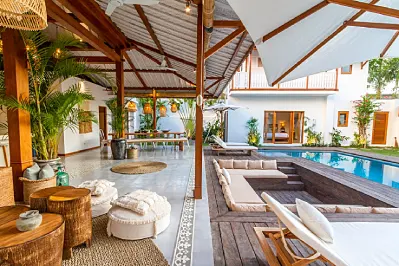
Alang-alang (traditional thatch) roofing, beyond its practical cooling properties, creates distinctive silhouettes that frame outdoor art installations and provide natural lighting for interior galleries. The organic textures and patterns of thatch complement both traditional and contemporary artistic elements.
The historical collaboration between undagi (traditional master builders) and Dutch architects during the early colonial period (1910-1918) established precedents for successful cross-cultural design integration. These partnerships demonstrated how traditional craftsmanship could enhance rather than compromise architectural innovation—a principle that continues guiding contemporary art-villa developments.
Contemporary Creative Community Impact
Artist Residencies Driving Architectural Innovation
Artist residency programs like AIR (Artist Inn Residency, Ubud) drive architectural innovation, featuring purpose-built villas with studio spaces and curated libraries. Residency models like Flow House foster “production-integrated living,” where creative work is seamlessly embedded in daily life. The Yayasan Bali Purnati performing arts foundation merges accommodation with performance spaces, setting new standards for specialized creative architectural needs.
Cross-Cultural Artistic Collaborations
The Tegel House project in Canggu exemplifies successful international collaboration in art-integrated villa design. The Swedish family commissioning this project spent extensive time researching local craftspeople and artists, eventually creating a wishlist of collaborators including woodworkers Kalpa Taru, interior design studio Somewhere Concepts, and artists Maverick Lee and Ricky Lee Gordon.
This collaborative approach ensures that international villa owners contribute to rather than exploit local creative communities. The project demonstrates how thoughtful integration of local artisans and international artists creates authentic cultural fusion while supporting local economic development.
Gallery Spaces and Living Art Integration
Contemporary Balinese villas often function as “living galleries.” For instance, Villa Canggu showcases works by Indonesian artists such as Eddy Susanto and Ronald Apriyan, transforming residential space into exhibition-grade environments. Open layouts and bi-fold glass walls bridge indoor and outdoor galleries, blurring boundaries for natural art appreciation.
Traditional Balinese Wood Carving in Modern Context
Balinese wood carving, with its centuries-old traditions and spiritual significance, provides rich material for contemporary villa integration. Traditional motifs depicting flora, fauna, mythical figures, and religious symbols translate naturally into modern architectural elements while maintaining cultural authenticity.
Villages like Mas near Ubud continue producing world-class wood carvings that contemporary villa projects incorporate as both decorative and structural elements. The carving traditions, typically passed down through families and requiring years of apprenticeship, create unique pieces that cannot be mass-produced, ensuring each villa’s artistic elements remain distinctive.
Modern applications include carved wooden door frames, decorative panels, and sculptural elements that serve both aesthetic and functional purposes. The integration of traditional carving techniques with contemporary design sensibilities creates bridge elements that connect historical craftsmanship with modern luxury living.
Sculpture Gardens and Outdoor Art Installations
The tropical climate and indoor-outdoor living philosophy of Balinese architecture create ideal conditions for sculpture gardens and outdoor art installations. Art Villas Bali’s Uluwatu project features “10 luxury art villas where each villa is designed with hand-painted art and stone sculptures, making every unit a unique masterpiece”.
These developments demonstrate how landscape design becomes integral to artistic expression, with gardens functioning as outdoor galleries. Stone walkways, water features, and tropical plantings provide natural settings for sculpture placement while creating contemplative spaces for art appreciation.
The Morabito Art Villa, featuring collaborations between Pascal Morabito and Damien Hirst, showcases how high-profile artistic partnerships can create destination properties that attract international art collectors and culturally sophisticated travelers.
Design Philosophy and Implementation
Biophilic design connects people to nature and provides organic settings for art. Natural light and greenery optimize art display, while projects like Villa Nest epitomize harmonious fusion across materials, architecture, and artistic integration. Selection focuses on both tradition (teak, mahogany, bamboo) and innovation (local stone, exposed timber, contemporary finishes).
Material Selection Balancing Tradition and Innovation
Contemporary projects demonstrate sophisticated approaches to material selection that honor traditional techniques while embracing innovation. Teak, mahogany, and bamboo remain preferred materials, chosen not only for their practical properties but also for their cultural resonance and ability to enhance artistic elements.
The Villa Nest project represents a “harmonious fusion of art, nature, architecture, and design” where material selection specifically supports artistic integration while respecting environmental considerations. Local stone masonry, exposed timber, and carefully selected contemporary materials create cohesive environments where art feels naturally embedded rather than imposed.
Case Studies: Exemplary Art-Inspired Villa Projects
- Villa Canggu: Features Indonesian contemporary art as integral architectural elements, not just décor.
- Morabito Art Villa: A luxury hotel concept with site-specific works by acclaimed artists, nominated for World Luxury Hotel Awards 2025.
- RF Studio’s Yayasan Bali Purnati: Artist-in-residence villas using locally sourced materials and collaborating with local artisans for all interiors.
Technical Considerations and Challenges
Climate-responsive designs—overhangs, ventilation systems, and selective climate controls—preserve art without compromising the island’s open-living ideals. Structural requirements for large installations blend traditional construction wisdom with modern engineering to meet safety standards.
Structural Requirements for Heavy Installations
Large-scale sculptures and art installations often require specialized structural support systems that must be integrated during initial design phases rather than retrofitted. Traditional Balinese construction techniques, while excellent for seismic conditions, may require enhancement to support contemporary art installations safely.
Modern projects demonstrate successful integration of traditional construction wisdom with contemporary engineering requirements, creating structures that honor cultural building practices while meeting international safety standards for art display.
Economic and Cultural Impact
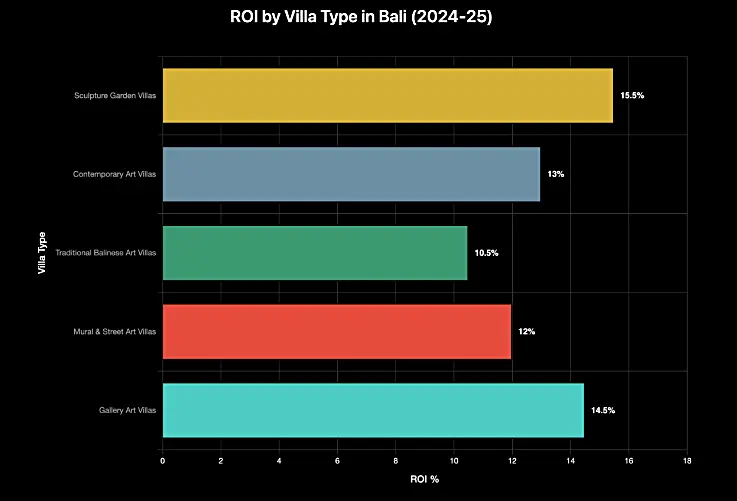
Art-integrated villas command price premiums (15–25% above standard luxury) and reach high occupancy rates (85–90%). Daily rentals are notably higher ($250–500 vs. $150–300 for regular luxury villas). This concept strengthens the creative economy, providing sustainable jobs for local artisans and fostering long-term cross-cultural collaboration.
Supporting Local Creative Economy
The art-villa development trend provides crucial economic support for Bali’s creative community. Projects like Tegel House demonstrate how international investment can create sustainable employment for local artisans while preserving traditional craft skills. Wood carvers, stone masons, textile artists, and other craftspeople benefit from integration into high-end architectural projects.
Artist residencies associated with villa developments create ongoing cultural exchange opportunities, enabling local artists to collaborate with international peers while maintaining connections to traditional practices. This cultural cross-pollination strengthens rather than dilutes local artistic traditions.
Future Trends and Innovations
Digital Art Integration and Interactive Installations
Emerging trends include integration of digital art installations and interactive elements that respond to environmental conditions or occupant presence. Nuanu City developments feature technologically advanced art installations including the THK Tower designed by architect Arthur Mamou-Mani, demonstrating how traditional Balinese settings can accommodate cutting-edge artistic technology.
Virtual and augmented reality elements are beginning to appear in luxury villa projects, creating possibilities for guests to experience historical or mythological narratives associated with traditional Balinese art forms in immersive digital formats.
Sustainable Art Materials and Eco-Conscious Design
Future developments increasingly prioritize environmental sustainability in both architectural materials and artistic elements. Bamboo construction techniques pioneered by Ibuku and other sustainable architecture firms provide models for eco-conscious art integration.
Projects emphasize locally sourced materials and traditional techniques that minimize environmental impact while maximizing cultural authenticity. This approach aligns with global trends toward responsible luxury that prioritizes environmental and cultural sustainability.
Community-Centered Art Spaces and Cultural Programming
The most successful future developments will likely emphasize community engagement and cultural education alongside luxury accommodation. The Yayasan Bali Purnati model, offering public programming and cultural events alongside private accommodations, demonstrates how art-integrated villas can serve broader cultural missions.
These developments create sustainable models where luxury real estate development contributes to cultural preservation and community development rather than displacing local communities or diluting cultural traditions.
The Future of Art-Inspired Villa Architecture
The fusion of Bali’s creative scene with villa design marks a turning point in luxury real estate, proving that authenticity and innovation can unlock new value. Key takeaways:
- Creative collaborations—from contemporary art showcases to performance-focused residences—demonstrate how investors, local artists, and master craftspeople can achieve exceptional outcomes
- Art-integrated villas command 15–25% price premiums and deliver higher occupancy rates, underscoring their market appeal
- Balancing traditional Balinese principles with modern artistic vision creates sustainable tourism templates that preserve heritage while offering genuine cultural immersion
- Technical innovations in tropical art preservation and climate-responsive engineering are influencing global architectural practice
- Emerging trends—such as eco-friendly materials, digital art installations, and community-centered cultural programming—will shape the next wave of art-inspired development
Bali’s success story offers a blueprint for luxury developers worldwide: collaborate meaningfully with local creative communities to build properties that enrich cultural landscapes rather than displace them.