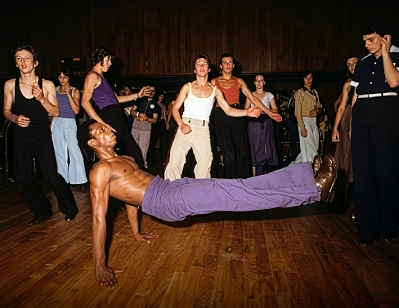
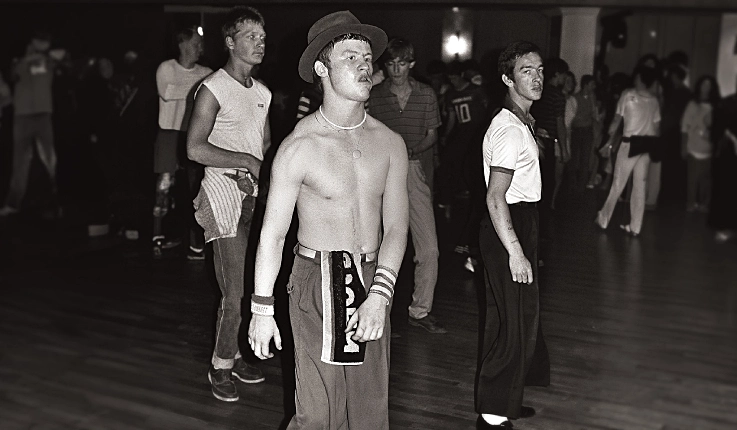
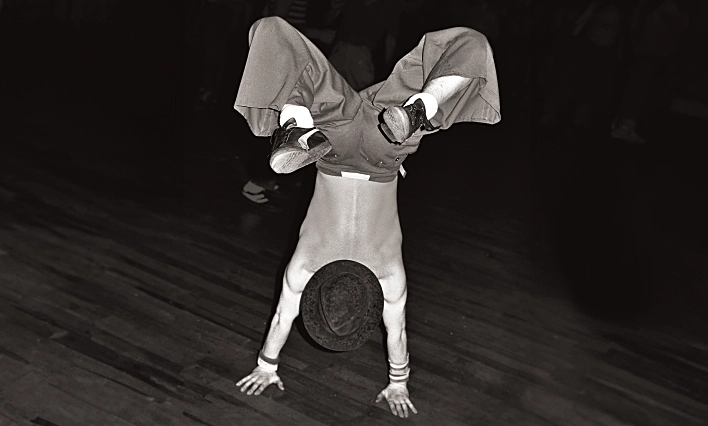
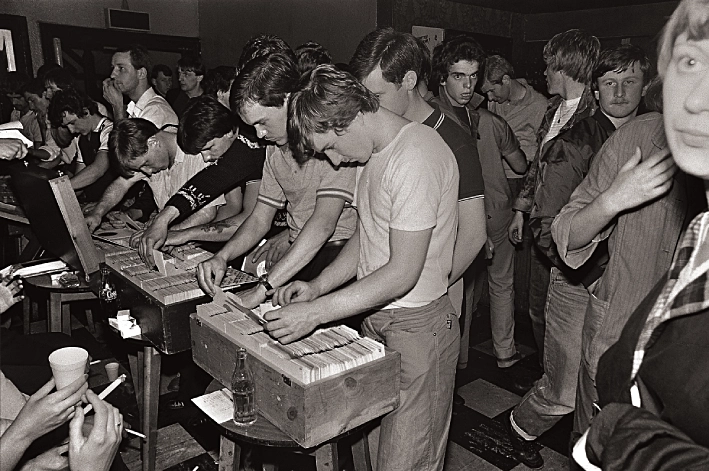
The film’s most affecting insight is that Northern Soul was never merely about music. It was about escape: from factory routines, from economic despair, from the grey malaise of Thatcher-era Britain. Teenagers in Oxford bags and bowling shirts hurled themselves across crowded dancefloors in improvised ballets powered by amphetamines, longing, and imported seven-inch singles that had failed to find audiences in America. In Byron’s telling, these forgotten records became instruments of collective salvation.
The documentary is crowded—in the best sense—with historians, DJs, photographers, broadcasters, and veteran soulies, among them Richard Searling, Russ Winstanley, Elaine Constantine, Levanna McLean, Tony Blackburn, and Kev Roberts. Their recollections arrive alongside lovingly restored archive footage: sweat raining from ceilings, dancers spinning through exhaustion, queues dissolving into joyful disorder. The editing toggles deftly between monochrome grit and bursts of saturated colour, capturing the movement’s peculiar mixture of austerity and transcendence.

What emerges is less a nostalgia piece than a study of cultural transmission. Northern Soul survived because it belonged to no single star, no marketable frontman, no codified aesthetic. It spread by whispered recommendation, taped compilations, and pilgrimage. The records themselves—Frank Wilson’s “Do I Love You (Indeed I Do),” Gloria Jones’s “Tainted Love,” Bob & Earl’s “Harlem Shuffle”—remain talismans of a scene built on obsession and crate-digging scholarship.
Byron is particularly attentive to continuity. Younger DJs and dancers inherit the movement not as retro kitsch but as living ritual. The dancefloor, the film suggests, remains one of the few democratic spaces left in British culture: ecstatic, intergenerational, defiantly communal. “This was a place that took us to euphoria,” one interviewee says, with the dazed clarity of someone remembering religion.
For viewers indifferent to the genre, Northern Soul: Still Burning may occasionally feel insiderish, even evangelical. Yet its larger argument—that subcultures preserve forms of joy abandoned by the mainstream—is difficult to resist. The film understands that music scenes are rarely about sound alone. They are about the temporary creation of a world in which ordinary people can become weightless.
Northern Soul: Still Burning opens in U.K. cinemas on May 15.
words Alexa Wang