Image Credit: Unsplash
We usually think of art as something for museums and galleries, a high-minded pursuit for grown-ups. But for a baby, the whole world is like their first, most immersive art show. From the moment they open their eyes, they’re soaking up sensory information, figuring out light, shadow, texture, and sound. Looking at your baby’s early development through a creative lens doesn’t mean you need an art degree. It just means seeing how great it is that their imaginative play is a masterpiece in the making.
The Art of Early Sensory Exploration
Before they can even hold a crayon or hum a tune, babies are already little masters of sensory art. Their main tools are touch, sight, and sound. Every new texture is like a sculpture, and every new sound or movement is part of their creative discovery. Rather than filling every moment with structured activities, think of their awake and alert times as opportunities for exploration. Keeping a newborn busy during wake windows becomes less about entertainment and more about offering meaningful sensory experiences that support healthy development.
Instead of just trying to fill time, focus on the quality of what they’re experiencing through their senses.
- Fabric Fun: Introduce all sorts of fabrics. A soft velvet piece, a slightly rough bit of burlap, a cool silk scarf, and a warm knit blanket each feel different. Let your baby touch these with their hands and feet.
- Light and Shadow Games: A baby’s vision is still developing, and they love high contrast. Use a simple flashlight to make shadows dance on a wall or ceiling. This play of light and dark is one of their very first visual shows.
- Temperature Touch: Offer things that are safely cool or warm to touch, like a chilled teething ring or a smooth stone warmed by the sun (but not hot). This helps them learn about temperature as a physical feeling.
This kind of play is all about the process. The goal isn’t to make something finished, but to get their senses involved in a way that builds brain connections and sparks curiosity.
Designing a Visually Rich Nursery
Your baby’s nursery is more than just a place to sleep; it’s their very first personal gallery. Designing it with an artistic eye can give them gentle stimulation all the time. While you might be tempted to fill it with soft pastels, studies show that babies are most interested in high-contrast patterns.
Try to think like a minimalist art curator. Instead of cluttering the space, pick a few striking pieces.
- High-Contrast Mobiles: A simple mobile with black, white, and red geometric shapes will grab a newborn’s attention much more than a pastel one with complicated characters. The sharp contrast helps their developing eyes focus and follow things.
- Gallery Wall: Dedicate one wall to a rotating display of art. This doesn’t have to be expensive prints. You can use high-contrast flashcards, framed pieces of interesting fabric, or even one bold abstract artwork. Change one or two pieces every couple of weeks to keep the room fresh and engaging.
- Smart Use of Color: While contrast is key, you can still add bold colors strategically. A single bright red pillow or a sunny yellow rug can draw your baby’s eye and attention in an otherwise neutral room.
The main idea is to create a space that’s visually interesting but not overwhelming. It should be a calm place that invites them to look and discover, much like a well-curated art museum.
Curating Your Infant’s First ‘Exhibits’
The things you give your baby are their first sculptures and interactive displays. Instead of a toy box overflowing with plastic, think about being more thoughtful when cultivating creativity and innovation with carefully chosen items. A “treasure basket” filled with a few simple, safe, and interesting objects can keep them exploring for hours.
When you’re putting together these ‘exhibits,’ aim for variety in material, weight, and texture.
- Natural Finds: Include things from nature, like a large, smooth seashell, a clean pinecone (with no loose bits), a soft feather, or a piece of driftwood.
- Everyday Objects: Regular household items are often more fascinating than toys made specifically for babies. A wooden spoon, a set of metal measuring cups, or a natural loofah sponge can offer unique sensory feedback.
- Simple is Best: Choose objects that are open-ended. A simple set of wooden blocks can be stacked, knocked over, or put in their mouth, allowing for more imaginative play than a toy that only does one thing when you press a button.
Switch out the items in the basket regularly. Bringing an object back after it’s been gone for a week can spark new interest, as your baby interacts with it using their newly developed skills and understanding. This approach teaches them that the world is full of interesting things to discover.
Soundscapes for Developing Brains
Sound is an invisible art form that shapes your baby’s brain right from the start. The sounds you create around them are just as important as what they see. A study from the University of Washington found that play sessions with music improved babies’ brain processing of both music and speech. This doesn’t mean you need classical music playing 24/7. Instead, think about creating a varied and intentional soundscape.
- The Art of Talking: The rhythm, pitch, and flow of your voice are the most important sounds your baby will hear. Talk to them, sing to them, and read to them. Change your tone and speed. This is their first introduction to the music of language.
- Different Kinds of Music: Let your baby hear a wide range of music. Play some gentle folk, lively jazz, or complex classical pieces. Notice how they react. Do they get calm, excited, or quiet? Their reactions are like their own little art critiques.
- The Sound of Quiet: Just like space is important in visual art, moments of quiet are crucial for processing sounds. A place that’s always noisy can be overwhelming. Allow for peaceful times where your baby can process what they’ve heard and listen to the subtle ambient sounds of home.
By treating sound as an artistic medium, you help your baby notice the subtle details of their auditory world, building a foundation for language and musical appreciation.
Movement as Performance Art
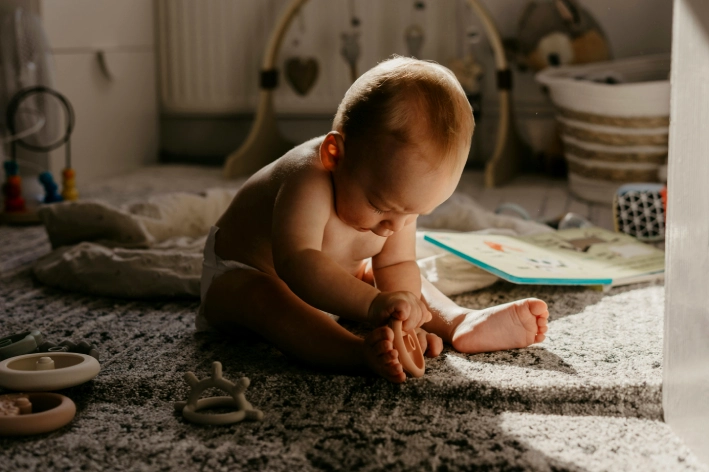
As your baby learns to control their body, their movements become a kind of performance art. Every kick, wiggle, and reach is an expression of what they want to do and what they’re discovering. Tummy time isn’t just an exercise for development; it’s your baby’s first dance recital. You can support this growing physicality by creating a safe and encouraging stage.
Instead of keeping them in seats or swings, give them plenty of floor time on a comfy mat. This freedom to move is essential for encouraging creative expression through their bodies. Watch as they learn to push up, roll over, and eventually crawl. These aren’t just milestones; they’re choreographed sequences they’re mastering through practice and repetition.
You can make this performance even better by interacting with them.
- Dance Together: Lie on the floor with your baby and copy their movements. When they kick, gently kick your own legs. This back-and-forth turns their solo performance into a duet.
- Props and Scenery: Place interesting objects just out of reach to encourage them to move towards something. A colorful scarf or a crinkly toy can be the motivation for their next “scene.”
Cheering on these efforts, big and small, builds their confidence and encourages them to keep exploring the amazing things their bodies can do.
Ultimately, seeing your baby as a budding artist changes how you see your role as a parent. You become a curator, a collaborator, and a devoted fan, providing the materials and inspiration for their very first masterpiece: a curious, creative, and engaged mind.
words Alexa Wang