There was a time when getting dressed meant drawing a line—clear, visible, and rarely questioned. What you wore at home stayed there. What you wore outside signalled intention, effort, a kind of readiness to be seen.
That line hasn’t disappeared. It’s just been quietly ignored.
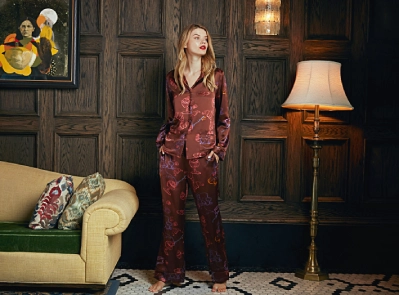
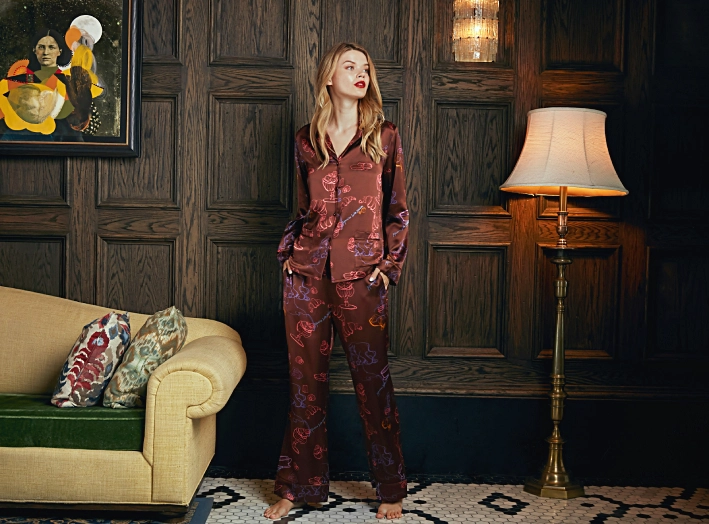
On any given morning now, somewhere between a coffee run and the first meeting of the day, you’ll see it: silk pajama shirts tucked into tailored trousers, striped sets softened further by worn-in sneakers, loose cotton pieces layered under heavy coats at airport gates. Not styled to shock, not even styled to stand out—just absorbed into the rhythm of everyday dressing.
And that’s the shift.
Pajamas didn’t become acceptable. We just stopped pretending they weren’t.
What’s happening here isn’t simply about comfort, though comfort is the easy explanation. It’s about a subtle rejection of the long-standing idea that effort must look a certain way—that structure equals polish, that stiffness signals intention. Increasingly, it doesn’t. Increasingly, it feels performative.
Instead, there’s a different kind of logic taking hold—one where clothing is expected to move with the day itself. Outfits are no longer built for single moments, but for transitions: from bed to desk, from indoors to out, from working to waiting to leaving again. Pajamas, with their inherent softness and flexibility, were always going to find a place in that equation.
Design has followed, but without overstatement. The pieces themselves have shifted almost imperceptibly—cuts a little sharper, fabrics a little more resilient. Washable silks that hold their shape beyond the bedroom. Cotton and bamboo blends that feel considered rather than casual. Details—piping, cuffs, prints—no longer read as decorative, but intentional.
What makes pajama dressing work, though, is tension. A silk set only feels complete when grounded by something heavier—a structured coat, a solid shoe, a sharper line somewhere else in the look. Without that contrast, it risks slipping back into what it once was: private, unfinished, unseen.
Versatility, now, isn’t optional. It’s the baseline.
Behind this aesthetic shift, there’s also a quieter recalibration within the industry itself. As smaller labels and independent brands respond to this demand for fluid, multi-purpose clothing, many are turning to more adaptive production models—including wholesale pajamas—to experiment without locking themselves into rigid seasonal structures. It’s less visible than the styling, but just as telling: flexibility isn’t just happening in wardrobes, but in the systems that produce them.
Social media, as ever, accelerates the effect—but not by dictating it. There’s no single way to wear pajamas outside anymore, no fixed formula to replicate. Instead, there’s accumulation: fragments of outfits, glimpses of routines, a slow redefinition of what looks “finished.” The result is less about trend and more about permission.
And that may be the point where this stops being reversible.
Because once the idea of “dressing properly” starts to feel outdated, it’s difficult to reconstruct. Once comfort stops signalling laziness—and starts signalling control—the hierarchy shifts.
Pajamas, in that sense, aren’t the story. They’re the evidence.
What they reveal is a broader change in expectation: that clothes should adapt to life, not the other way around. That ease doesn’t cancel out intention. That looking put-together no longer requires looking restricted.
From bedroom to street, the journey isn’t about distance.
It’s about deciding that the distinction no longer matters.