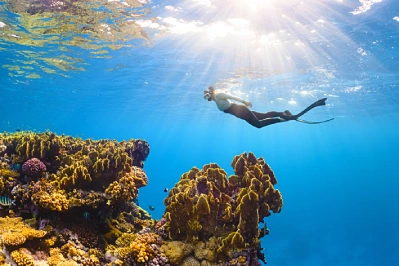
Some of the most interesting sights on a trip are hidden beneath the water. Coral reefs shelter colourful fish and other marine life, while submerged rock formations reveal a different side of a destination’s landscape. Exploring these underwater environments can be just as fascinating as visiting the attractions on land.
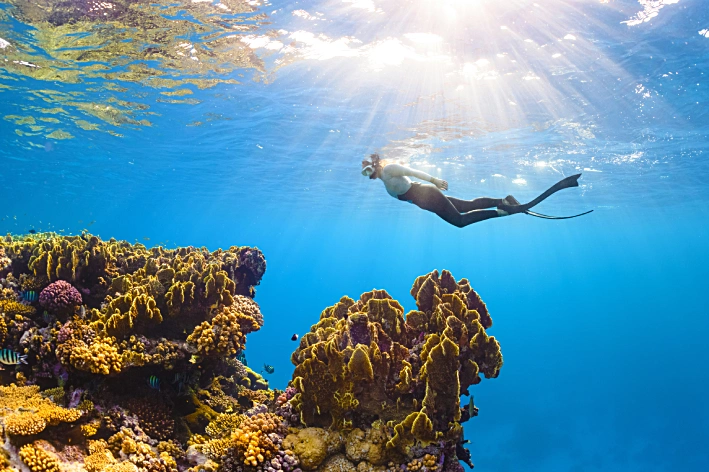
For travellers interested in snorkelling or diving, the underwater experience can be a reason to choose a destination in the first place. These five destinations reveal different underwater environments, with experiences ranging from exploring marine habitats to seeing unusual geological formations up close.
Diving Coral Gardens and Granite Pinnacles in Koh Tao, Thailand
Koh Tao, a small island in the Gulf of Thailand, is surrounded by coral reefs, sheltered bays and rocky underwater formations. Its shallow waters are well suited to snorkelling and introductory diving, while deeper sites feature granite pinnacles rising from the seafloor. These different environments make the island an interesting destination for exploring marine life beneath the surface.
Around Aow Leuk and Japanese Gardens, shallow reefs shelter colourful fish and hard corals, with occasional sightings of sea turtles. Farther offshore, Chumphon Pinnacle is known for its large rock formations, sea anemones and schools of fish, including barracuda. More experienced divers can also visit Sail Rock, a deeper offshore site with steep rock walls and a distinctive vertical swim-through.
Koh Tao has dive sites suitable for different experience levels, although conditions and visibility vary throughout the year. For travellers taking the Bangkok to Koh Tao ferry, the journey begins with an overland transfer to a mainland port before continuing by boat to the island. Once there, local dive operators arrange excursions to shallow reefs and offshore sites, depending on sea conditions.
Snorkelling Between Two Tectonic Plates in Thingvellir, Iceland
In Iceland’s Thingvellir National Park, Silfra is a freshwater fissure within the rift zone where the North American and Eurasian tectonic plates are slowly moving apart. Water originating from the Langjökull glacier filters through underground lava rock for decades before reaching the fissure. The result is remarkably clear water surrounded by steep volcanic rock formations.
Floating along the surface, snorkelers can look down at submerged rock walls and large boulders stretching into the blue water below. Visibility can reach around 100 metres in favourable conditions, while patches of green algae, sometimes called “troll hair,” add colour to the rocky landscape. The narrow passages and deeper sections give visitors a close look at the geological forces that have shaped this part of Iceland.
The water remains around 2–4°C throughout the year, so guided snorkelling tours typically provide dry suits and thermal protection. Participants should check swimming and health requirements before booking. After exploring Silfra, visitors can follow the national park’s walking trails and discover its historical significance as the site where Iceland’s Alþing assembly was established around 930.
Diving Fringing Reefs and Blue-Water Drop-Offs in Raja Ampat, Indonesia
Raja Ampat, an archipelago of more than 1,500 islands and smaller islets in eastern Indonesia, is home to one of the world’s richest marine ecosystems. Its limestone islands and forested coastlines are surrounded by coral gardens, underwater walls and submerged pinnacles. Beneath the surface, divers can explore reefs covered in soft and hard corals, with colourful fish moving between the formations.
The underwater scenery varies considerably between dive sites. At Blue Magic in the Dampier Strait, a submerged pinnacle attracts schools of fish, while divers may also spot reef sharks and manta rays. Smaller creatures are equally fascinating, including pygmy seahorses that shelter among sea fans. Around Arborek Island, shallow reefs are also accessible to snorkelers, allowing visitors to explore the marine environment without diving into deeper waters.
Exploring Raja Ampat usually involves boat trips from island-based accommodations or longer journeys aboard liveaboard vessels. Some dive sites, including Blue Magic, experience strong currents and are better suited to experienced divers, while sheltered reefs may be suitable for beginners. Choosing sites that match individual experience levels and sea conditions leaves more time to appreciate the region’s remarkable marine life.
Watching Whales and Dolphins in the Azores, Portugal
The Azores’ nine volcanic islands rise from the mid-Atlantic, surrounded by deep waters frequented by whales and dolphins. Sperm whales live around the islands year-round, while migrating blue whales are more commonly seen during spring. Boat excursions from São Miguel and Pico take visitors out to observe these marine mammals, although sightings depend on sea conditions and the animals’ movements.
Beneath the surface, the volcanic landscape continues with submerged rock formations, arches and steep underwater walls. Around the remote Formigas Islets, divers can explore rocky reefs where schools of fish move through the open water. The area is also known for occasional sightings of devil rays and sharks, while its underwater slopes and volcanic formations provide plenty to see even without encounters with larger marine animals.
The strong currents around Formigas make these offshore dive sites more suitable for experienced divers. Visitors interested in getting into the water with marine wildlife can join regulated dolphin-snorkelling excursions, although swimming with whales is prohibited. On Pico, the Whalers’ Museum in Lajes do Pico offers a look at the islands’ maritime history and their changing relationship with the ocean.
Snorkelling With Sea Lions in the Galápagos Islands, Ecuador
The Galápagos Islands are known for their unusual wildlife, but some of the most fascinating encounters take place beneath the surface. Ocean currents bring nutrient-rich waters to the archipelago, supporting sea lions, marine iguanas, sea turtles and an extraordinary variety of fish. Snorkelling around rocky coves and volcanic shorelines gives visitors opportunities to observe these animals in their natural habitat.
Near Champion Islet, off Floreana Island, Galápagos sea lions may be seen swimming through the water, occasionally approaching snorkelers out of curiosity. Nearby Devil’s Crown, the remains of an eroded volcanic cone, shelters colourful reef fish, with possible sightings of sea turtles, eagle rays and whitetip reef sharks. Elsewhere in the archipelago, visitors may spot marine iguanas feeding on underwater algae around Fernandina Island or Galápagos penguins swimming near Bartolomé Island.
Snorkelling experiences vary between islands, with some sheltered bays suitable for beginners and other sites exposed to stronger currents. Guided excursions help visitors explore designated marine areas while following the national park’s wildlife protection rules. Keeping a respectful distance from the animals allows snorkelers to observe their natural behaviour without disturbing them.
Which underwater world would you visit first?
Floating above Silfra’s rocky depths is a very different experience from exploring the coral-covered pinnacles of Raja Ampat. In the Galápagos, the possibility of seeing sea lions and marine iguanas makes snorkelling even more exciting. Each destination reveals a side of its landscape and wildlife that visitors might otherwise miss.
You don’t need to be an experienced diver to enjoy many of these places. Shallow reefs and guided snorkelling trips make some sites accessible to beginners, while deeper waters and stronger currents require more preparation. Choosing a destination that matches your interests and comfort in the water is a good place to start.
written by Al Woods